




Ireland’s Bastille: Inside Kilmainham Gaol
Few experiences in Ireland come with a ticket as hot or as hard to get as Kilmainham Gaol. Tickets drop exactly 28 days before your visit, and if you blink, you’ll miss out on one of the country’s essential experiences. For us, the third time was the charm. We snagged our tickets 28 days before our December trip – the wait was more than worth it.
Shannon Relates: A Powerful Presence:
Stepping into Kilmainham Gaol felt surprisingly familiar, its presence in Irish history so powerful that it already felt like part of my understanding of Ireland. The tour began with an audio presentation in the chapel, offering important historical context and setting the stage for everything we were about to see. It introduced the prison’s origins, its role in Ireland’s struggle for independence, and the stories of the people who passed through its doors.
Starting the tour in the chapel set the tone of reflection and acknowledged silence. Learning that Joseph Plunkett, one of the leaders of the Easter Rising, married his long-time love, Grace Gifford, in that very chapel just hours before his execution was the start of the heartbreak that stayed with me throughout the tour.
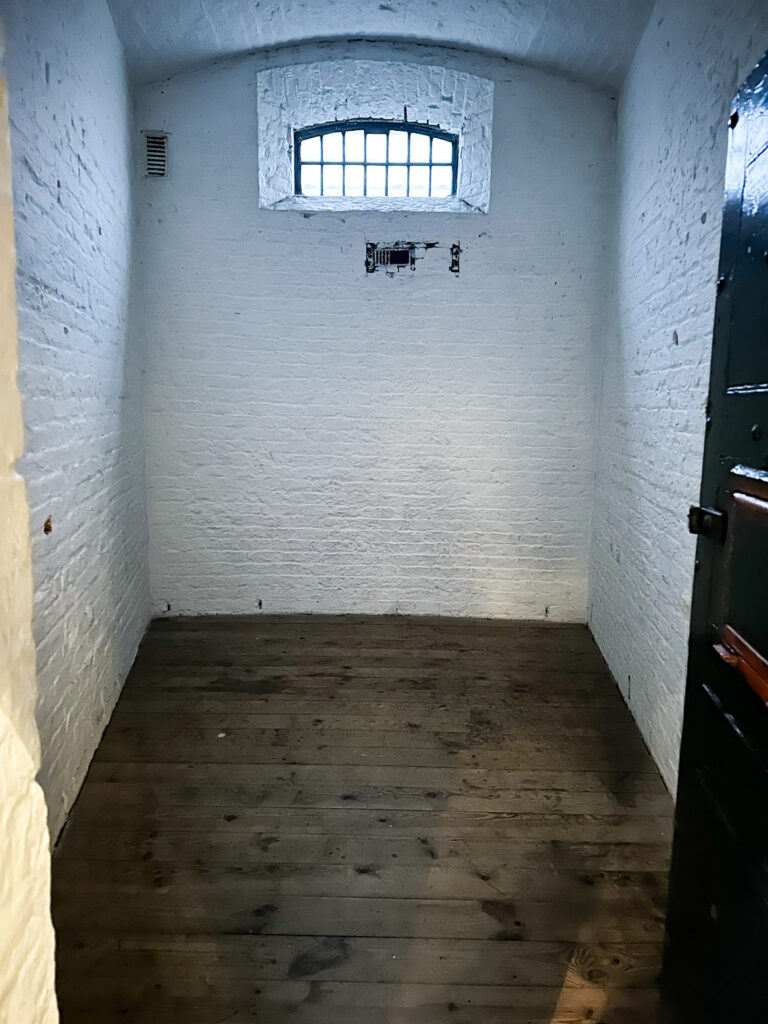
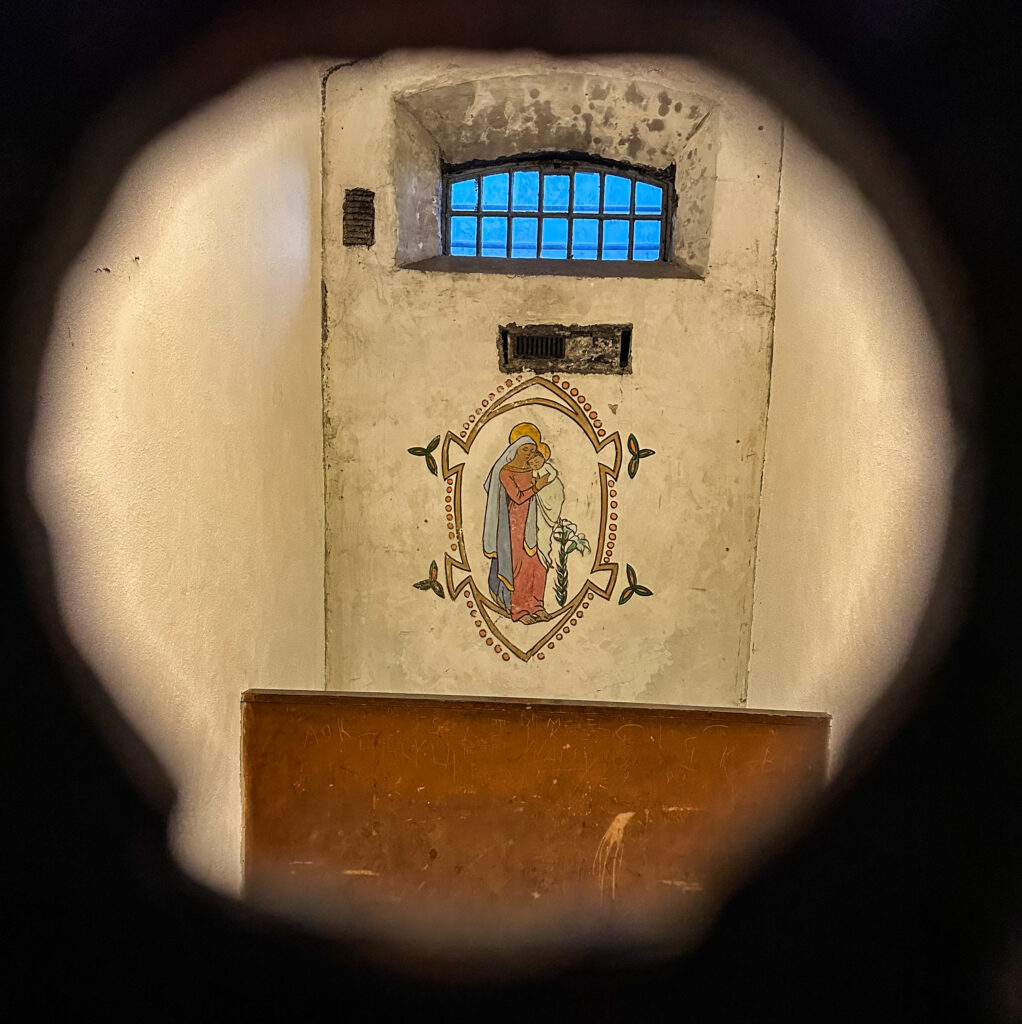
History is alive when you set foot into the West Wing of the gaol, the oldest part of the prison. This area contains many of the original dark, cold cells that housed political prisoners and others.
Built in 1796, the weight of every year is felt as you step through the narrow corridors. As is so often the case in Irish culture, the stories told within these walls bring the history vividly to life.
Even though we were with a large group, there was a level of quiet achieved to hear our tour guide regale what men (and later women and children) were incarcerated for- crimes ranging from political crimes to prostitution. Children often ended up in the prison solely due to their parents’ behavior. Originally, the west wing had no glass in windows, no heating or lighting.
This exposure to the natural elements reflected the harsh laws at the time and is still felt when passing through. Cells echo coffins, making it almost inconceivable to think about human conditions when overcrowding became a very real problem.

The west wing’s continued use from 1796 until the gaol’s closure in 1924 stands as a testament not only to the solid construction of this part of the building, but also to Ireland’s long and turbulent history — from famine and social hardship to political strife and the struggle for independence.
Karen Relates: A Victorian Prison
Moving to the east wing of the gaol felt like stepping into an entirely new era. The Victorian period brought about many reforms, one of them being the mass construction of prisons meant to impose order, structure, and a more modern approach to incarceration. Yet these changes did little to solve deeper problems.
Before the new gaol was built, and especially during the Famine, the number of people imprisoned for stealing food surged dramatically. Combined with prisoners awaiting transport to other facilities, Kilmainham became a place defined by overcrowding, illness, and desperation, conditions no architectural improvement could fully address.
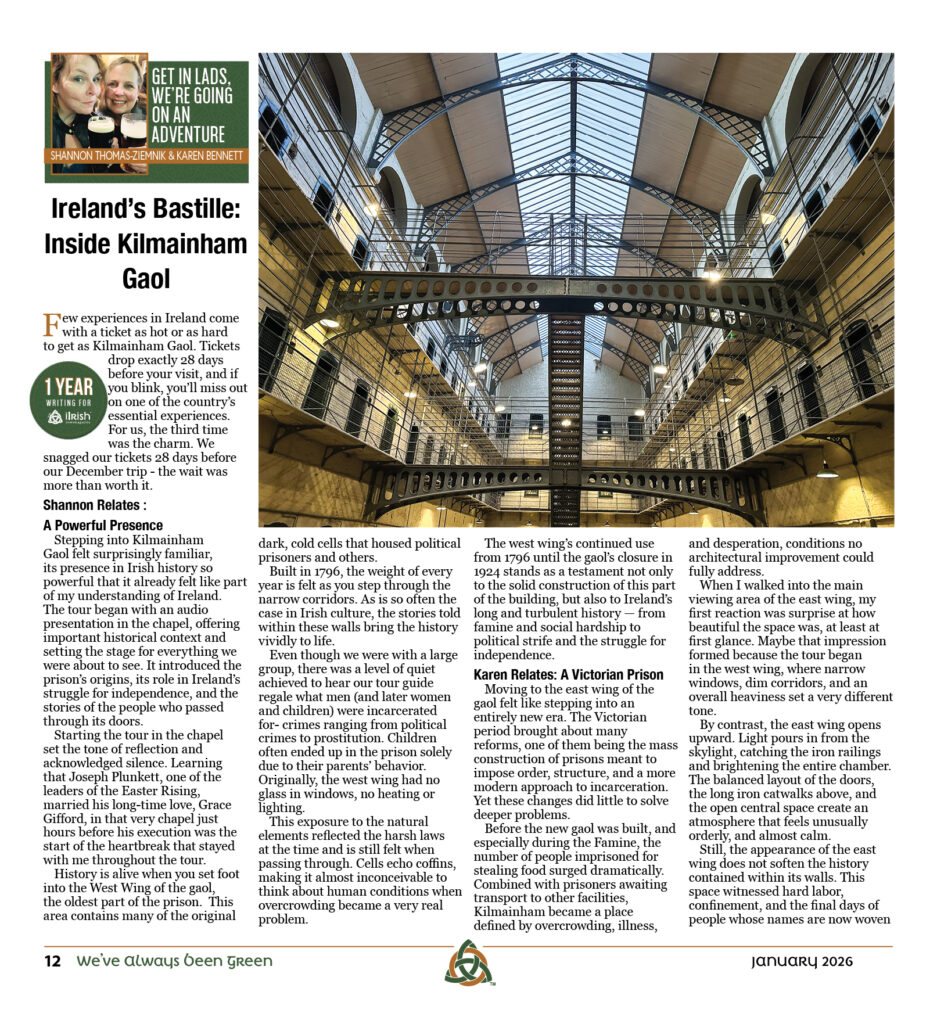
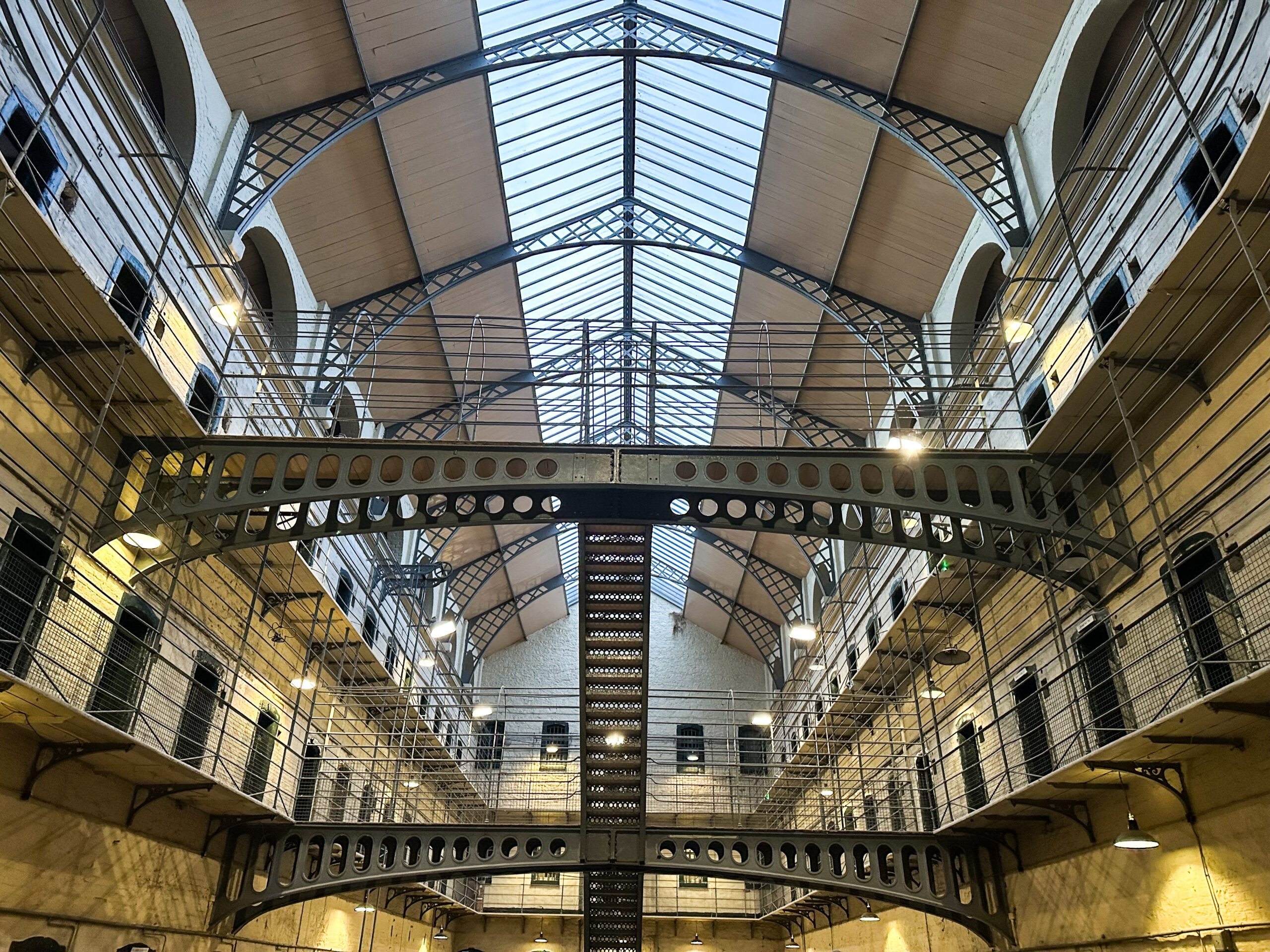
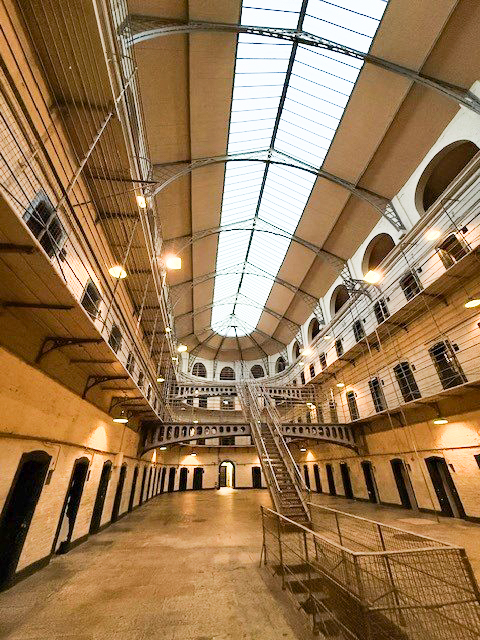
When I walked into the main viewing area of the east wing, my first reaction was surprise at how beautiful the space was, at least at first glance. Maybe that impression formed because the tour began in the west wing, where narrow windows, dim corridors, and an overall heaviness set a very different tone.
By contrast, the east wing opens upward. Light pours in from the skylight, catching the iron railings and brightening the entire chamber. The balanced layout of the doors, the long iron catwalks above, and the open central space create an atmosphere that feels unusually orderly, and almost calm.
Still, the appearance of the east wing does not soften the history contained within its walls. This space witnessed hard labor, confinement, and the final days of people whose names are now woven into Irish history.
One of the more notable figures associated with the gaol is Constance Markievicz, a leader in the 1916 Easter Rising. A member of the Irish Citizen Army, she was court martialed and sentenced to death, though her sentence was commuted because she was a woman.
Her background was an unexpected one for a rebel. Born into an Anglo-Irish aristocratic family and trained as an artist in Paris. She went on to become the first woman elected to the British Parliament and later served as Minister for Labour in the new Irish government.
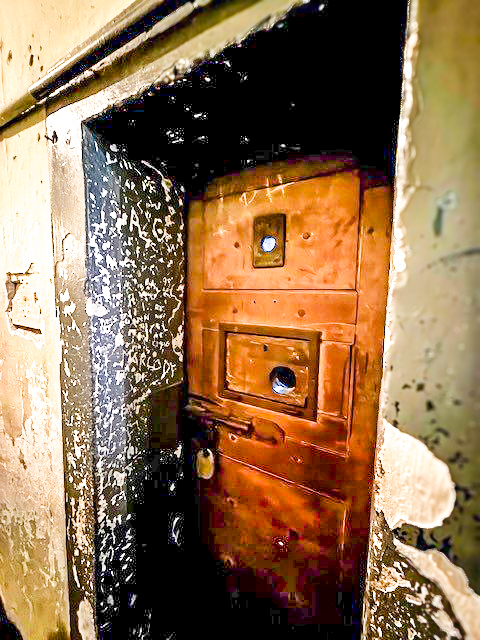
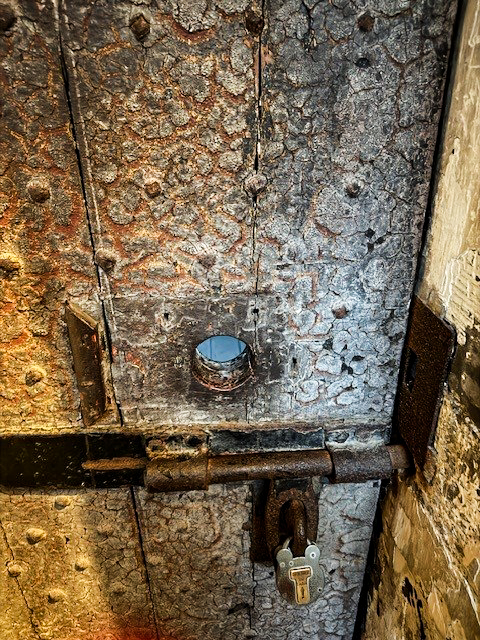
By 1910, Kilmainham Gaol closed after a steady decline in prisoner numbers. Yet only six years later, it once again became the center of national attention during the Easter Rising, holding and executing its leaders. Walking through the east wing today, it becomes clear that Kilmainham is both visually striking and historically weighty, a place where architecture and memory meet, inviting visitors to look closely and reflect on what unfolded here.
There is always more to see and learn at Kilmainham, a landmark that continues to illuminate Ireland’s long and complex history, story and impact felt still.