


An Irish Story in Cleveland Stone – Part I
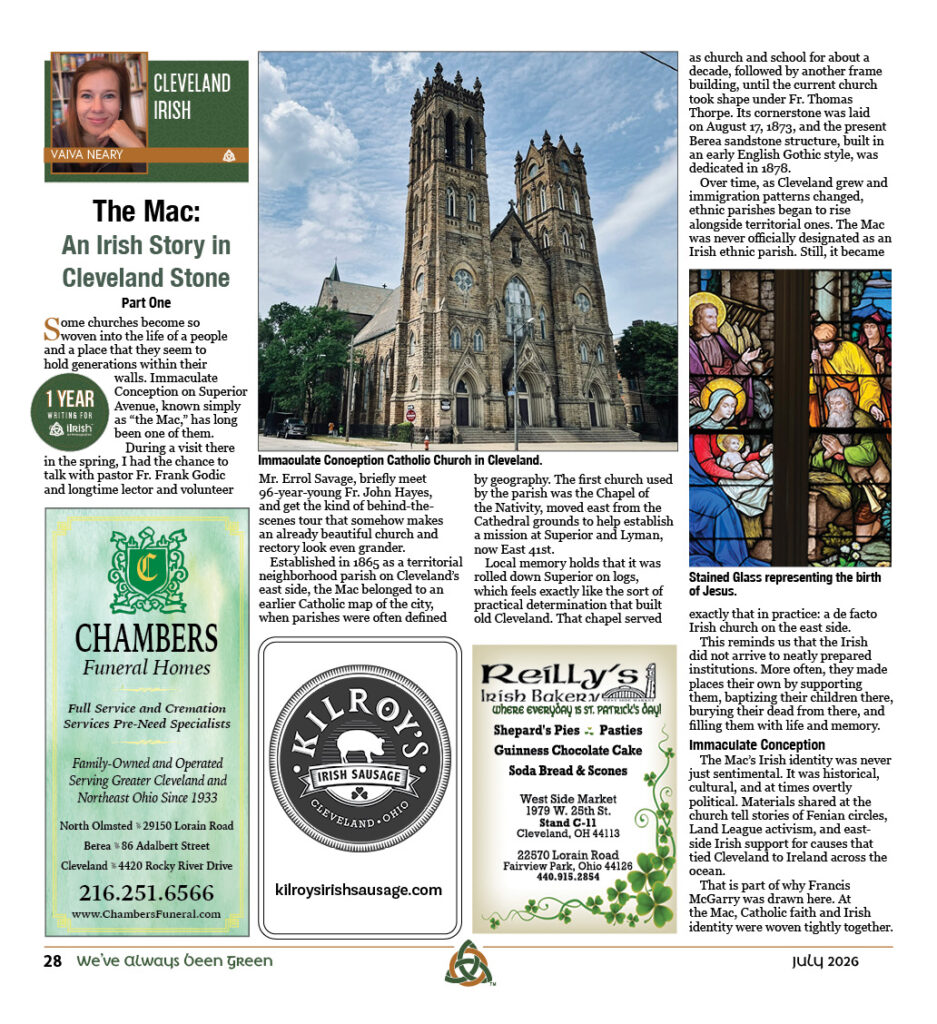
Some churches become so woven into the life of a people and a place that they seem to hold generations within their walls. Immaculate Conception on Superior Avenue, known simply as “the Mac,” has long been one of them.
During a visit there in the spring, I had the chance to talk with pastor Fr. Frank Godic and longtime lector and volunteer Mr. Errol Savage, briefly meet 96-year-young Fr. John Hayes, and get the kind of behind-the-scenes tour that somehow makes an already beautiful church and rectory look even grander.
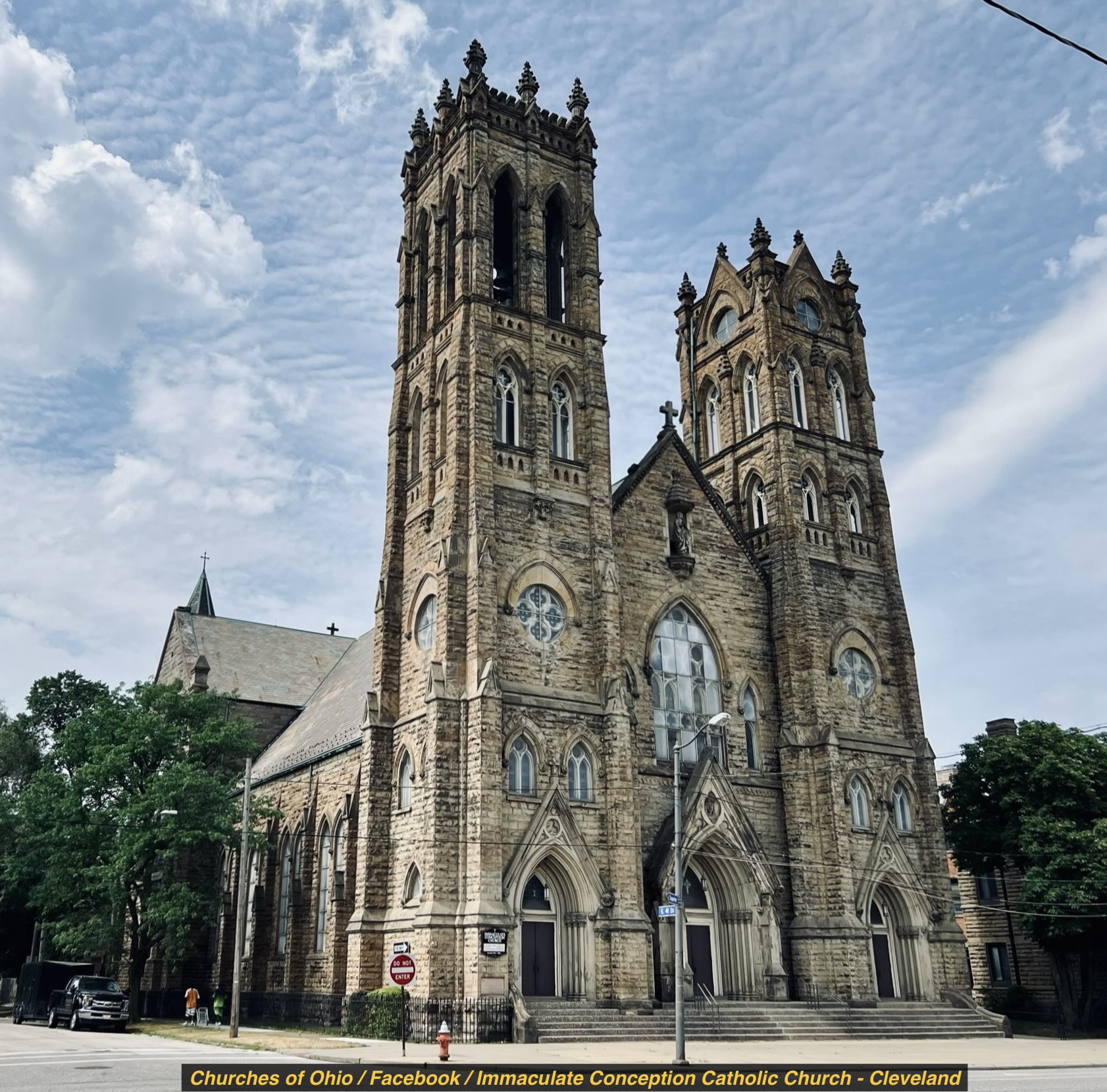
Established in 1865 as a territorial neighborhood parish on Cleveland’s east side, the Mac belonged to an earlier Catholic map of the city, when parishes were often defined by geography. The first church used by the parish was the Chapel of the Nativity, moved east from the Cathedral grounds to help establish a mission at Superior and Lyman, now East 41st.
Local memory holds that it was rolled down Superior on logs, which feels exactly like the sort of practical determination that built old Cleveland. That chapel served as church and school for about a decade, followed by another frame building, until the current church took shape under Fr. Thomas Thorpe. Its cornerstone was laid on August 17, 1873, and the present Berea sandstone structure, built in an early English Gothic style, was dedicated in 1878.
Over time, as Cleveland grew and immigration patterns changed, ethnic parishes began to rise alongside territorial ones. The Mac was never officially designated as an Irish ethnic parish. Still, it became exactly that in practice: a de facto Irish church on the east side.
This reminds us that the Irish did not arrive to neatly prepared institutions. More often, they made places their own by supporting them, baptizing their children there, burying their dead from there, and filling them with life and memory.


Immaculate Conception
The Mac’s Irish identity was never just sentimental. It was historical, cultural, and at times overtly political. Materials shared at the church tell stories of Fenian circles, Land League activism, and east-side Irish support for causes that tied Cleveland to Ireland across the ocean.
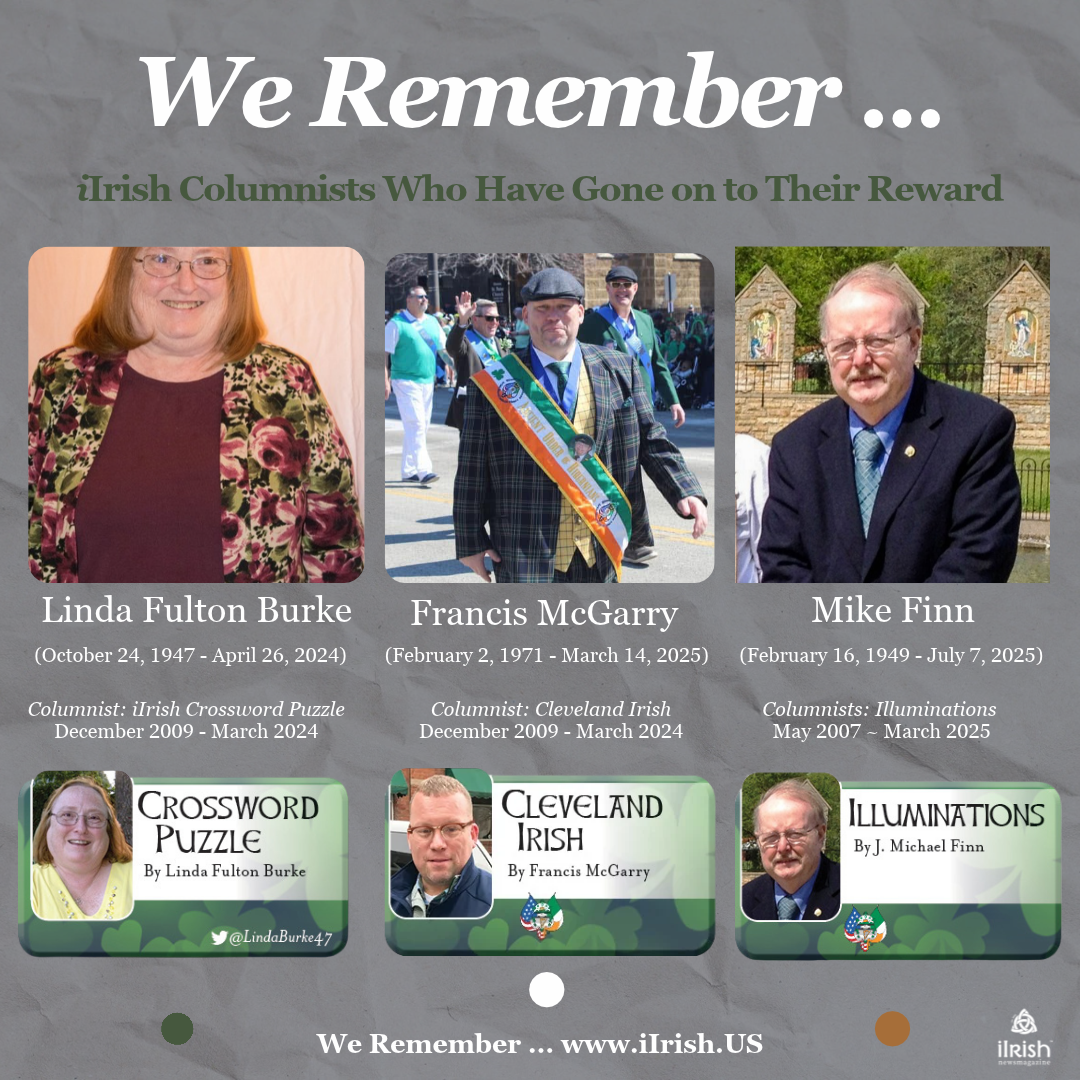
That is part of why Francis McGarry was drawn here. At the Mac, Catholic faith and Irish identity were woven tightly together.
Every old parish carries its own folklore, and the Mac has plenty. Fr. Godic shared the story of how the Mac got its nickname. Most people assume “the Mac” is simply short for “Immaculate.” But in the old sacramental registers – the official parish books where baptisms, marriages, and other milestones are recorded – there was a page for every letter of the alphabet. When it came to M, though, one page was not enough. There was a page for M names and then a whole separate page for Mc and Mac names because there were so many of them.
One parishioner recalled that in the years of Fr. Mackert, the church had a serious pigeon problem in the tower. Fr. Mackert, who had been a marksman in the armed forces, often took care of the pigeons himself before or after Mass.
On one memorable occasion, carpenter Dave, who did all kinds of work around the church, was sent up into the bell tower to do the same. Shots rang out over Superior Avenue.
Neighbors panicked. Police rushed to the scene, only to discover that the supposed sniper on the roof was just another chapter in the Mac’s war with pigeons. It is exactly the kind of story that reminds you these grand old churches were never museums. They were busy, imperfect, living places.
The Mac’s life was never confined to the sanctuary alone. The old coal room became the Thorpe Club, where people still gather for coffee and doughnuts. The rectory, with its fireplaces, dark wood, and old-world feel, seems less like an office and more like a lived-in chapter of Catholic Cleveland.
Fr. Godic and Mr. Savage noted that rectories were built large in part because there was a time when marriages between Catholics and non-Catholics took place in the rectory living room rather than in the church itself. The parish school, run by the Ursuline Nuns, was once a highly regarded teacher-training site.
The Mini-United Nations
In its final years before closing in 2010, it had become very small, with fewer than ten students in a grade. Still, it remained strikingly diverse. African American students, African students, white students, Asian students, and Puerto Rican students were all part of the mix, and people affectionately dubbed it the “mini–United Nations.”
The Mac’s story also cannot be told without talking about the Latin Mass. Before the reforms that followed the Second Vatican Council, Mass in the Roman Catholic Church was celebrated in Latin. After the 1960s, most Catholics became used to hearing Mass in English and other vernacular languages.
But in the late 1980s, the Mac became one of the first places in Cleveland where the older Latin Mass tradition returned. Fr. Godic explained that Bishop Anthony Pilla supported bringing it there, and at its height, it drew roughly 200 people a week and became an important source of both spiritual life and financial support.
Over the years, other churches began offering Latin liturgies, schedules shifted, and church rules about where the older Tridentine Mass could be offered changed too. Still, Latin services have remained an important part of the Mac’s identity.
That helps explain why one gentleman told me that he and his wife moved from Euclid to Geauga County in 2002 but still drive an hour each way weekly to the Mac. His grandmother, born in 1895, was baptized there. When I asked what keeps them returning, he answered plainly: “The Latin Mass. We’re no different from anyone else, we just like the old-fashioned ways.”
That same feeling came through in other conversations too. Another parishioner, Carol Lloyd, proudly shared that her mother-in-law, Grace Eleanor Powers, born in 1888, is listed in the parish registry. Other names surfaced as people remembered those who kept the place going when numbers were already thinning.
There was Pat Rose, remembered as a tough woman who cleaned the church and once fought off a robber by whipping her grocery bags around David-and-Goliath style. There were volunteers who watered plants, watched the doors, and simply kept showing up. One parishioner remembered making a homemade film of the Stations of the Cross and calling it Mac’s Treasures.
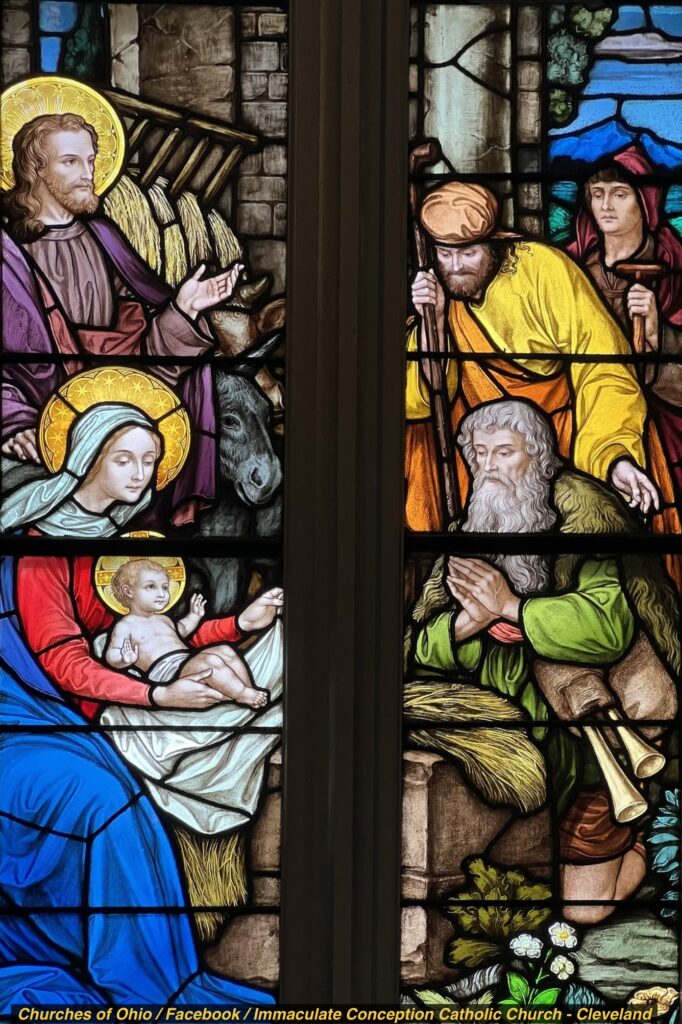
That is what makes the Mac so poignant and so worth remembering: it is not only a handsome old building, but a place where Cleveland’s Irish story took root, gathered strength, and lived for generations. Even if its next chapter is shaped by something different, the story is not over, and next month we will look at what may change, what may endure, and how a church so long tied to Cleveland Irish memory will forge ahead.
References
Photos by Kyle Ray, Churches of Ohio. Used with permission.Diocese of Cleveland parish directory, Immaculate Conception Parish, Cleveland.
Cleveland Historical, “Immaculate Conception Church: The Cleveland Catholic Diocese Grows Eastward.”
Catholic Diocese of Cleveland clergy directory.