


Where the River Burns
Old family records can tell us where our ancestors lived, when they married and where they were buried. They may offer dates, addresses and names written in fading ink. What they cannot always tell us is what those people feared, whom they loved or how it felt to leave Ireland and begin again in Cleveland.
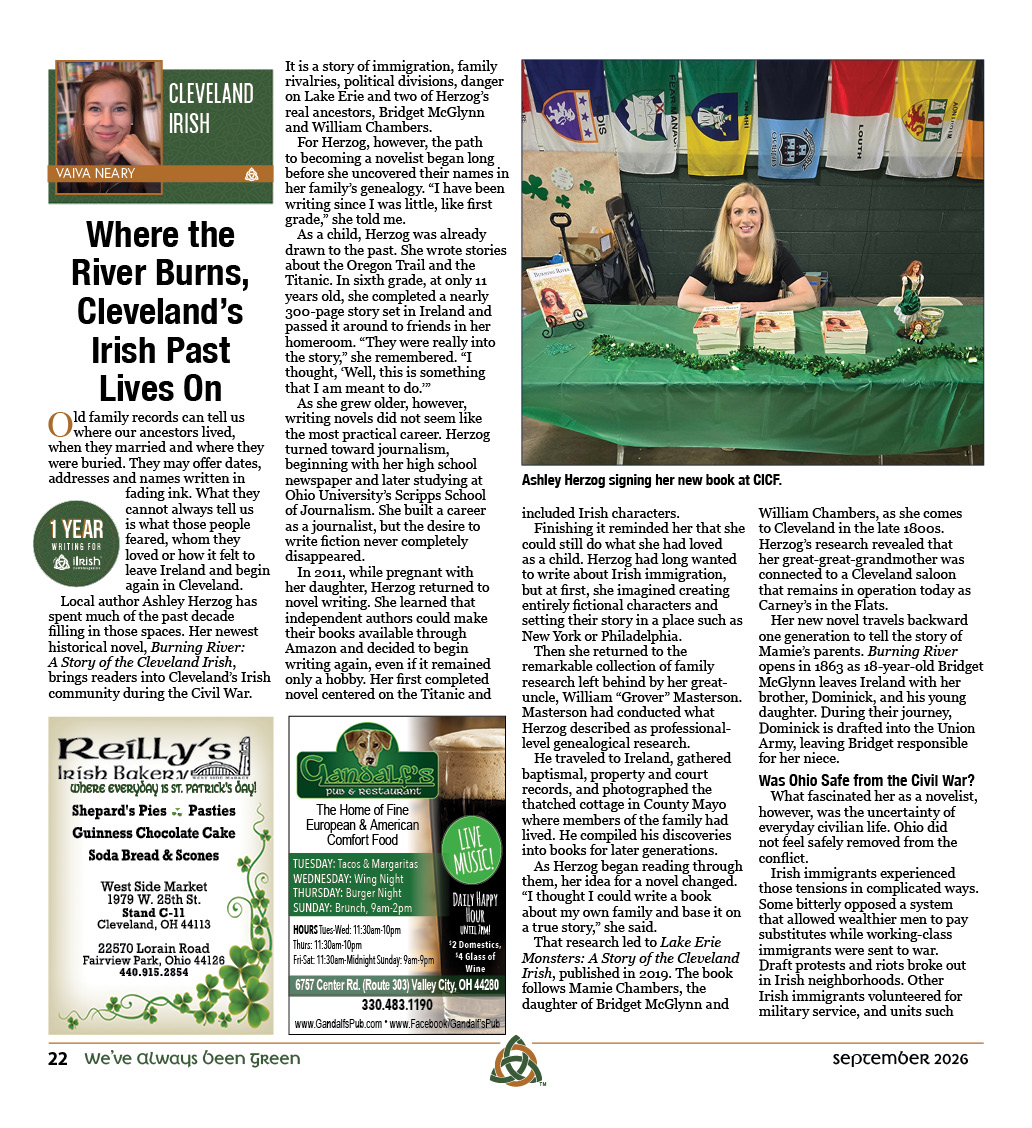
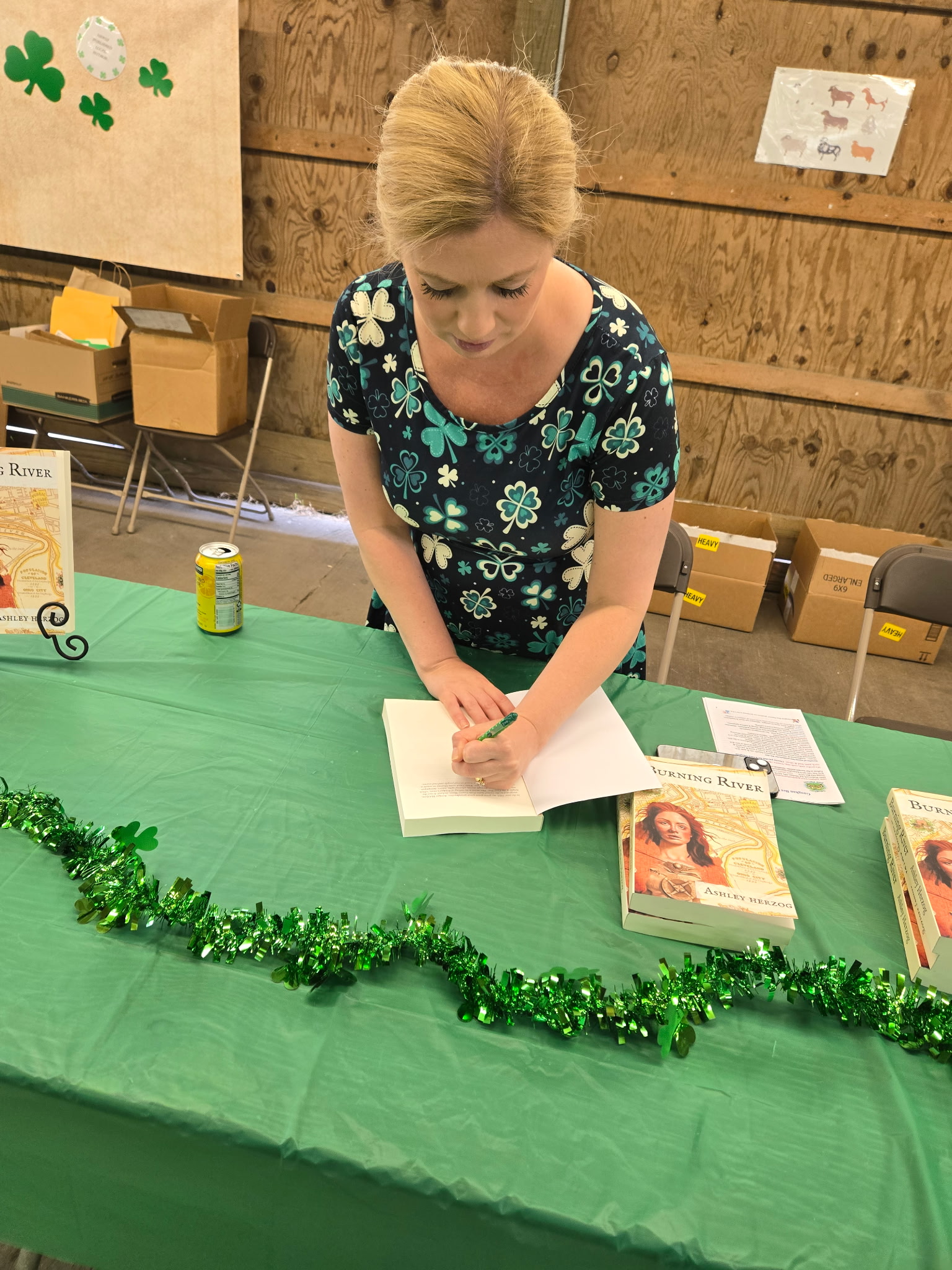
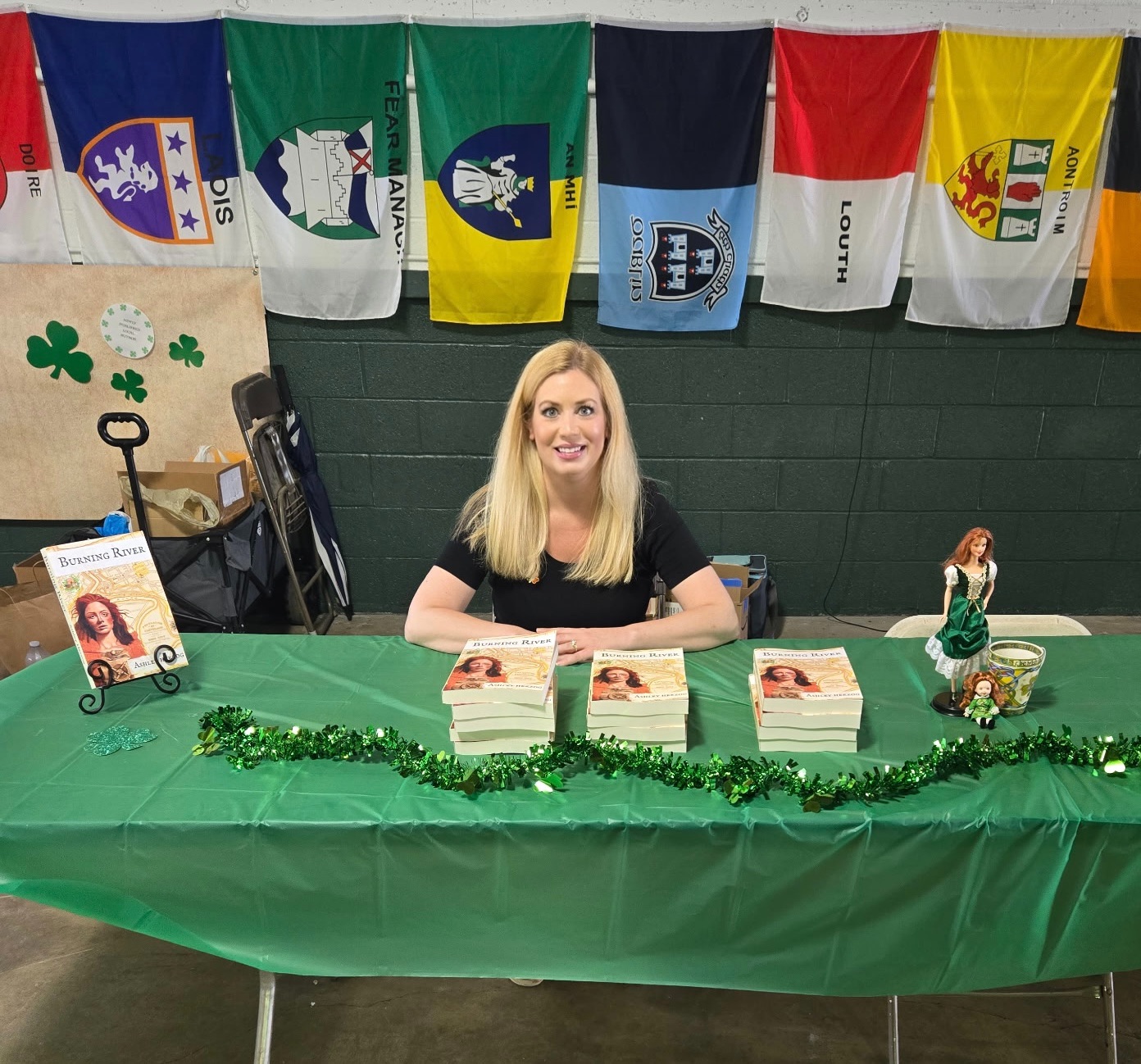
Local author Ashley Herzog has spent much of the past decade filling in those spaces. Her newest historical novel, Burning River: A Story of the Cleveland Irish, brings readers into Cleveland’s Irish community during the Civil War. It is a story of immigration, family rivalries, political divisions, danger on Lake Erie and two of Herzog’s real ancestors, Bridget McGlynn and William Chambers.
For Herzog, however, the path to becoming a novelist began long before she uncovered their names in her family’s genealogy. “I have been writing since I was little, like first grade,” she told me.
As a child, Herzog was already drawn to the past. She wrote stories about the Oregon Trail and the Titanic. In sixth grade, at only 11 years old, she completed a nearly 300-page story set in Ireland and passed it around to friends in her homeroom. “They were really into the story,” she remembered. “I thought, ‘Well, this is something that I am meant to do.’”
As she grew older, however, writing novels did not seem like the most practical career. Herzog turned toward journalism, beginning with her high school newspaper and later studying at Ohio University’s Scripps School of Journalism. She built a career as a journalist, but the desire to write fiction never completely disappeared.
In 2011, while pregnant with her daughter, Herzog returned to novel writing. She learned that independent authors could make their books available through Amazon and decided to begin writing again, even if it remained only a hobby. Her first completed novel centered on the Titanic and included Irish characters.
Finishing it reminded her that she could still do what she had loved as a child. Herzog had long wanted to write about Irish immigration, but at first, she imagined creating entirely fictional characters and setting their story in a place such as New York or Philadelphia.
Then she returned to the remarkable collection of family research left behind by her great-uncle, William “Grover” Masterson. Masterson had conducted what Herzog described as professional-level genealogical research.
He traveled to Ireland, gathered baptismal, property and court records, and photographed the thatched cottage in County Mayo where members of the family had lived. He compiled his discoveries into books for later generations.
As Herzog began reading through them, her idea for a novel changed. “I thought I could write a book about my own family and base it on a true story,” she said.
That research led to Lake Erie Monsters: A Story of the Cleveland Irish, published in 2019. The book follows Mamie Chambers, the daughter of Bridget McGlynn and William Chambers, as she comes to Cleveland in the late 1800s. Herzog’s research revealed that her great-great-grandmother was connected to a Cleveland saloon that remains in operation today as Carney’s in the Flats.
Her new novel travels backward one generation to tell the story of Mamie’s parents. Burning River opens in 1863 as 18-year-old Bridget McGlynn leaves Ireland with her brother, Dominick, and his young daughter. During their journey, Dominick is drafted into the Union Army, leaving Bridget responsible for her niece.
Despite a warning from William Chambers, a young Irish American serviceman from a rival family, Bridget boards a traveling showboat called the Green Monster. Confederate sympathizers are secretly using the boat to transport explosives.
A few miles from Cedar Point, it catches fire, killing several passengers and leaving Bridget with dangerous knowledge about what happened aboard. The novel then follows Bridget and William as they reunite in Cleveland, form an unexpected relationship and confront the consequences of the disaster.
Although the novel contains romance, suspense and adventure, it was built upon years of historical and genealogical research. Herzog began developing the book around 2020 and spent approximately six years reconsidering its direction, uncovering new records and revising the story.
Once she settled on the final version, she completed the draft in about six months. Her sources included genealogy websites, Chronicling America’s historic newspaper collection, the archives of The Plain Dealer and records she examined in person at the Cuyahoga County Archives.
Historic newspapers were especially valuable because they allowed her to see what Clevelanders would have been reading and discussing on a particular day. When writing a scene set in July 1864, for example, Herzog could look at newspapers from that month and discover what was happening around the city.
“It took years of research,” she said, “but I was really happy with the outcome.” That research also changed Herzog’s understanding of the Civil War. Like many people, she had learned about its major battles and national figures in school.
Was Ohio Safe from the Civil War?
What fascinated her as a novelist, however, was the uncertainty of everyday civilian life. Ohio did not feel safely removed from the conflict.
Confederate General John Hunt Morgan led a raid into the state in 1863, and rumors of invasion and Confederate activity created real fear. At the same time, Northern communities were deeply divided over the war, slavery and the military draft.
Irish immigrants experienced those tensions in complicated ways. Some bitterly opposed a system that allowed wealthier men to pay substitutes while working-class immigrants were sent to war. Draft protests and riots broke out in Irish neighborhoods. Other Irish immigrants volunteered for military service, and units such as Cleveland’s Hibernian Guards earned respect through their sacrifices.
Herzog did not want to flatten those experiences into a simple or sentimental picture. “I wanted to show that we’re not all just one monolithic group,” she explained. “There was a lot of political disagreement.
“There were people who opposed the Civil War and people who supported it. There were people who protested the draft and participated in draft riots, and there were soldiers who voluntarily went to war.”
That complexity is central to Burning River. Herzog wanted her Irish characters to be fully formed people rather than familiar historical stereotypes. They disagree with one another, make mistakes and respond differently to the pressure of war, prejudice and poverty.
Bridget also offers a woman’s view of this history. In Cleveland, she becomes a volunteer nurse caring for soldiers who have returned wounded and, in some cases, without the resources to make their way home. Through Bridget, the story explores both the formal relief efforts organized during the war and the ways Irish Catholics had to create support systems of their own when excluded from Protestant-led organizations.
The novel may be historical fiction, but its emotional foundation is deeply personal. Herzog’s mother is entirely of Irish descent, and her grandmother was an active member of the West Side Irish American Club.
After her grandmother died when Herzog was nine, St. Patrick’s Day and other Irish traditions became painful reminders of her loss. As a teenager, she moved away from that part of her identity.
That began to change when she traveled to Ireland in 2010. She visited the area from which her family departed and saw land similar to what her ancestors would have known. Although Herzog had traveled before, she said she had never experienced such an immediate personal connection to a place.
The trip brought her back to her great-uncle’s research and, eventually, to the stories she is now preserving through fiction. Herzog is especially proud that her daughter and future generations will have another way to encounter the family members whose lives Grover Masterson worked so hard to document.
“Just like my great-uncle preserved that history for us, I feel like future generations can read this book and know where their family came from and what they went through,” she said. She is still deciding where her writing will take her next.
Readers have asked for a sequel, and she has also considered setting a future book in Ireland during the Famine. For now, she is allowing herself time to appreciate the completion of Burning River and the ancestors whose names and experiences inspired it.
Herzog’s novels offer a reminder that family history is not simply a collection of names moving quietly through official records. Each name belonged to someone who faced uncertainty, disagreement, love, loss and the difficult work of beginning again. Through Ashley Herzog’s writing, Bridget, William and Mamie Chambers are no longer only entries on a family tree. Their stories have returned to Cleveland, where their descendants—and the community they helped build—can meet them again.
Burning River: A Story of the Cleveland Irish and Lake Erie Monsters: A Story of the Cleveland Irish is available through Amazon. As of our interview, Burning River was also available locally at Casey’s Irish Imports in Rocky River.