


Ireland and the Vikings
“Is acher in gáith in-nocht,
Fu-fúasna fairggae findfolt:
Ní ágor réimm mora minn
Dond láechraid lainn úa Lothlind.”
“Bitter and wild is the wind tonight
Tossing the tresses of the sea to white.
On such a night as this I feel at ease:
Fierce Norsemen only course the quiet seas.”
We’ve seen the movies, Viking long ships anchored in the bay, while a band of rough looking Viking warriors make their way to an isolated monastery. Once inside the walls, bloodshed and murder precede the looting of gold and silver candlesticks, crucifixes and chalices covered in precious jewels.
But, that’s the movies. The reality is that those types of raids had already been a part of Irish life for quite some time before the Norsemen arrived in the late 700s.
Raiding parties from rival clans would plunder the monasteries of their enemies as well as cattle, produce and other wealth that the clan might have. The monasteries themselves were affiliated with individual clans and would often act as a type of bank or vault for the valuables of the clan.
As far as the defenseless monks, they were often as belligerent as their secular countrymen, even involving themselves in battle. In the seventh century, their involvement was so intense, that the Ionan monk St. Adamnan issued a directive against monks, women and children from participating in battles. Most saw it as a suggestion rather than a directive, so little changed.
The Vikings traveled from Norway, to the British Isles, to Iceland, Greenland and Canada. That happens to be the range of the Atlantic Cod. They had learned to preserve it by hanging the fish in the freezing Atlantic air to dry.
Once preserved, it could be broken off, similar to hard-tack, and eaten. That method eliminated the need for salt to preserve the fish.
When the Vikings did arrive, they found Scotland and Ireland were worlds they fit into quite well. They found it was a barbarian region, with local rulers or overlords providing protection. More accurately, it was extorted protection from nearby settlements.
Ireland and Scotland never felt the influence of the Romans, who were unable to establish themselves in either country. Roads were almost nonexistent; travel was done on Ireland’s lakes and rivers. As a result, monastaries and settlements were clustered by the riverbanks into Ireland’s interior.
The first Nordic raiding parties were small, isolated raids along the coast. Few of the local clans allowed these viking raids to distract them from their own family fueds and skirmishes with their neighbors.

Nordic Raids
It was a generation later, when the Norse raiding parties came in larger fleets, even wintering in Ireland to prepare for a second season of raiding, that the Irish began to take notice. It was one of those larger fleets of longships that plundered Armagh in 832.
The following year they were in Louth, Columcille and as far south as Lismore in Waterford. The longships were ideally constructed to navigate the waterways of Ireland.
The Vikings were not always unwelcome. Many were hired as mercenaries by local clans against their enemies, often with a promise of plunder and land to settle. Intermarraige was becoming commonplace, from the lowest warrior to the highest chieftan participating.
Turgeis, a name linguists think may have been misinterpreted from the Nordic Thorgils or Thorgest, arrived on the western shore and sailed deep inland up the River Shannon. He and his men raided settlements and monastaries as much as 100 miles inland.
Dublin
Turgeis and others like him founded semi-permanent camps to stage their attacks from. They favored easily defendable places, such as islands at river mouths, or on lakes. In 841, one such camp was established where the River Poddle meets the Liffey, an area locals called “the black pool,” Dubh Linn. That Viking settlement is now the capitol of The Republic of Ireland.
There are other place names in Ireland that have Norse roots. Wicklow comes from the Viking name Vikingalo; Limerick was Hlymreke; Waterford, Vedrafjordr; and Wexford was called Veisufjordr, all given names first by the Vikings.
The Vikings were seen by the locals not as foreigners by the mid 800s, but as another tribe led by their king, Turgeis. The Viking’s power rose and fell over the next two centuries.
Those that had assimilated into Irish culture fared better than those that continued to live the life of a Viking warrior. The latter group were expelled from Ireland by the Irish warlord Brian Boru in the Battle of Clontarf in 1014.
History is written by the victors, so the adage goes, but when it comes to the Vikings, their story was largely told by the Irish clerics who were often the victims of Viking raids. Monastaries, aside from being relatively easy targets, were also the home of craftsmen who worked in gold and silver.
Brewers, bakers, farmers and educated writers were all a mainstay of monastic life. How much of a free hand did the author of the opening poem hold when he penned his verse?
From Plunderers to Being Plundered
The reality is that during the time of the Vikings in Ireland, the Irish themselves plundered more churches than the Norse did. The Irish certainly did not need any lessons of warfare or brutality from the Vikings, or anyone else.
The Vikings did influence the Irish in political, economic and even cultural ways. The Vikings with their bases and outposts gave rise to towns and commerce that was lacking. The Viking ties with clans elsewhere in the British Isles eventually enlarged the Irish trade with their neighbors.
Irish language also was influenced by the Vikings. The word for boat in Irish is bád, derived from the Norse bátr; Cod in Irish is trosc, from the Norse borskr; Margard is market, from markaor; and pinginn is penny, from penning. Beoir is beer, the Norse word is bjórr.
Modern scholars are studying the Vikings time in Ireland in a new light. Were they fierce Northmen, or did they push the Irish into a modern, civilized society?
For more to the story:
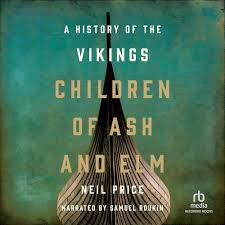
- A History of the Vikings; Children of Ash and Elm by Neil Price
- The Vikings by Robert Ferguson
- Cod; A Biographyof the Fish That Changed the World by Mark Kurlansky
- The Far Traveler; Voyages of a Viking Woman by Nancy Marie Brown