


Don’t Speak About the War
There’s always a deep need or desire to be known, even if the knowing is virtually (pun intended) impossible. For creative minds who are interested in the arts, we create a medium through which we project our soul or what we perceive to be the essence of who we are.
For poets, our love of ambiguity stems from a love of mystery. We don’t want to know everything, or we believe we can’t know everything. There’s a limit to what we can know.
Poetry or liturgy aims to create that sense of mystery as a means of drawing attention to the mysterious, that force that governs those things that lie just beyond our senses. Since the advent of nuclear physics and the emerging philosophies surrounding this discipline, we are free to experiment with ideas that mainstream science is cautious to embrace. Our existence and consciousness in the realm of quantum physics open new ideas.
Like clouds in the sky, our ideas of who we are change. Sometimes they seem familiar and understandable, but at other times they seem strange and mysterious. Particles become entangled, and our ideas race to find new meanings in our greater awareness of how little we know.
Mystery is not an invitation to close our minds and accept some idea of faith blindly. It’s a call to keep our curiosity alive.
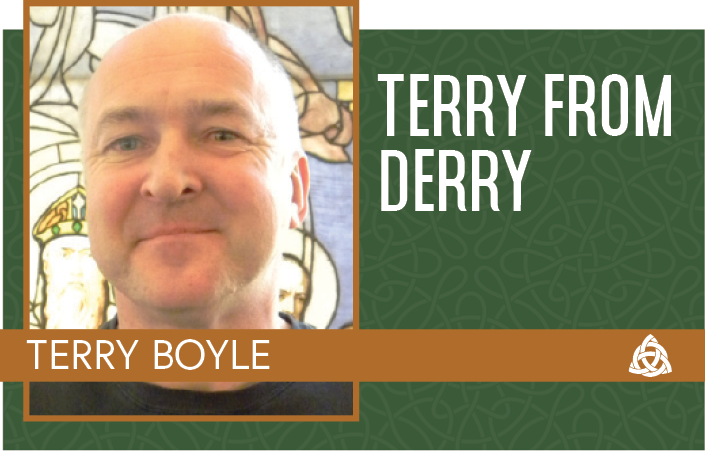
I grew up in a working-class family in Northern Ireland during the worst of the Troubles. I was the first in my family to go to University. My interest in the arts led me to study English Literature.
Three degrees later, I found myself in love with the human imagination. The very fact that we can conceive the impossible convinces me that our curiosity is alive and well. What we see in the clouds can be defined by science as the result of weather patterns, whereas the imagination seeks to find familiar shapes and forms.
Who Are We as a Species?
There are so many theories about who we are as a species. Some of them are a far stretch of the imagination, others reduce us to nothing more than matter.
Somewhere in between these extremes lie a middle ground that embraces science and what appears implausible. It is this territory that I find myself occupying.
I remember in my younger, more idealistic days; one person saying that I had my head in the clouds. I suppose it’s better than what they could’ve said. My views then were a bit more fixed, more traditional, than they are now.
It was a time when my belief system centered around matters of faith. I don’t blame people for wanting the world to be understood in concrete terms.
It’s comforting to believe there’s a God and a plan for human existence. Since we fear death, it’s understandable why we need an afterlife.
The hardest thing to live with is doubt. It’s an uncomfortable place at the best of times. You live in hope that some discovery will prove your existence is meaningful, and not simply a random fluke. But it never happens.
It didn’t take me long to discover that those who protested strongly for certainty were often afraid to admit to doubt. Placards demonstrating fundamental credos do not make truth. If anything, these acts of supposed faith stifle growth and keep our thinking confined to a narrow viewpoint.
The more unstable our world has become, the greater the risk of abandoning our critical thinking for a more stable worldview. Once we begin to exorcise our libraries and schools of books that no longer fit our beliefs, we have lost our minds to ignorance and fear.
Is Science at War with Faith?
Science is not at war with faith, as some would have you believe. Scientific thought is about expanding our knowledge. Science has saved innumerable lives. Without scientific thought, we would be at the mercy of every disease.
But science has also brought us a new juncture in our existence. We are at the edge of something significant that will change everything we understand about the world. A.I. has us reconsidering what we understand as consciousness.
Is consciousness a purely human experience, or can we create consciousness in artificial intelligence? What would it be like to have another kind of life form that can process information much faster than we ever could?
I’m excited about the new scientific discoveries. We’re already beginning to see how these things can benefit us as a species.
But what we’re also seeing is the rise of anti-intellectualism generated by those who allow themselves to be governed by fear. These people would prefer to see us unvaccinated, unprotected from disease, and at the mercy of witch doctors. They would also prefer to keep us in a state of warfare, using science to fine-hone weaponry rather than use it to bring us together.
When those who govern us reject science or use it to reinforce bigotry, then we should be suspicious of their motives. It’s not in their interest to bring peace when they can keep firm control by exploiting people’s fears.
We’re in a state of war now, and the spin perpetrated by those who started it is obscene. Children die, and people are forced into homelessness.
The death toll continues to escalate, and what do we get from those who engage in this folly? Nothing but the inflation of their egos.
Their rhetoric demonises the enemy in the worst possible ways. Think about how the Germans dehumanised the Jews. By doing so, they could treat them in the most inhumane ways.
Israel and the U.S. have learned nothing from the past. Together, they create the basis for wiping out nations. But let’s not speak about the war. What’s more important is the price of petrol and groceries.
https://www.youtube.com/@Derrypoet/videos