


The Celtic nations’ most supported soccer league, the Scottish Premiership, just wrapped up Europe’s most exhilarating title race in the 2025/2026 soccer season. Glasgow Celtic triumphed for the Club’s fifth Consecutive title, its 56th championship overall, but the final-day showdown with Heart of Midlothian (Hearts)—who came up just short of being the first Club outside the Old Firm to win Scotland’s Premier league since Alex Ferguson’s Aberdeen in 1985—attracted global attention. The League also had a wonderful Irish tinge, making for fantastic viewing and excitement for what lays ahead.

The Green and White Bhoys
Celtic Football Club, League and Cup double champions this year, always attract the greatest Irish support of any soccer club in the World. Brother Walfrid, born Andrew Kerins in south County Sligo in 1840, founded the Club in 1887 while serving as Headmaster at Sacred Heart School in 1887 to raise relief funds for the Catholic poor of East Glasgow – many of whom were Famine refugees from Ireland.
This season saw Martin O’Neill of Belfast, former Celtic title-winning and Irish National Team manager, take the reigns of the Club after a miserable start under Wilfred Nancy, hired away from the Columbus Crew of Major League Soccer before the season kicked off. The Celtic team sheet also included Liam Scales throughout the season, born in County Wicklow and a fluent Gaeilgoeir, paired in Central Defense with Americans Cameron Carter-Vickers or Austin Trusty.
Glasgow Celtic is a great club for Irish Americans to follow. Cities throughout the country have Supporters Clubs, with the Columbus edition meeting at the Fadó Pub in Easton to watch the Green and White Hoops.
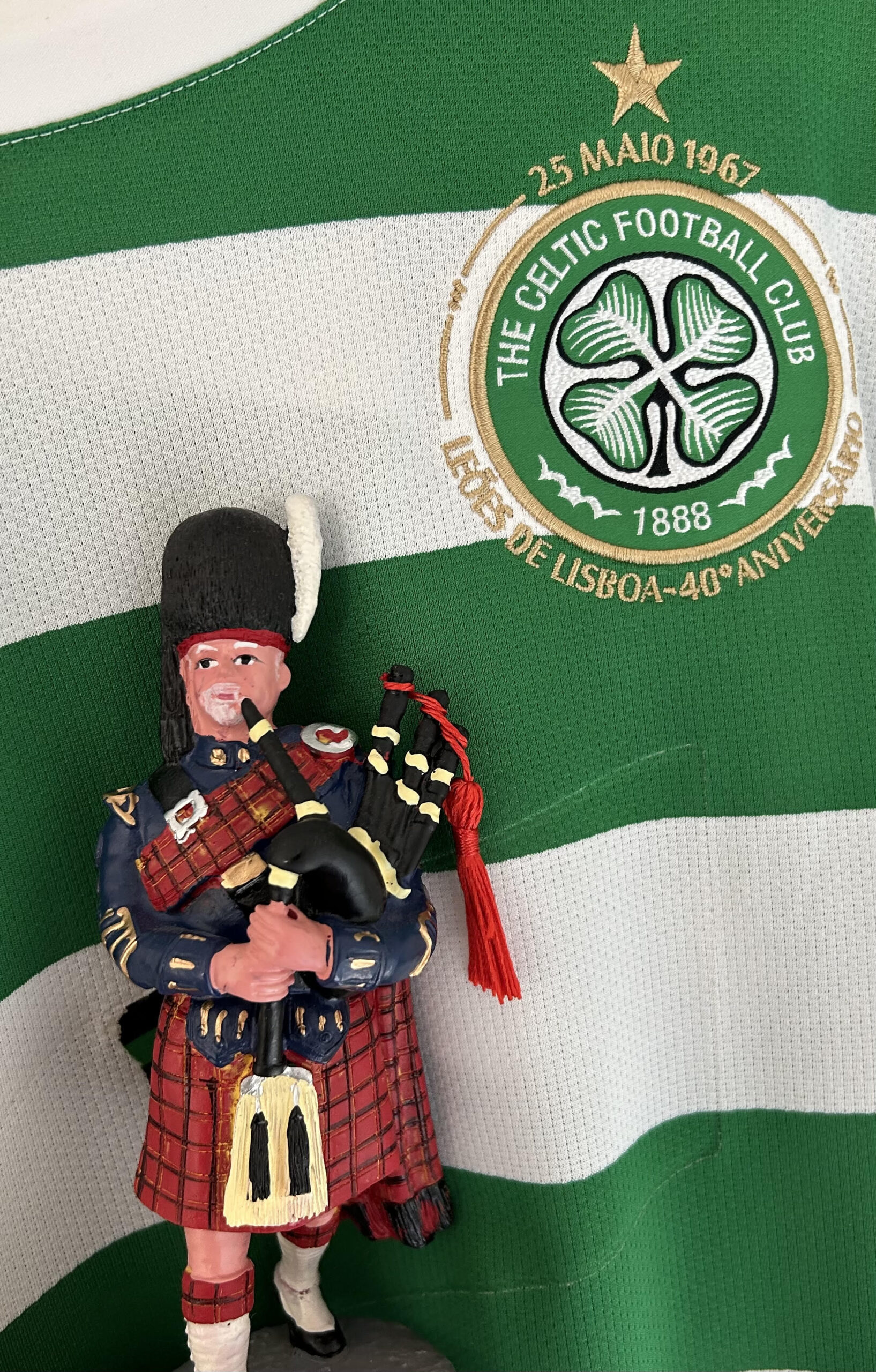
Glasgow Celtic is a great club for Irish Americans to follow. Cities throughout the country have Supporters Clubs, with the Columbus edition meeting at the Fadó Pub in Easton to watch the Green and White Hoops.
Cleveland’s Celtic Supporters attract fans to, where else, PJ McIntyre’s, and in Cincinnati the group alternate between Molly Malone’s in Covington and Binski’s Bar. The Celtic Supporters Club is so popular in Detroit, they host an annual Féile for a long weekend, inviting out-of-towners to experience the Motor City’s Irish and East Glasgow influence.
Irish Influence Throughout Scotland
Irish history abounds at other clubs throughout Scotland, too. And, as the English Premier League saw a record-low seven Irish players take to the field during the 2025/2026 season (including Newcastle’s Alex Murphy, who was limited to a frustratingly low ten minutes across only two substitute appearances after being brought over from Galway United of the League of Ireland), Irish stars thrive on Scottish rosters.
The other half of May 16’s winner-take-all title drama, Hearts, relied on County Cavan’s Oisin McEntee (born in New York City) for much of the year, before a torn hamstring in late April ended his season and dented Hearts title ambitions.
There was no Irish involvement at the other half of the Old Firm, Glasgow Rangers, but Edinburgh’s Old Firm second club, Hibernians, started three Irishmen who all began their careers in the League of Ireland. Defender Warren O’Hora of Dublin’s Bohemians, Meath’s Jamie McGrath (who won two Irish titles with Dundalk), and Sligo-raised forward Owen Elding all propelled Hibernians into a fifth-place finish.
Hibernians were formed in 1875 by Irish community members of Edinburgh who were barred from playing for other clubs due to anti-Irish bias. As the Irish Times discovered this year, McGrath’s romantic partner, Fiona Whelahan, is the descendant of Hibernians’ first Captain, Michael Whelahan of County Roscommon.
[Editor’s Note: UP Roscommon!]
Irish in the Scottish Split
Since 2000, when the Scottish Premier League became constituted of 12 clubs, the League splits for the last five games of the season, with the top six clubs only playing each other and deciding the league title and European competition qualification, while the bottom six battle to avoid Relegation. The split is a great model for the League of Ireland, if it were ever to expand from 10 to 12 clubs (Ireland will see its first Third Tier soccer competition begin this August, an encouraging increase for the professionalism of the club game in the Republic).
The bottom split of this year saw the country’s last Old Firm rivalry of clubs from Dundee. Dundee United was first constituted as Dundee Hibernian in 1909 and is currently managed by County Waterford man Jim Goodwin and captained by Will Ferry, an English Irishman with a growing Cap count for the Republic’s National team. Dundee United finished top of the second-tier standings, three points ahead of their derby rivals Dundee F.C.
Aberdeen, the last club not from Glasgow’s Old Firm to win the Scottish league title, started Gavin Molloy, transferred from North Dublin’s Shelbourne in their Irish title-winning season, for the final 11 of 12 games after he returned from injury.
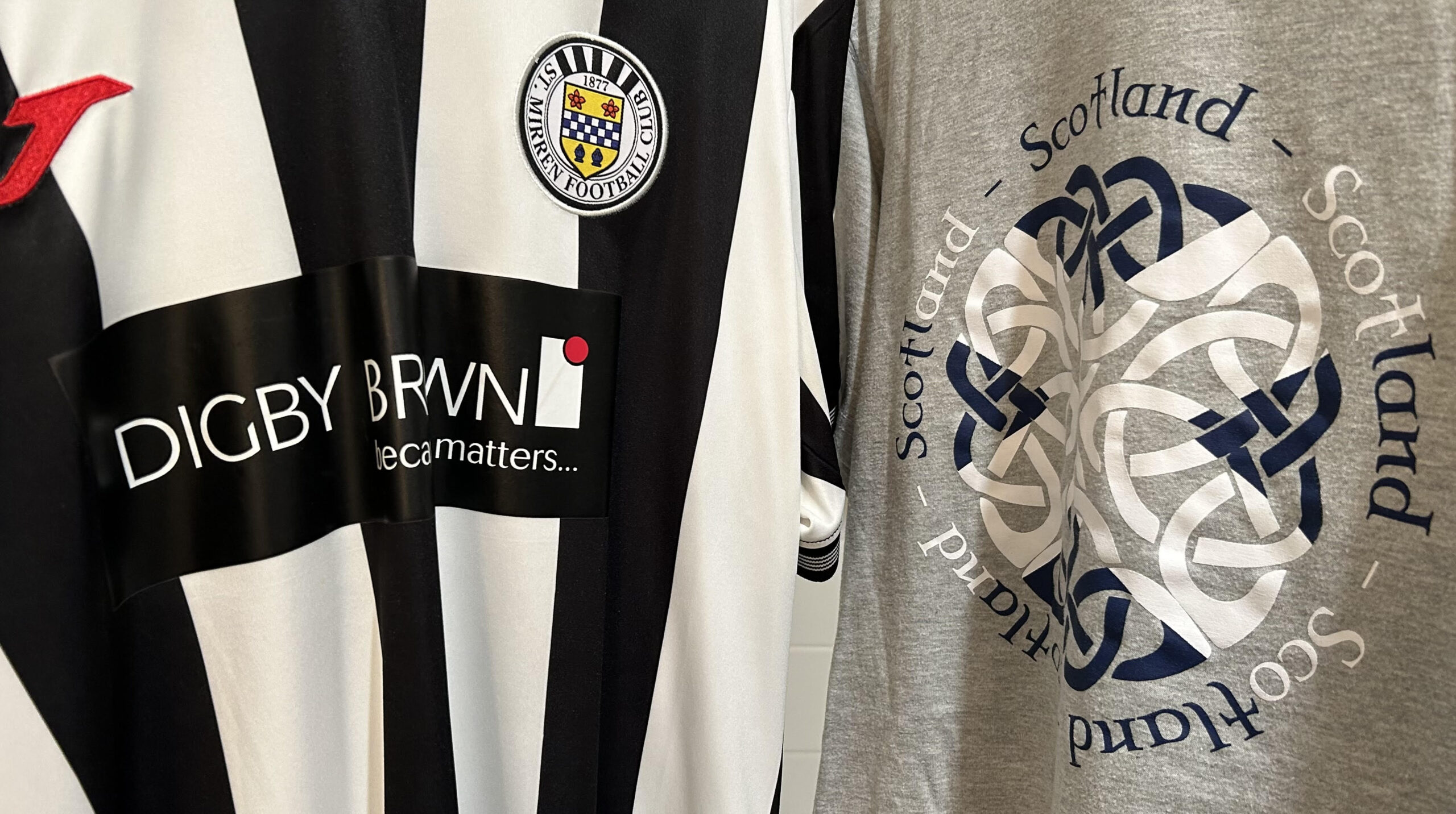
St. Mirren, a club from Paisley and named for Saint Mirin (Meadhrán), the patron Saint of Paisley and Prior of Bangor Abbey in County Down in the late 500s A.D., relied on Irish midfield dynamos Killian Phillips (born in San Diego and a product of Drogheda United in the League of Ireland) and Jacob Devaney (born in Barnsley, England, and a loanee from the academy of Manchester United) to stave off Relegation against Partick Thistle in Scotland’s final day of soccer competition, May 25, ahead of the nation’s return to the World Cup for the first time since 1998.
Scotland produced a fantastic Club soccer season in conjunction with their National Team’s qualification for the North American edition of the World Cup. The Nation’s first two World Cup games are in Boston, with their Group Finale against Brazil in Miami on June 24. Definitely check out their World Cup roster announcement video starring Ewan McGregor, and find a rooting interest from all the Irish history and future of the Scottish Premiership next season.