




The Rollicking Redheads of Ohio
I first met members of the Irish Setter Club of Ohio at the Cleveland Irish Cultural Festival, where the brilliant, red-coated dogs naturally drew a steady stream of admirers. The festival provided the introduction, but when I later spoke with Victoria Lindeman and Bobbi Fisher, I discovered that the real story stretched far beyond a single weekend.
For both women, Irish Setters have become a source of friendship, purpose, service and community. Fisher, the club’s vice president, has been involved with the organization since 1978.
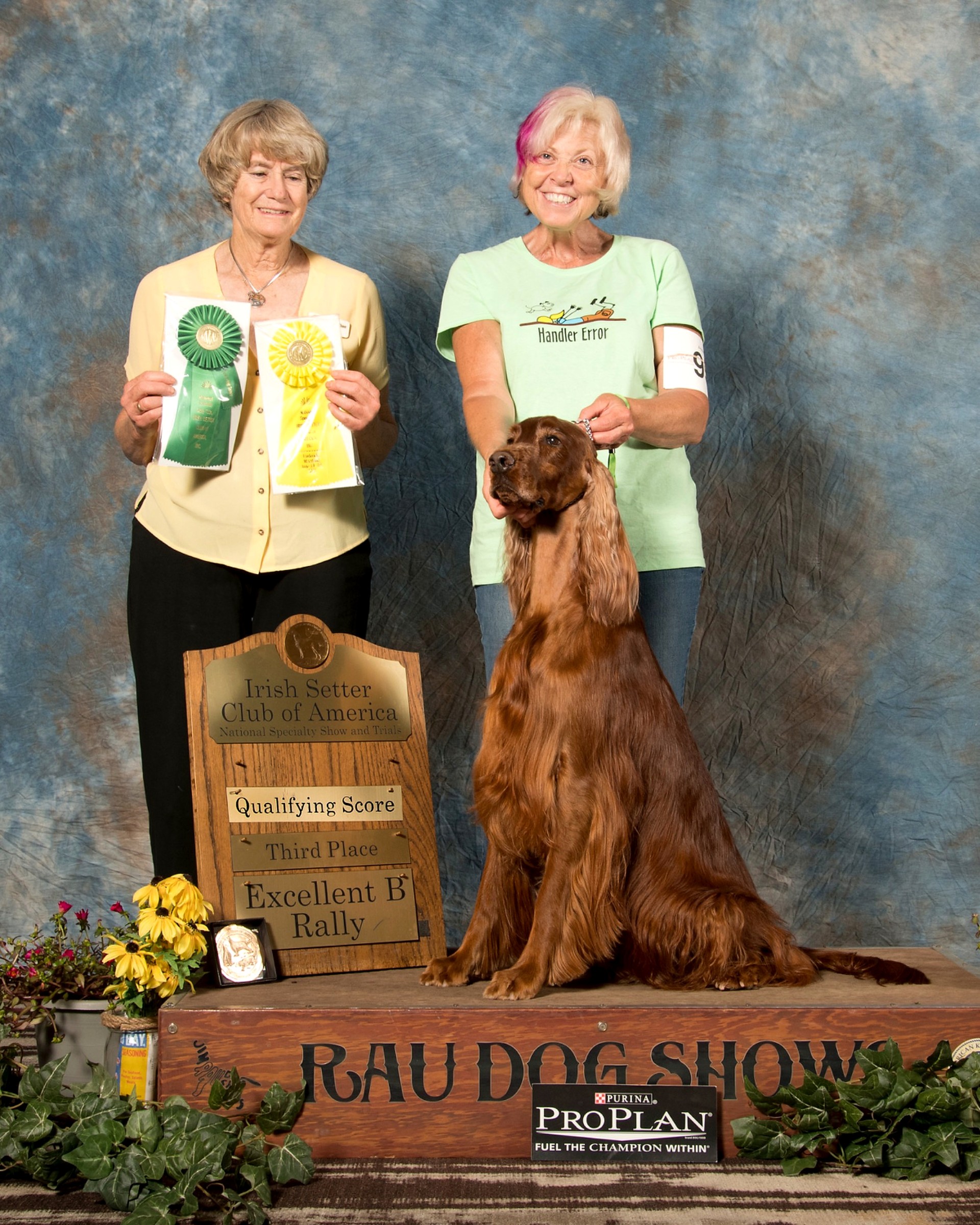
Her introduction to the breed came during an especially difficult time in her life. She was a nursing student undergoing treatment for thyroid cancer that had spread to the lymph nodes in her neck. A friend, recognizing that Fisher was depressed, persuaded her to attend a dog show.
There, Fisher encountered an Irish Setter. “I saw the Irish Setter and the big red flowing hair,” she remembered. “I was just taken aback by their personalities and how friendly they are.”
That encounter began a connection with the breed that has continued for nearly five decades. Fisher became a breeder, trainer, competitor and mentor, helping generations of owners understand the intelligence, temperament and potential of Irish Setters.
The Personality of a Dog
Lindeman’s journey began in 2005, when she brought home her first Irish Setter. She had been warned that the breed could be “crazy,” but she did not yet understand just how thoroughly the dog would reshape her life.
She later learned that her first setter had come from a puppy mill. Rather than discouraging her, the experience led Lindeman to educate herself about responsible breeding, health testing, obedience and canine activities.
She began taking her dog to classes, therapy visits and shows. “I like to say that dog actually got me all of my friends and got me all of my knowledge,” she said.
Through the dog world, Lindeman met people who welcomed her quickly and generously. One friendship began when she casually mentioned that her dream was to sit in the middle of a litter of puppies while they climbed on her and covered her with kisses.
The breeders told her to come over. She did, and the experience helped form friendships that continue to this day. One of those breeders became one of Lindeman’s closest friends and now serves as president of the Irish Setter Club of Ohio.
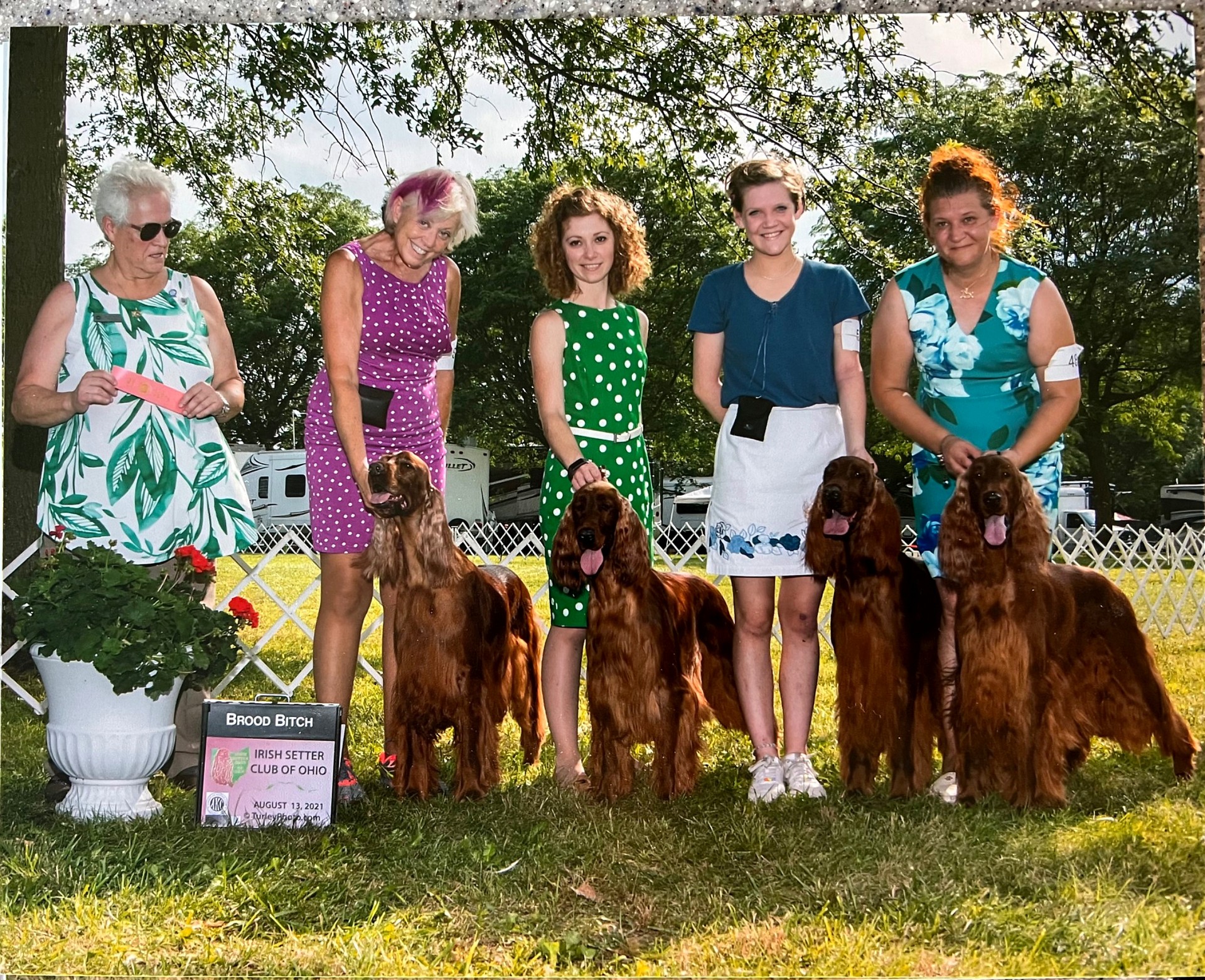
That openness is central to the club. Lindeman described it as a community of people who come together not simply to compete, but to celebrate the breed and support one another. “The family that I’ve gained by having an Irish Setter is unbelievable,” she said.
The club has 40 to 50 members, though Lindeman noted that many memberships represent several people from the same family. Some members live outside Ohio, and not everyone participates in every activity, making the active core of the organization especially close-knit.
In Lindeman’s family, the club is quite literally a family affair. Her father serves as treasurer, her mother helps organize the raffle, and Lindeman serves on the board and plans social activities. Fisher serves as vice president.
The organization is currently experiencing a period of renewal. Some longtime members have stepped back after many years of service, while a newer board is working to preserve the club’s history and welcome a broader range of Irish Setter owners.
More Than a Dog & Pony Show
The club remains deeply connected to dog shows, obedience, agility and other competitive events, but its leaders also want to create more opportunities for people whose Irish Setters are primarily beloved family pets. Lindeman hopes future activities will include hikes, seminars and community gatherings that allow owners to enjoy the breed together without needing to enter a show ring.
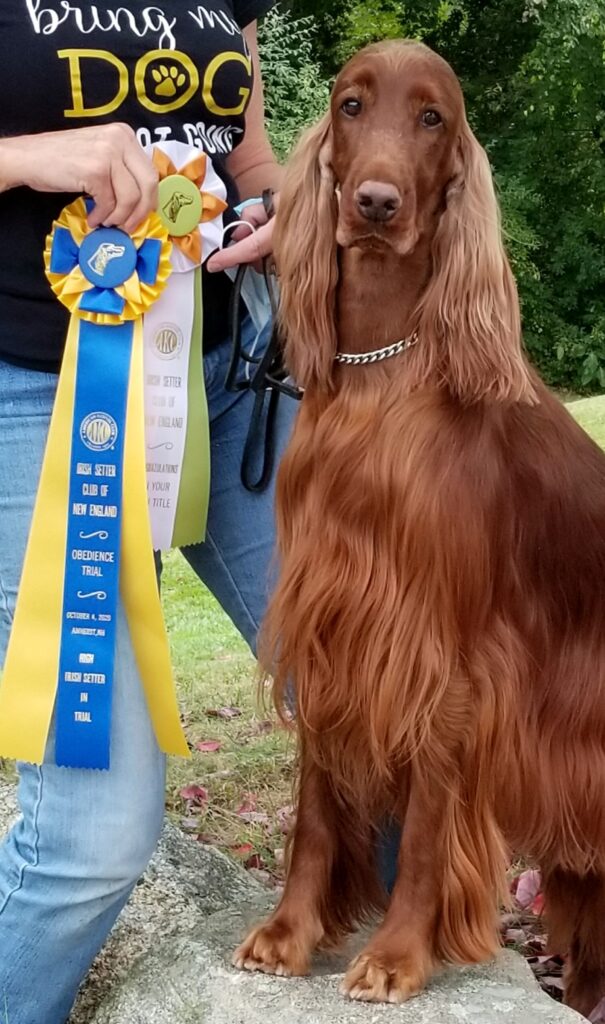
At the center of everything, of course, are the dogs themselves. Irish Setters were developed as sporting dogs that helped hunters locate game birds such as quail and pheasant.
Their natural abilities include pointing toward birds and helping flush them from cover. That history explains much about the breed’s energy, athleticism and desire to have something meaningful to do.
“They are ridiculously smart.” Lindeman said. “You have to spend time using their brain.”
Breed Standard
She once heard that it may take time to “chisel” something into an Irish Setter’s mind, but once the dog learns it, the lesson stays there. Their official breed standard describes them as having a “rollicking” personality, a word both women agreed captures them perfectly.
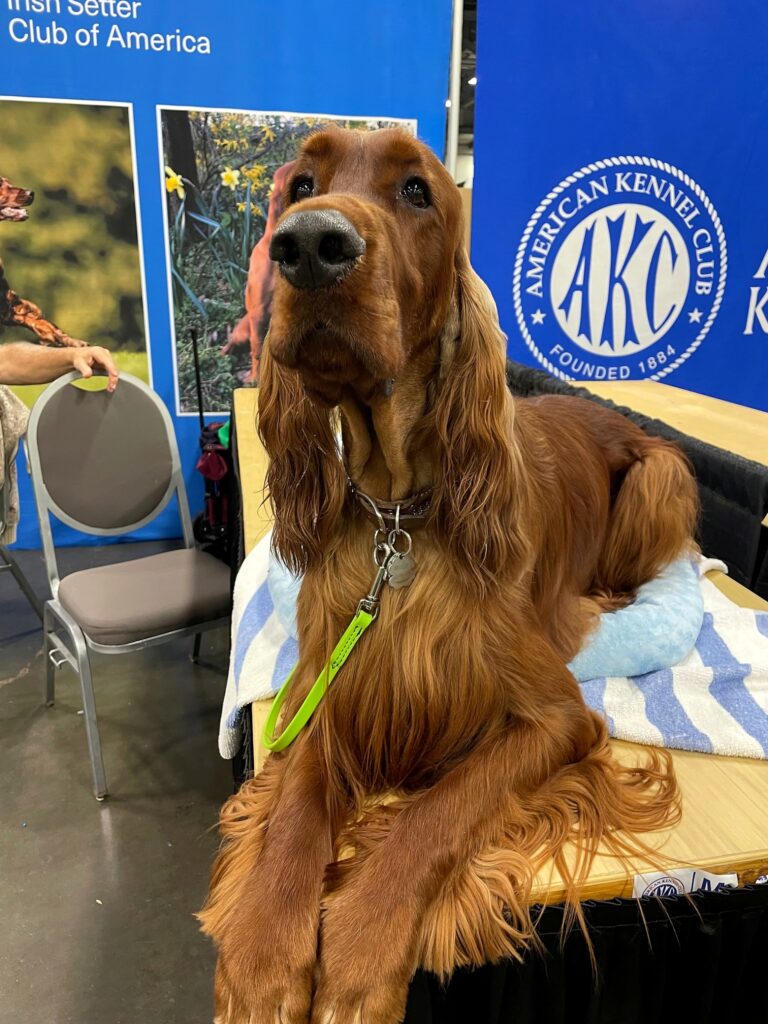
Irish Setters are enthusiastic, affectionate, playful and frequently silly. “They have a lot of human-like qualities,” Lindeman said. “You honestly could just sit on the couch and watch them.”
They twist themselves into unusual positions, create their own entertainment and seem to possess an instinct for making people laugh. Yet the same dog that behaves like a comedian at home can become focused and attentive when given a job.
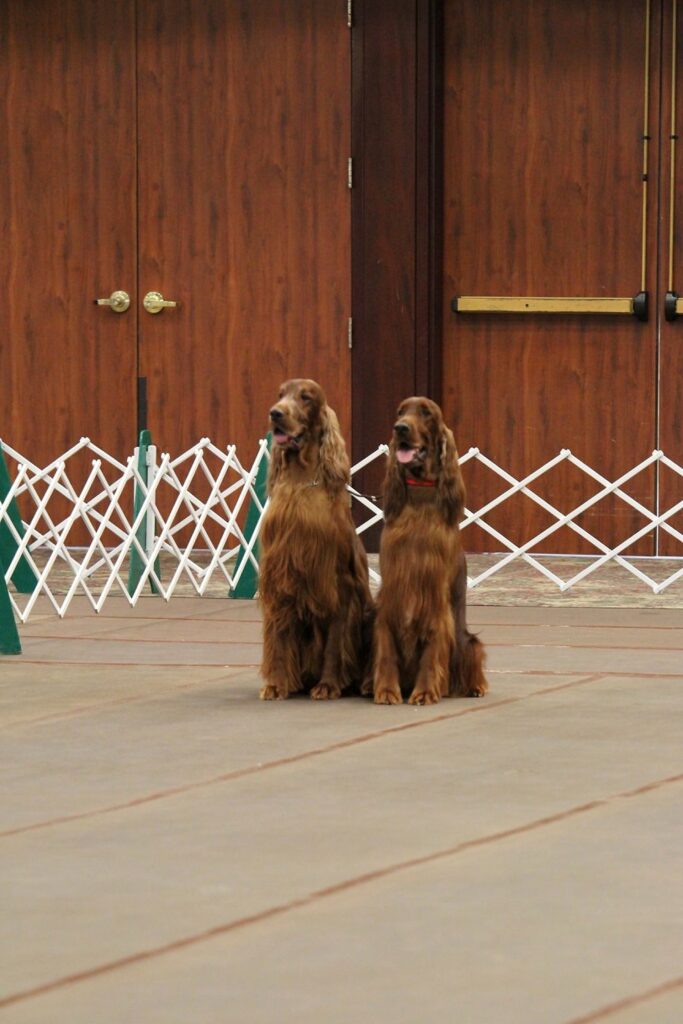
Irish Setters participate in conformation, obedience, rally, agility, hunting tests, therapy work and even dock diving. Fisher has bred dogs that earned advanced hunting titles, while Lindeman has seen firsthand how naturally the breed can adapt to therapy work.
Irish Setters may visit nursing homes, hospice facilities, schools, libraries and hospitals, providing companionship and comfort. Lindeman recalled feeling nervous before her first therapy-dog appointment. Once they entered the building, however, her dog appeared to understand immediately that the situation called for a different kind of behavior.
“It was like a switch went on in their brain,” she said. The same exuberant dog who might race around at home became calm and attentive around the people they were visiting.
“They know when to be goofy and when to do their job,” Lindeman explained. Fisher’s role in the club extends beyond breeding and competition. She has also helped introduce new families to the world of Irish Setters and encouraged young people to become involved.
Lindeman shared the story of one family that originally contacted a breeder because they wanted a single Irish Setter as a household companion. The breeder did not have puppies available, so she referred the family to Fisher.
Fisher not only helped them find a dog but also introduced them to showing and other activities. Their daughter, Ava, became involved in junior showmanship, and her younger brother soon became interested as well.
The family that had planned to own one pet now has several Irish Setters and a motor home for traveling to dog shows. “They jumped all in,” Lindeman said with a laugh.
The story illustrates the powerful role that mentors can play. Fisher did not simply provide a puppy and send the family on its way. She helped them understand training, showing, responsible ownership and the wider community surrounding the breed.
Irish Setters are loving and loyal, but their beauty should not distract prospective owners from their need for exercise, mental stimulation and companionship. They are not the correct choice for every household, just as no single breed is right for everyone.
“Know if it will fit your lifestyle.” Lindeman advised. “Go talk to people.”
Fisher also hopes to challenge old stereotypes about Irish Setters. During the 1970s, the breed sometimes had a reputation for being flighty or unintelligent. She believes responsible breeding and training have helped demonstrate what devoted owners already knew: Irish Setters are capable, adaptable and highly intelligent dogs.
The flowing coat may be what first attracts attention, but it is the Irish Setter’s joyful nature—and the generous community surrounding the breed—that creates a bond lasting for decades.