


Irish America 250
Teddy Roosvelt was the first U.S. President to visit Ireland; his travels left him with a lasting respect for the Irish. In remarks to the NYC Friendly Sons of St. Patrick gathering on March 17, 1909, Roosvelt shared:
“Long before the outbreak of the Revolution there had begun on the soil of the colonies which afterward became the United States that mixture of races which has been, and still is, one of the most important features in our history as a people. At the time, early in the eighteenth century, when the immigrants from Ireland first began to come in numbers to this country, the race elements in our population were still imperfectly fused, and for some time the new Irish strain was clearly distinguishable from the others. There was a peculiarity about these immigrants who came from Ireland to the colonies during the eighteenth century which has never been paralleled in the case of any other immigrants whatsoever. In all other cases, since the very first settlements, the pushing westward of the frontiers has been due primarily to the men of native birth. But the immigrants from Ireland in the seventeenth century pushed boldly through the settled districts and planted themselves as the advance guard of the conquering civilization on the borders of the wilderness. By the time the Revolution broke out these men had begun to mix with their fellows of other stocks, and they furnished their full share of leadership in the great struggle which made us a Nation. Among their number was Commodore John Barry, one of the three or four officers to whom our infant navy owed most. On land they furnished generals like Montgomery, who fell so gloriously at Quebec, and Sullivan, the conqueror of the Iroquois, who came of a New Hampshire family, which furnished governors to three New England States, while the Continental troops of the hardest fighter among Washington’s generals, Mad Anthony Wayne, were recruited so largely from this stock that Light Horse Harry Lee always referred to them as “The Line of Ireland.”
While establishment historians sanitized the Irish contributions out of American popular history, T.R. tried to set the record straight.

Dervish & PBS
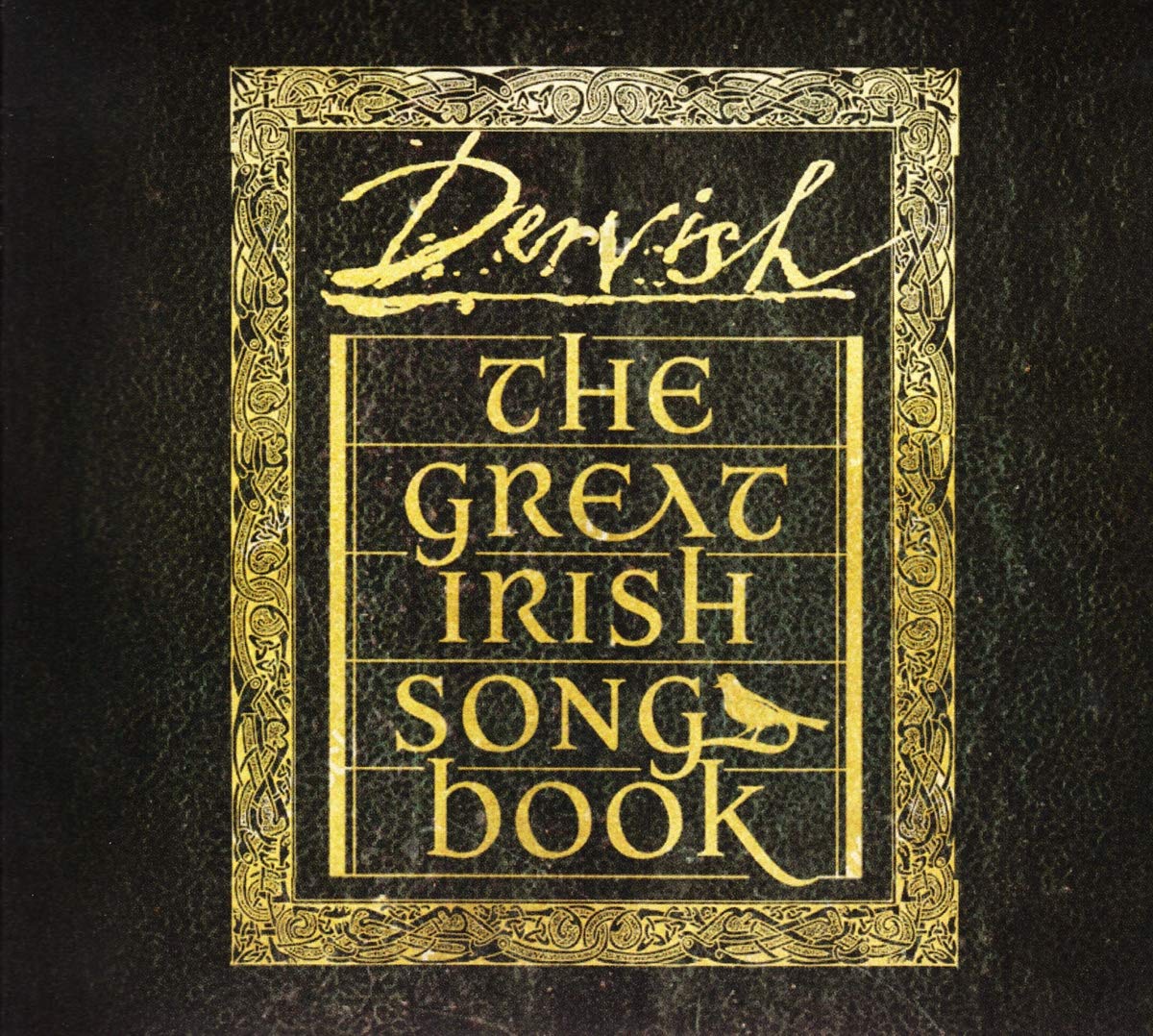
Dervish is one of the finest traditional musical groups performing today. The internationally celebrated ensemble recently played on the banks of the mighty Cuyahoga River as part of their 30th annual tour of the United States. Dervish is celebrating the launch of Vol. II of the Great Irish Songbook.
This work has been the core of its partnership with American PBS (don’t forget to donate to your local PBS station after the dTrump admin’s defunding) to promote one of Ireland’s great exports (no tariffs on song). Dervish is joined by other Irish music luminaries such as: David Gray, Imelda May, Moya Brennan (of Clannad), Indigo Girls, Kate Rusby, Brian Kennedy and more. Together, these artists honored the enduring legacy and vibrant tradition of Irish music.
Irish American musician Mick Moloney shared on the Jacket notes of Dervish’s CD: “The most important historical and cultural concerns in Ireland have been expressed through the musical arts over the years in an unbroken tradition that continued even through the centuries of colonization by the British Empire.” Go to PBS’s Passport to check out this great collaboration of Irish music and American Public Television.
Irish Poets
“On Raglan Road of an autumn day I saw her first and knew,
That her dark hair would weave a snare, That I might one day rue.
I saw the danger and I passed Along the enchanted way,
And I said let grief be a fallen leaf, At the dawning of the day.”
Poet Patrick Kavanagh penned these words in 1946, and later musician Luke Kelly of the Dubliners paired it with a traditional Irish melody. It has become one of the more favorite modern Irish songs, even with the melancholy of the poets unanswered love of a young med student from County Kerry Kavanagh would see walking down Raglan Road in Dublin 4 on her way to school. Despite seeing the snare, the likely outcome, his humanity overrules his rationality and still greets his emotions as one welcomes the dawning of a new day.
Connolly Up North

Irish President Catherine Connolly made true on one of her campaign promises to make Northern Ireland one of her first official visits. At Belfast University she shared: Northern Ireland now represents a beacon of light to the world in how decades-long conflict can be resolved and reconciliation fostered. In a world that is ever-more consumed with war and militarism, Northern Ireland’s lesson is increasingly important, and it is a lesson that we should all tell the world: that peace is possible. In that context I am mindful of the words of our Constitution: ‘It is the firm will of the Irish nation, in harmony and friendship, to unite all the people who share the territory of the island of Ireland, in all the diversity of their identities and traditions, recognizing that a united Ireland shall be brought about only be peaceful means with the consent of a majority of the people, democratically expressed, in both jurisdictions in the island.’ As President, I look forward to playing my part in deepening relationships on this island. We won’t always agree.
Limerick
Limerick is more than a county and city in Ireland; it is also a fun and sometimes silly word creation. “A bard who resided in Killarney, Wrote ballads both joyful and barmy. With a lute and a lyre, He’d set towns afire, But only with words, not an army.”
The Japanese Haiku poetic structure gets a lot of lauding these days, I say give the good ol’ limerick its due. Feel free to send in your creations. Remember to keep to five lines and use a AABBA rhyming scheme.
U.S. Bishops Speak Out
“As pastors, we the bishops of the United States are bound to our people by ties of communion and compassion in Our Lord Jesus Christ. We are disturbed when we see among our people a climate of fear and anxiety around questions of profiling and immigration enforcement. We are saddened by the state of contemporary debate and the vilification of immigrants. We are concerned about the conditions in detention centers and the lack of access to pastoral care. Catholic social teaching exhorts nations to recognize the fundamental dignity of all persons, including immigrants. Human dignity and national security are not in conflict. Both are possible if people of good will work together. We oppose the indiscriminate mass deportation of people. We pray for an end to dehumanizing rhetoric and violence, whether directed at immigrants or at law enforcement. We pray that the Lord may guide the leaders of our nation, and we are grateful for past and present opportunities to dialogue with public and elected officials. In this dialogue, we will continue to advocate for meaningful immigration reform.”