


Gilbert Stuart
In the year 1789, in a debtor’s prison in Dublin, Ireland, Gilbert Stuart, a renowned painter, was confined to a cell. He had tried to flee from his Irish creditors and patrons over debts accumulated from a less than moral lifestyle.
Three thousand miles away, George Washington was on his way to becoming America’s first president. Washington was unaware that he was about to become an accomplice in a scheme that Stuart was planning to win his freedom and make his fortune.
Stuart had fled the Colonies to Britain and then to Ireland at the onset of the American Revolution. He was a royalist and was not a supporter of Washington’s cause. Somehow, these two men would make history together.
Gilbert Stuart was born in 1755, in the Rhode Island Colony. He was the third child of Gilbert and Elizabeth Stuart. Gilbert Sr., was a Scottish immigrant and owned the first snuff mill in America.
Early in life the young Gilbert’s artistic skills were showing great promise. In 1770, he was taken under the wing of Cosmo Alexander, a Scottish artist. Alexander was a visitor to the colonies, who was making a living as a portrait artist. When Stuart was fourteen, under his mentor’s guidance, he completed his first commissioned work, Dr. Hunter’s Spaniels. It still hangs in the Hunter House Mansion in Newport.
In 1775, he left for England, and studied under portrait artist Benjamin West. It was under West that Stuart’s own style would develop, and in just two years he had his first exihibition at the Royal Academy.
His portraits were earning him fame and financial success. He had an equal reputation as a drunken carouser and was known for taking money from many of those that commissioned and sat for him for a portrait. He had married and had a growing family to support. Those obligations and a lavish lifestyle landed him in Marshalsea Prison.
On his release, Stuart ended his almost two decade stay abroad. He left a number of unfinished portraits behind and fled to America. He returned focused on a single goal, painting a portrait of George Washington.
He settled briefly in New York, looking for portrait commissions from people that could help him get the attention of Washington. His break came in 1794, when he painted a portrait of statesman John Jay. Jay had played a key role in negotiating the Treaty of Paris in 1783, bringing an end to the Revolutionary War. He also served as the first Chief Justice of the United States. Stuart recieved a letter of introduction from Jay to Washington for his work.
Stuart left New York and opened a studio in Germantown in Philidelphia. Washington posed for him later that same year.
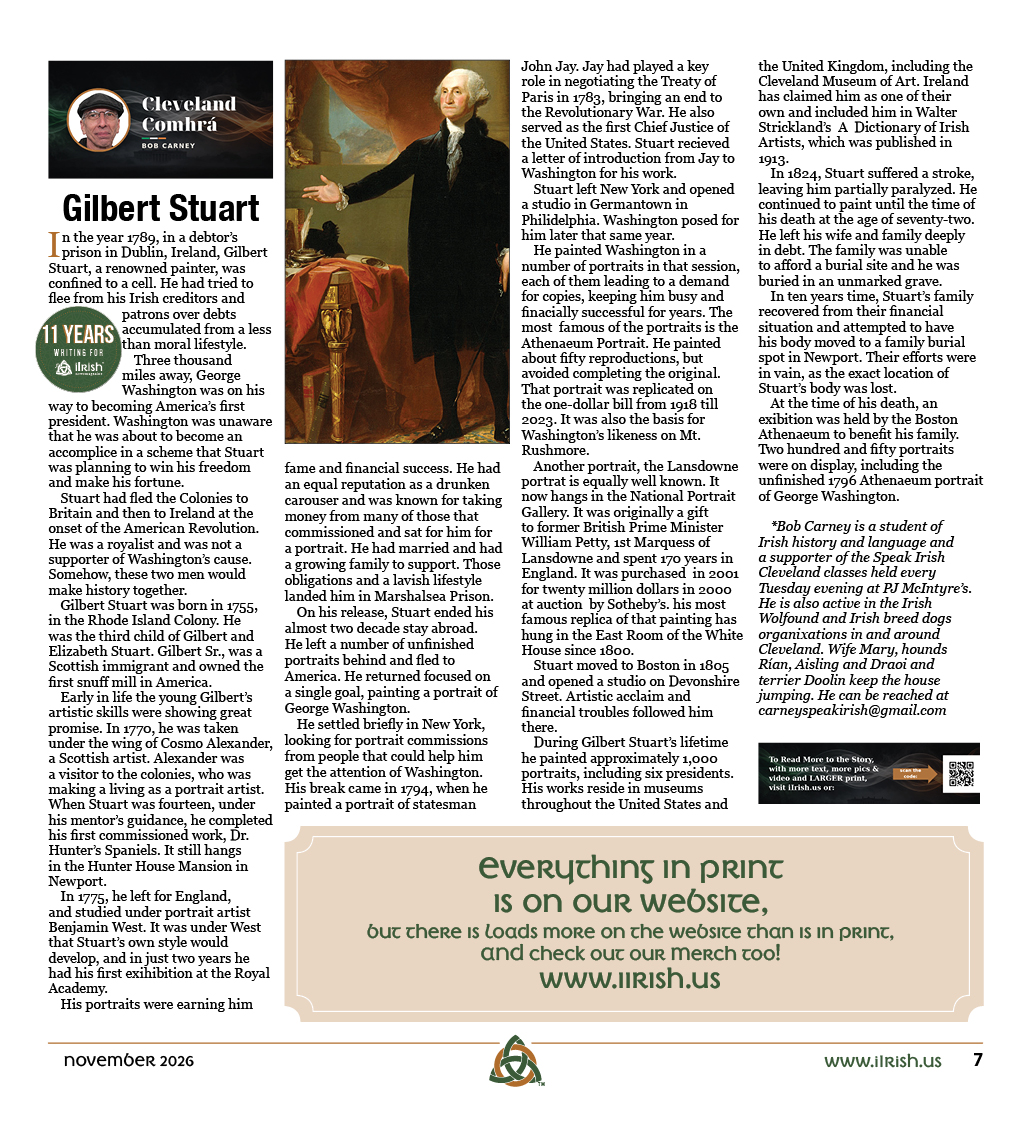
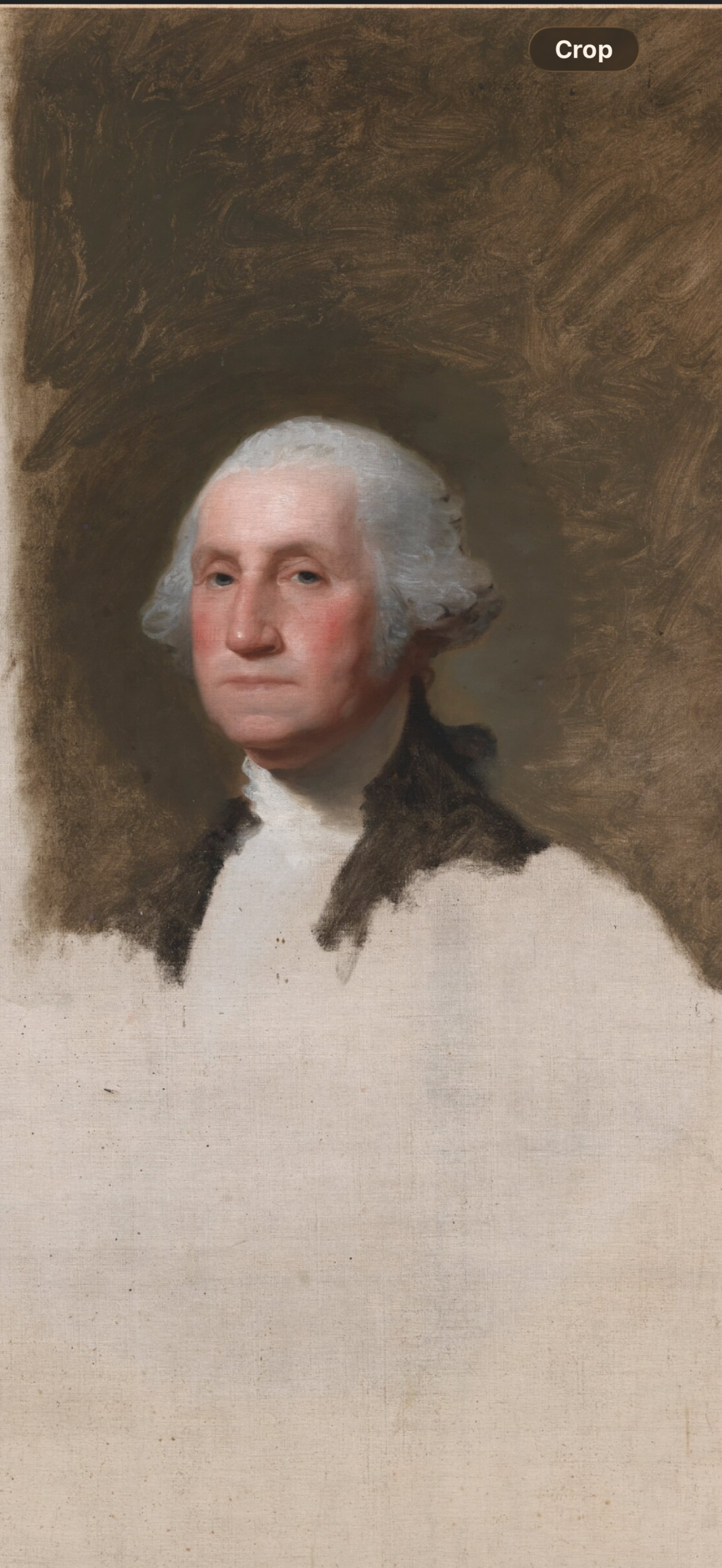
He painted Washington in a number of portraits in that session, each of them leading to a demand for copies, keeping him busy and finacially successful for years. The most famous of the portraits is the Athenaeum Portrait. He painted about fifty reproductions, but avoided completing the original. That portrait was replicated on the one-dollar bill from 1918 till 2023. It was also the basis for Washington’s likeness on Mt. Rushmore.
He painted Washington in a number of portraits in that session, each of them leading to a demand for copies, keeping him busy and financially successful for years. The most famous of the portraits is the Athenaeum Portrait. He painted about fifty reproductions, but avoided completing the original. That portrait was replicated on the one-dollar bill from 1918 till 2023. It was also the basis for Washington’s likeness on Mt. Rushmore.
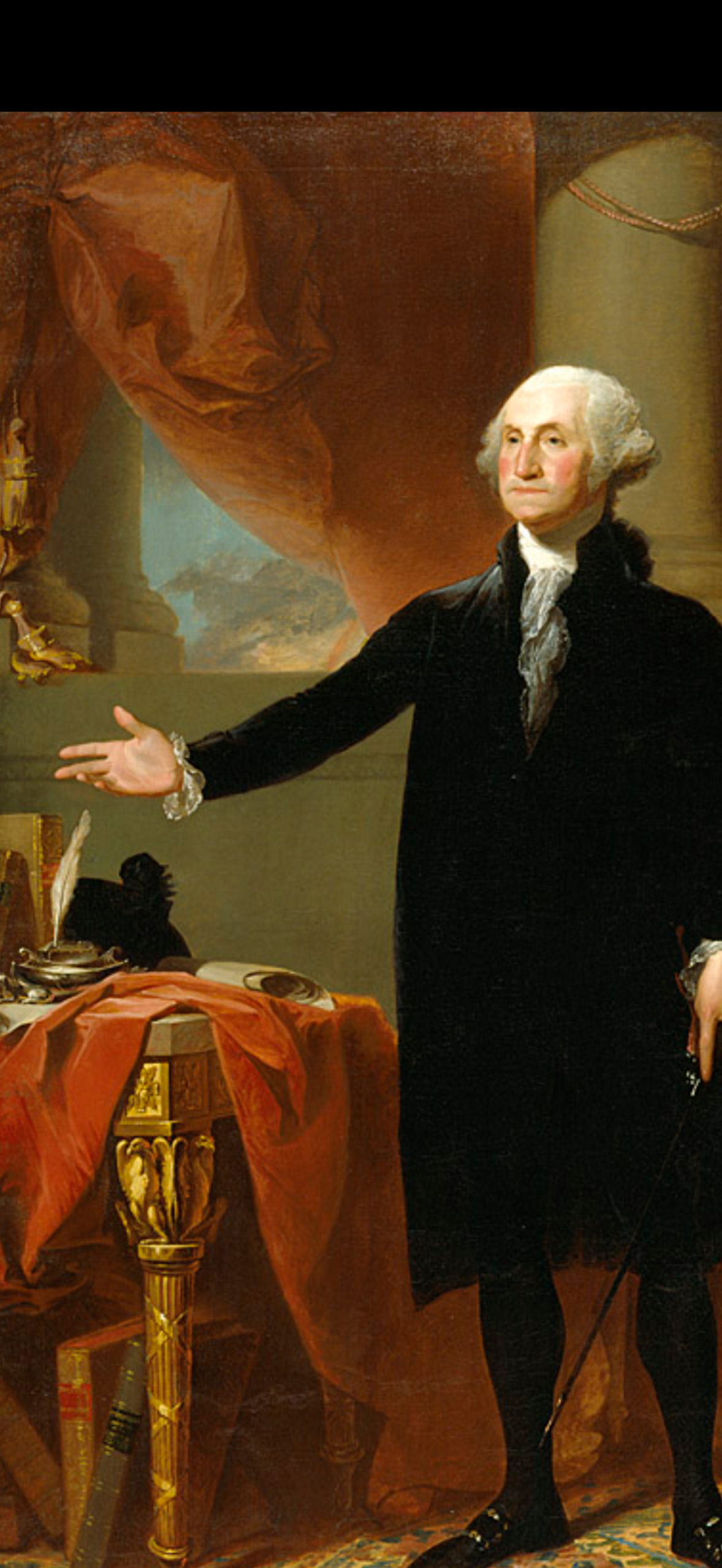
Another portrait, the Lansdowne portrat is equally well known. It now hangs in the National Portrait Gallery. It was originally a gift to former British Prime Minister William Petty, 1st Marquess of Lansdowne and spent 170 years in England. It was purchased in 2001 for twenty million dollars in 2000 at auction by Sotheby’s. his most famous replica of that painting has hung in the East Room of the White House since 1800.
Stuart moved to Boston in 1805 and opened a studio on Devonshire Street. Artistic acclaim and financial troubles followed him there.
During Gilbert Stuart’s lifetime he painted approximately 1,000 portraits, including six presidents. His works reside in museums throughout the United States and the United Kingdom, including the Cleveland Museum of Art. Ireland has claimed him as one of their own and included him in Walter Strickland’s A Dictionary of Irish Artists, which was published in 1913.
In 1824, Stuart suffered a stroke, leaving him partially paralyzed. He continued to paint until the time of his death at the age of seventy-two. He left his wife and family deeply in debt. The family was unable to afford a burial site and he was buried in an unmarked grave.
In ten years time, Stuart’s family recovered from their financial situation and attempted to have his body moved to a family burial spot in Newport. Their efforts were in vain, as the exact location of Stuart’s body was lost.
At the time of his death, an exibition was held by the Boston Athenaeum to benefit his family. Two hundred and fifty portraits were on display, including the unfinished 1796 Athenaeum portrait of George Washington.