



By Emily Barno Earnest
Photos by Tom Ginley
All rights reserved
First Throw In
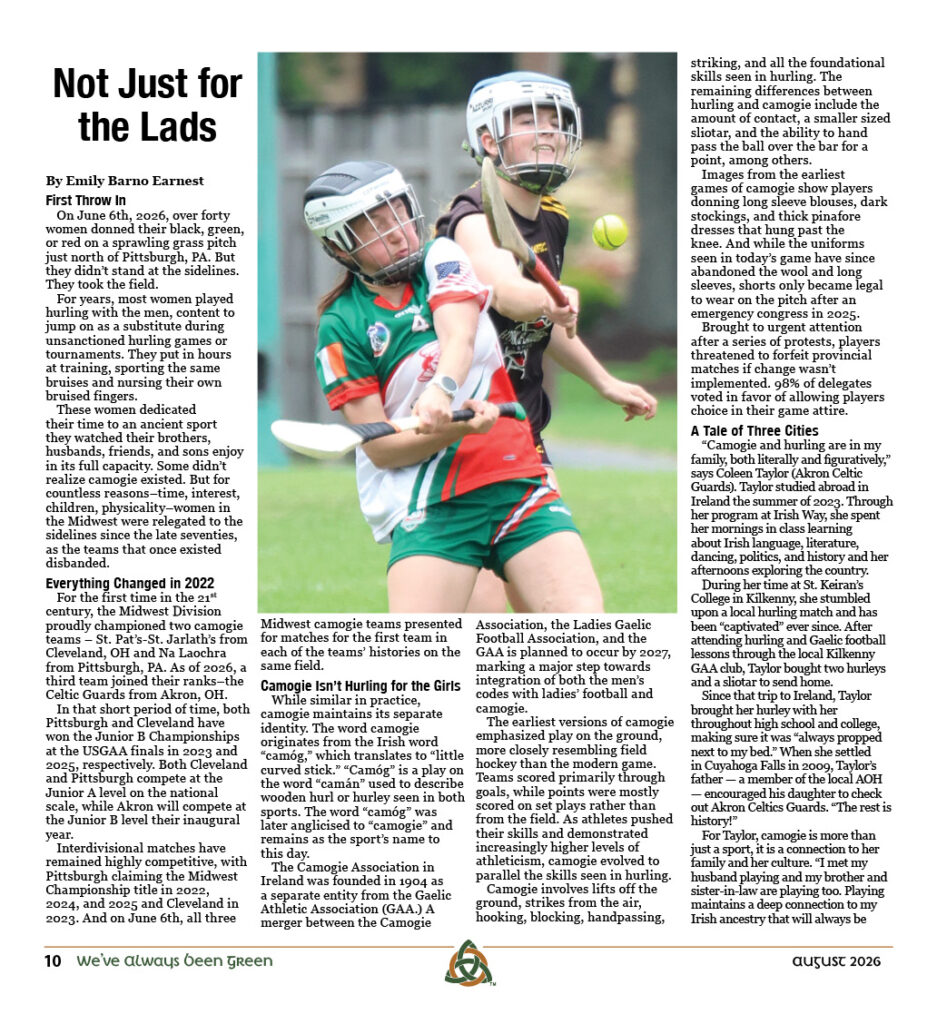
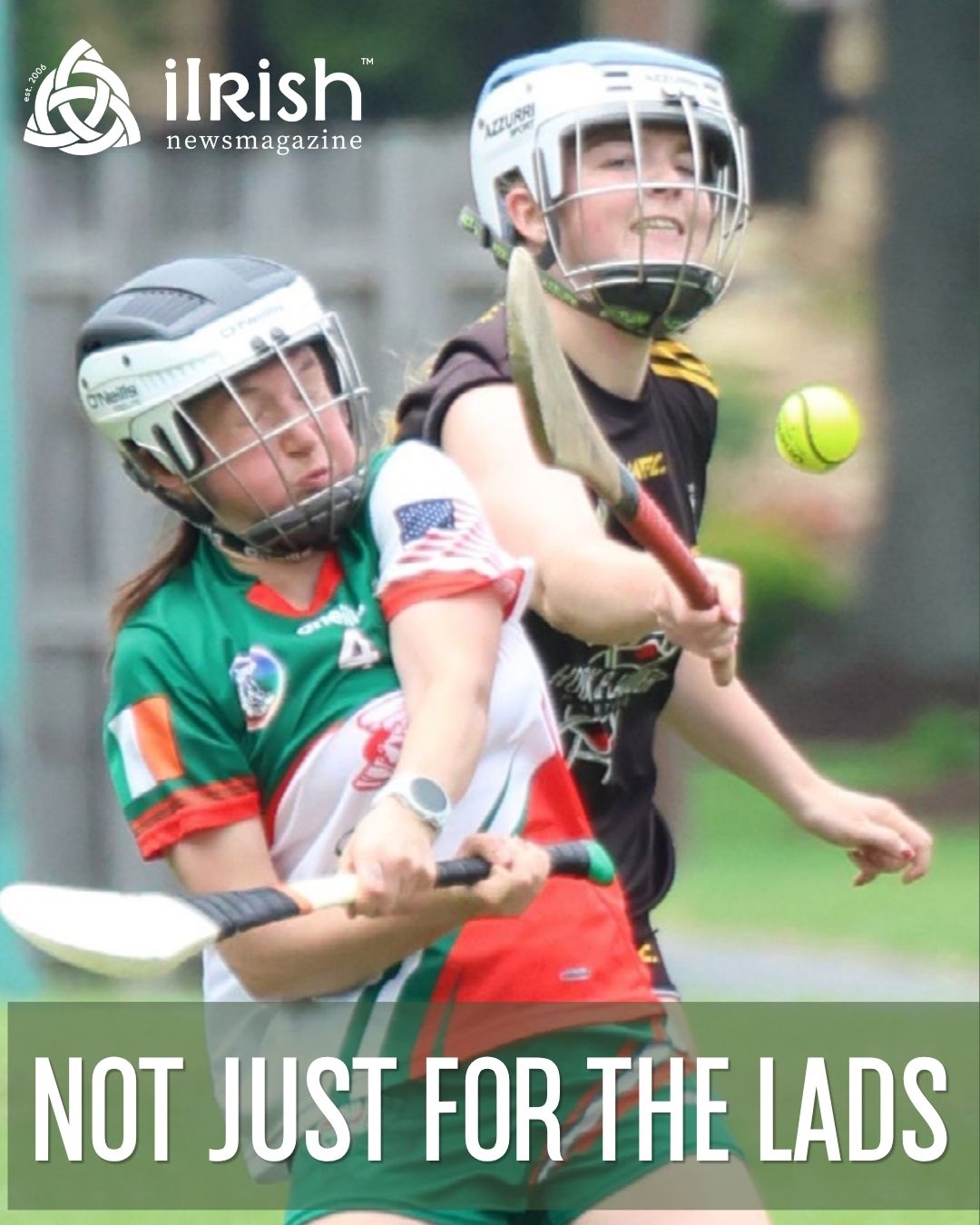
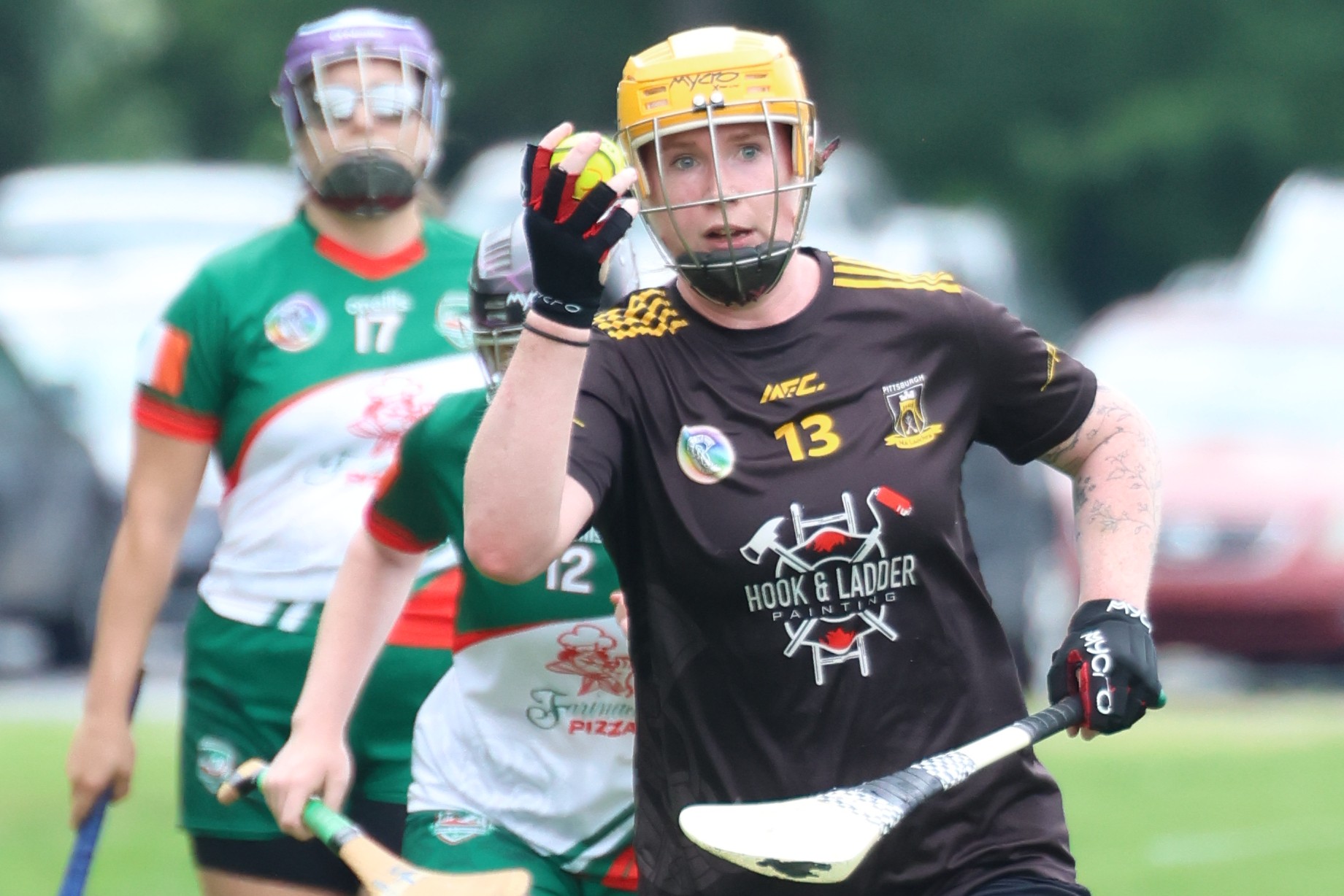
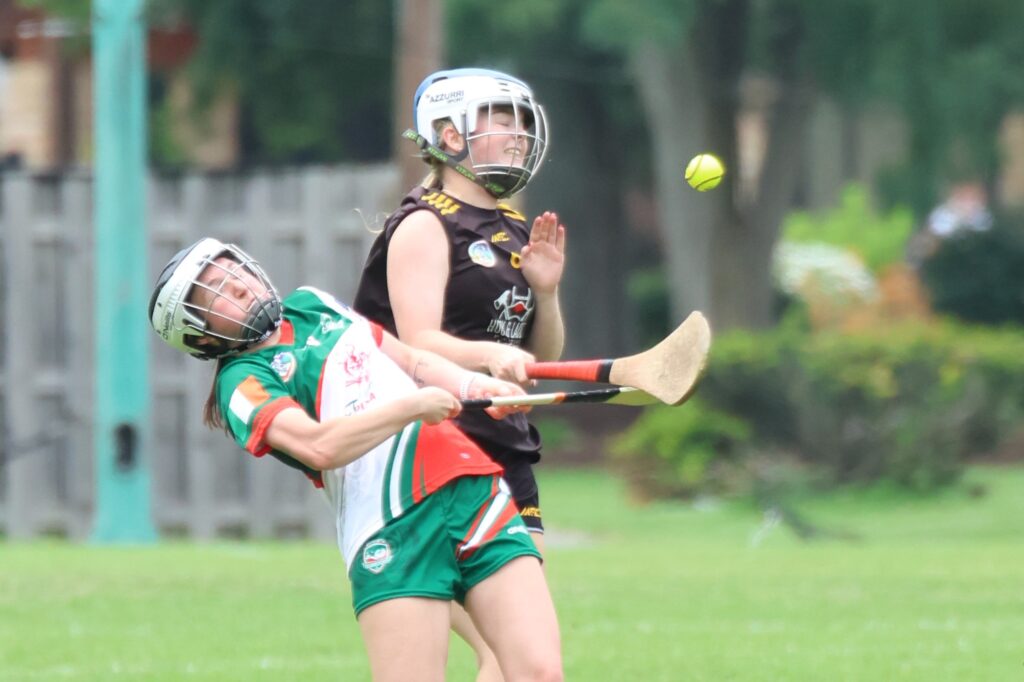
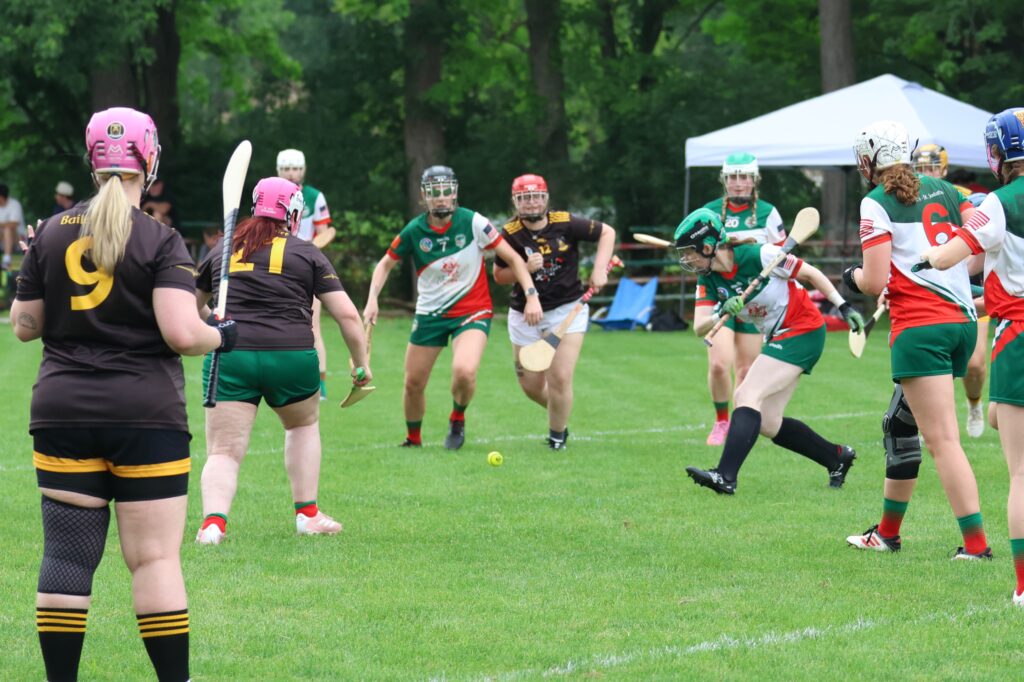
On June 6th, 2026, over forty women donned their black, green, or red on a sprawling grass pitch just north of Pittsburgh, PA. But they didn’t stand at the sidelines. They took the field.
For years, most women played hurling with the men, content to jump on as a substitute during unsanctioned hurling games or tournaments. They put in hours at training, sporting the same bruises and nursing their own bruised fingers.
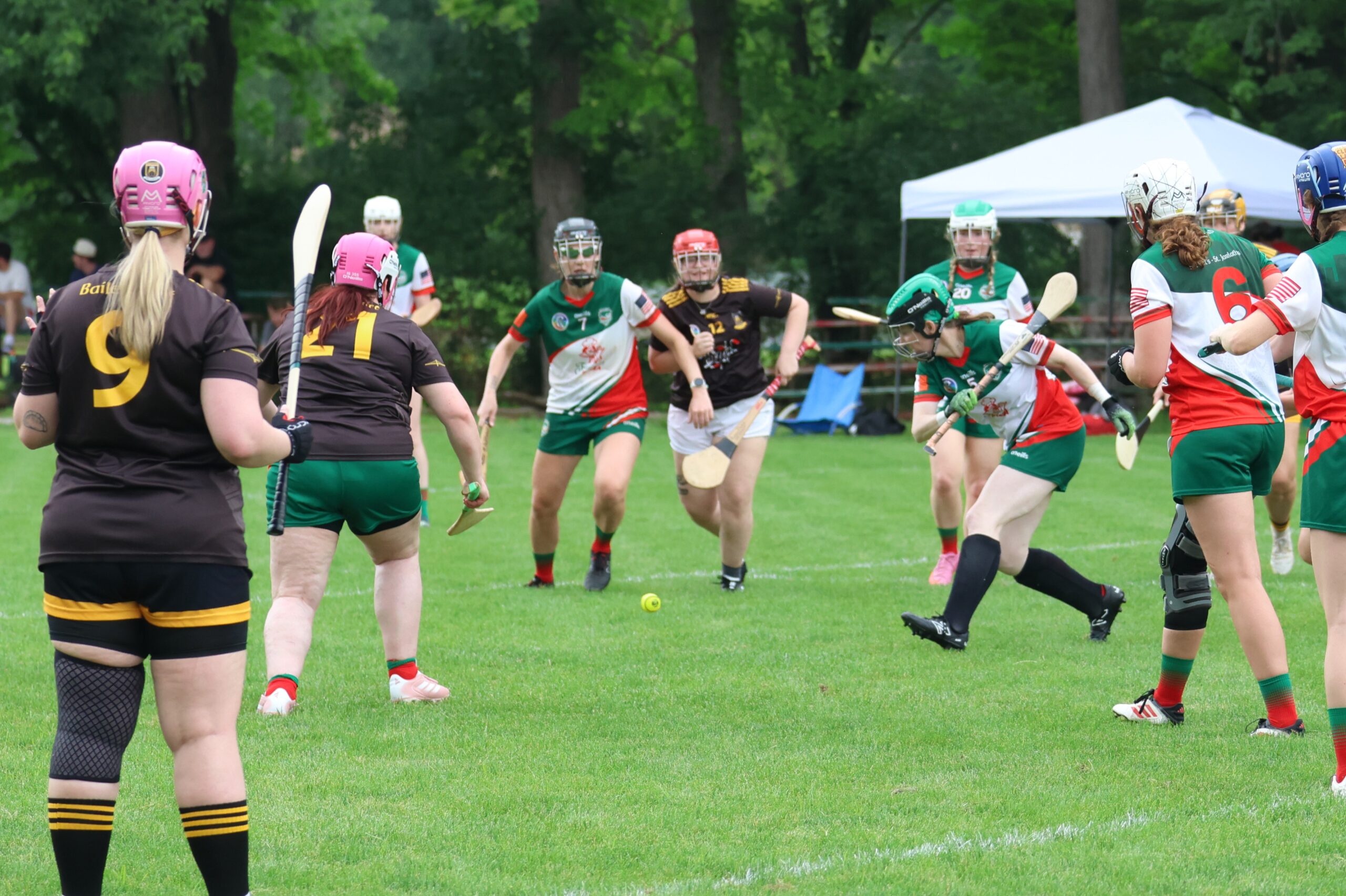
These women dedicated their time to an ancient sport they watched their brothers, husbands, friends, and sons enjoy in its full capacity. Some didn’t realize camogie existed. But for countless reasons–time, interest, children, physicality–women in the Midwest were relegated to the sidelines since the late seventies, as the teams that once existed disbanded.
Everything Changed in 2022.
For the first time in the 21st century, the Midwest Division proudly championed two camogie teams – St. Pat’s-St. Jarlath’s from Cleveland, OH and Na Laochra from Pittsburgh, PA. As of 2026, a third team joined their ranks–the Celtic Guards from Akron, OH.
In that short period of time, both Pittsburgh and Cleveland have won the Junior B Championships at the USGAA finals in 2023 and 2025, respectively. Both Cleveland and Pittsburgh compete at the Junior A level on the national scale, while Akron will compete at the Junior B level their inaugural year.
Interdivisional matches have remained highly competitive, with Pittsburgh claiming the Midwest Championship title in 2022, 2024, and 2025 and Cleveland in 2023. And on June 6th, all three Midwest camogie teams presented for matches for the first team in each of the teams’ histories on the same field.
Camogie Isn’t Hurling for the Girls.
While similar in practice, camogie maintains its separate identity. The word camogie originates from the Irish word “camóg,” which translates to “little curved stick.” “Camóg” is a play on the word “camán” used to describe wooden hurl or hurley seen in both sports. The word “camóg” was later anglicised to “camogie” and remains as the sport’s name to this day.
The Camogie Association in Ireland was founded in 1904 as a separate entity from the Gaelic Athletic Association (GAA.) A merger between the Camogie Association, the Ladies Gaelic Football Association, and the GAA is planned to occur by 2027, marking a major step towards integration of both the men’s codes with ladies’ football and camogie.
The earliest versions of camogie emphasized play on the ground, more closely resembling field hockey than the modern game. Teams scored primarily through goals, while points were mostly scored on set plays rather than from the field. As athletes pushed their skills and demonstrated increasingly higher levels of athleticism, camogie evolved to parallel the skills seen in hurling.
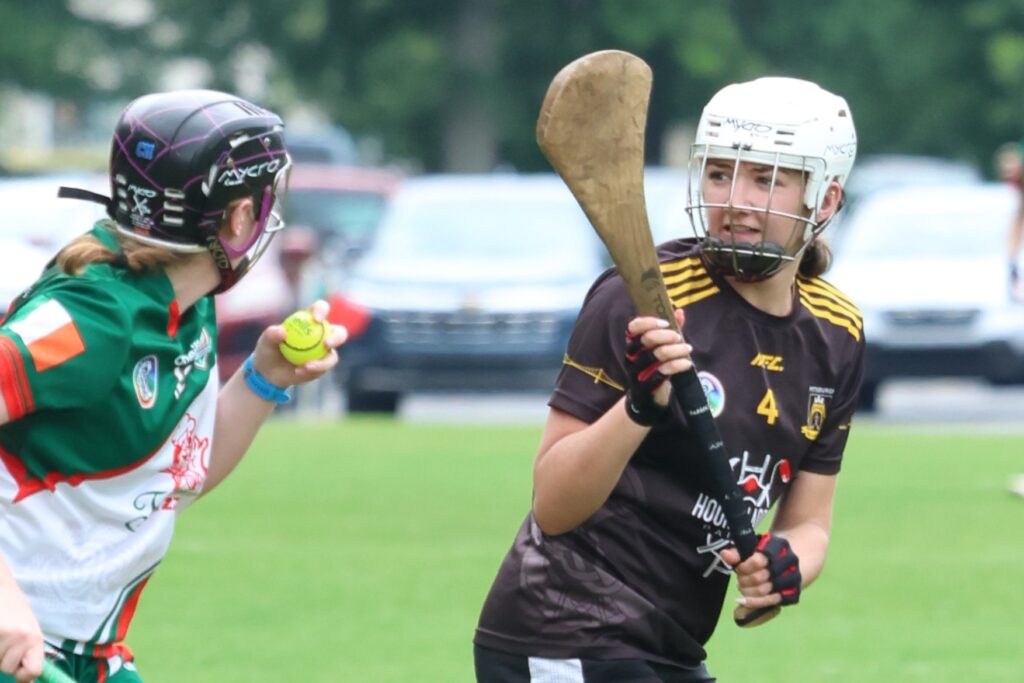
Camogie involves lifts off the ground, strikes from the air, hooking, blocking, handpassing, striking, and all the foundational skills seen in hurling. The remaining differences between hurling and camogie include the amount of contact, a smaller sized sliotar, and the ability to hand pass the ball over the bar for a point, among others.
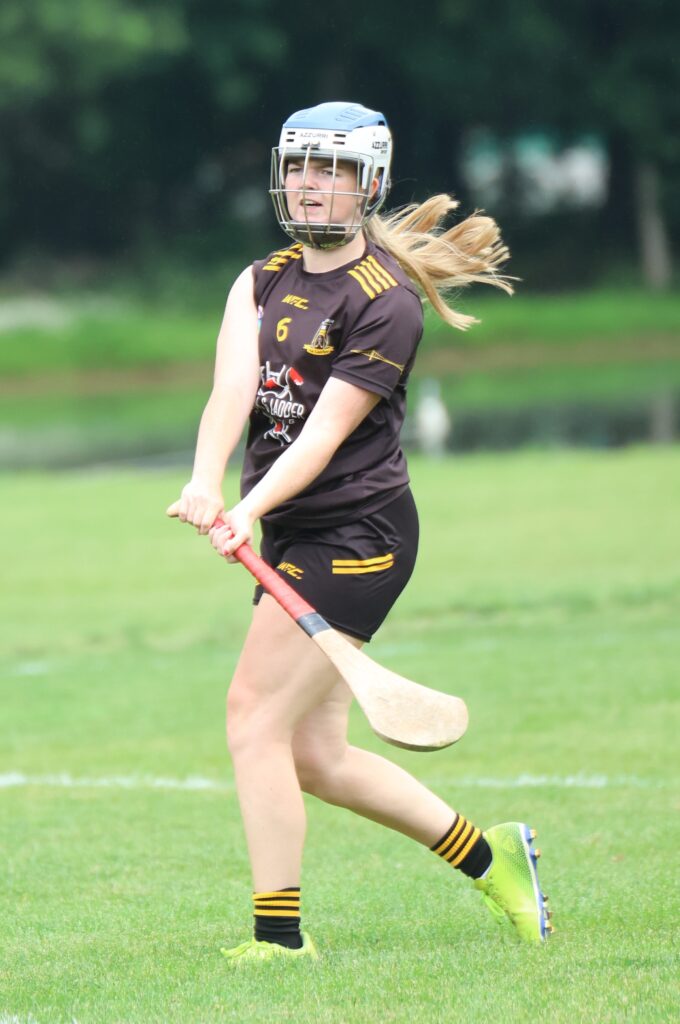


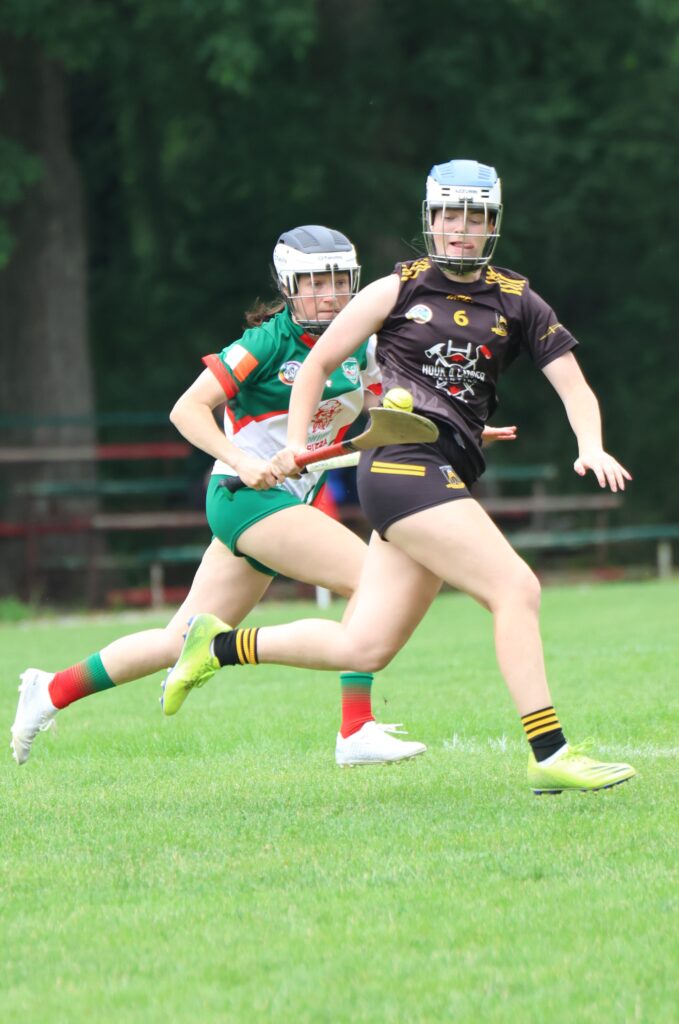
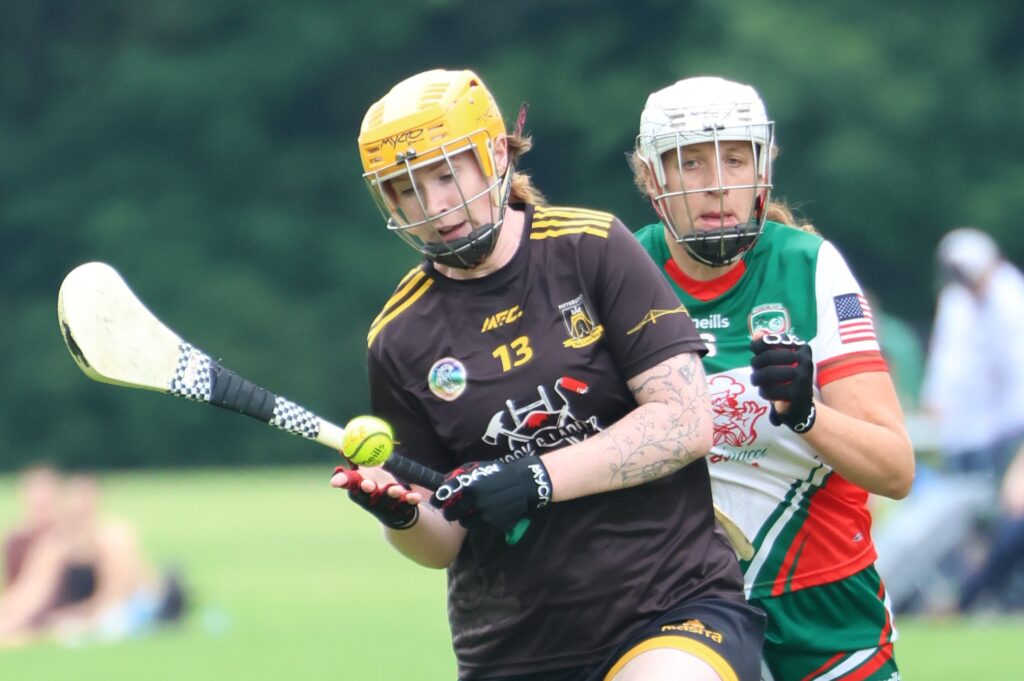
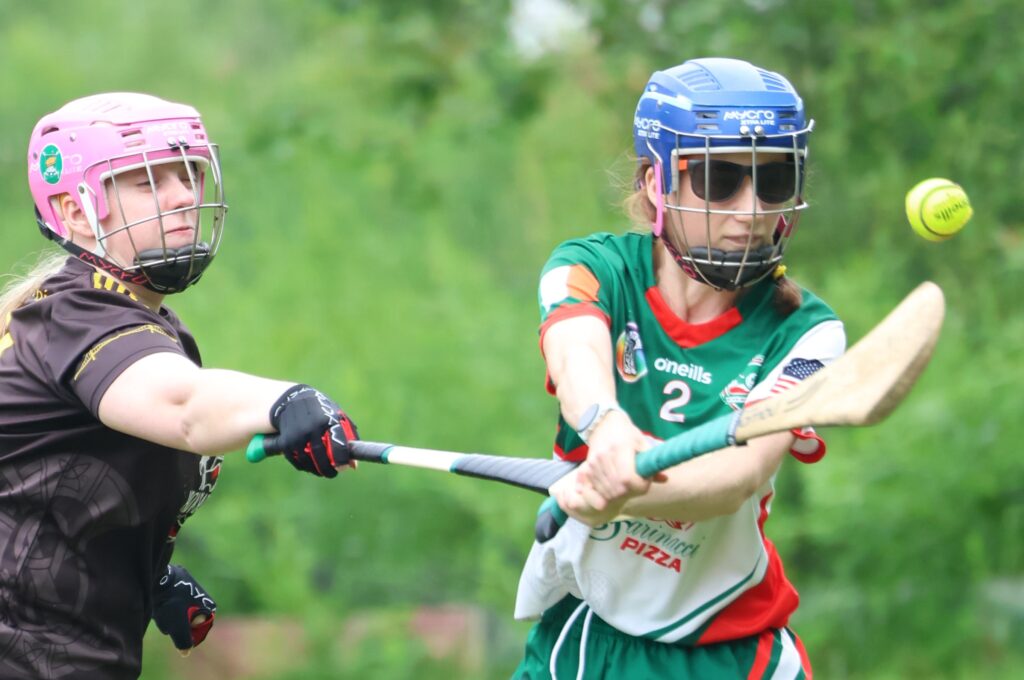
Images from the earliest games of camogie show players donning long sleeve blouses, dark stockings, and thick pinafore dresses that hung past the knee. And while the uniforms seen in today’s game have since abandoned the wool and long sleeves, shorts only became legal to wear on the pitch after an emergency congress in 2025.
Brought to urgent attention after a series of protests, players threatened to forfeit provincial matches if change wasn’t implemented. 98% of delegates voted in favor of allowing players choice in their game attire.
A Tale of Three Cities
“Camogie and hurling are in my family, both literally and figuratively,” says Coleen Taylor (Akron Celtic Guards). Taylor studied abroad in Ireland the summer of 2023. Through her program at Irish Way, she spent her mornings in class learning about Irish language, literature, dancing, politics, and history and her afternoons exploring the country.
During her time at St. Keiran’s College in Kilkenny, she stumbled upon a local hurling match and has been “captivated” ever since. After attending hurling and Gaelic football lessons through the local Kilkenny GAA club, Taylor bought two hurleys and a sliotar to send home.
Since that trip to Ireland, Taylor brought her hurley with her throughout high school and college, making sure it was “always propped next to my bed.” When she settled in Cuyahoga Falls in 2009, Taylor’s father — a member of the local AOH encouraged his daughter to check out Akron Celtics Guards. “The rest is history!”
For Taylor, camogie is more than just a sport, —it is a connection to her family and her culture. “I met my husband playing and my brother and sister-in-law are playing too. Playing maintains a deep connection to my Irish ancestry that will always be special and important to me.” Coleen has been involved with the Akron Celtic Guards since that time and has been one of the driving forces behind bringing camogie to Akron.
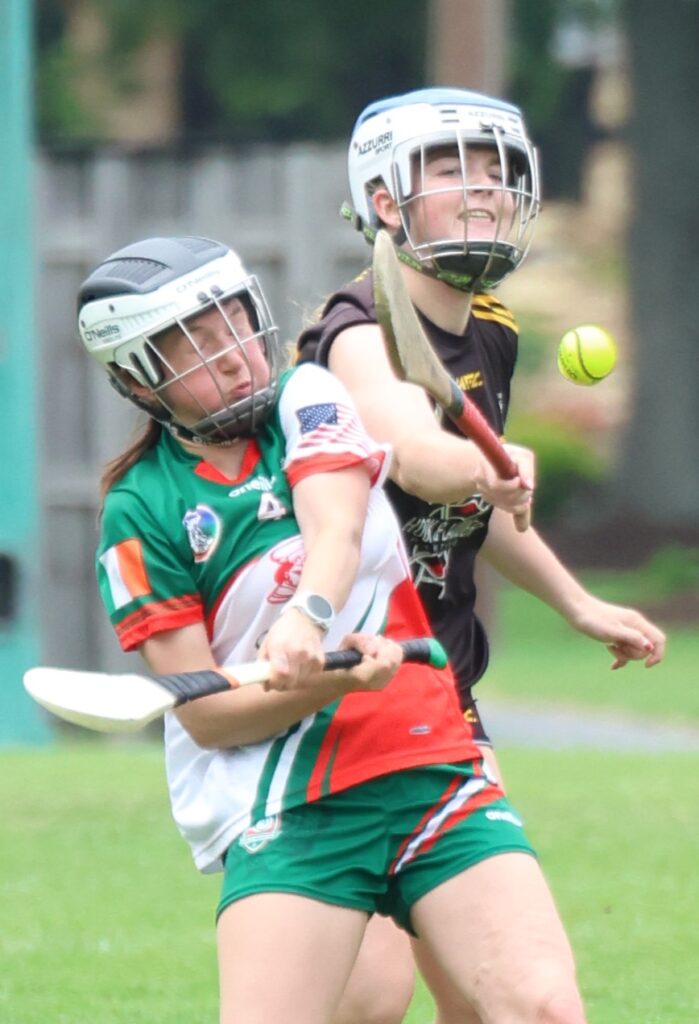
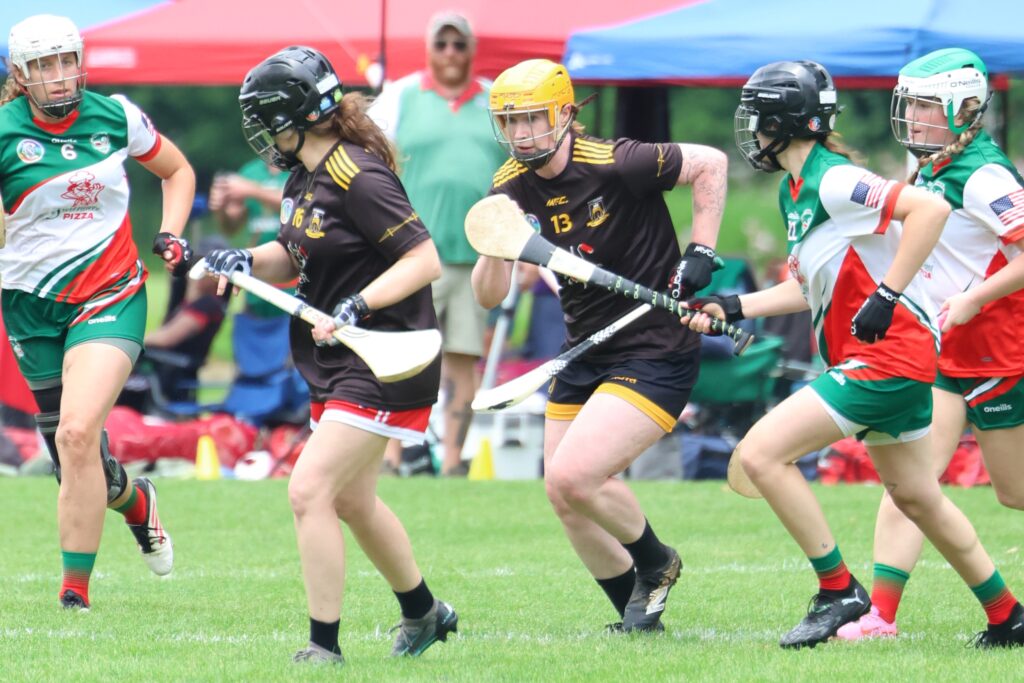

After moving to Cleveland, Kayla Caruso (Cleveland St.Pat’s – St. Jarlath’s) challenged herself to try different hobbies in her new home. When a recruiting post on MeetUp caught her eye, Caruso attended her first practice with Cleveland’s camogie team. That single session was enough to hook her to the sport.
Kismet
Caruso notes that while she participated in numerous sports while growing up, only two involved stick and swinging components. But she appreciated the challenge.
“Honestly, for me, it was likely the best. I’m glad it didn’t come naturally to me… if there is any sort of obstacle, I make a game out of it. Everything else I discovered was kismet.”
Finding that the women of Cleveland’s team were in similar stages in life and shared her same competitive drive was exactly what she was looking for.
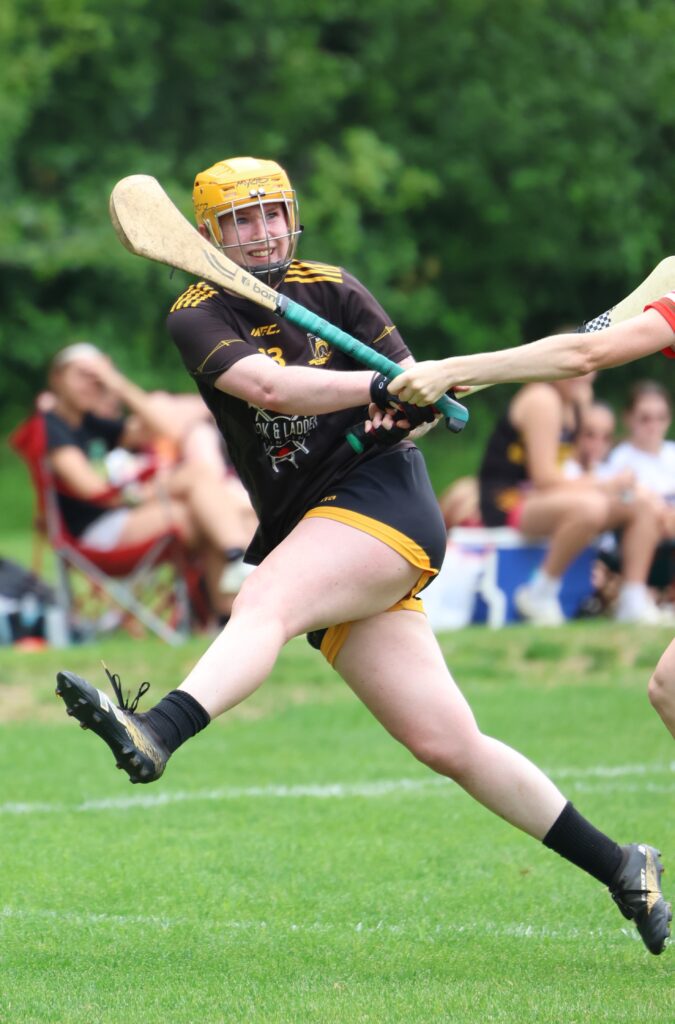
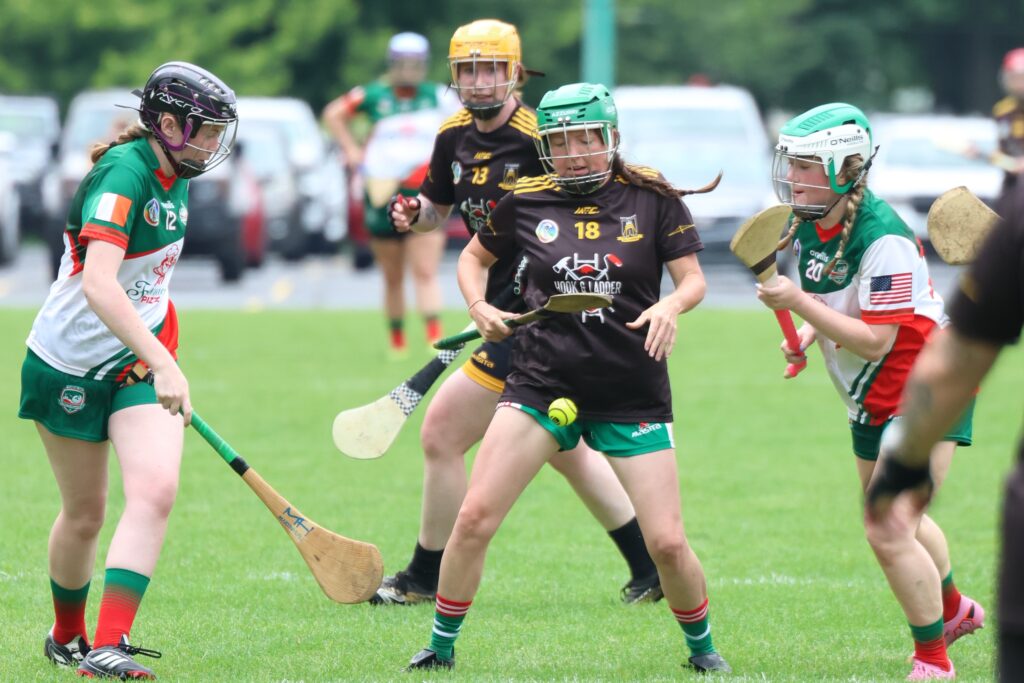
Drawn to the competition and the camaraderie, the GAA was a perfect fit to Caruso. Thanks to the “persistent consistency” of Cleveland’s team captain Clodagh Murphy, Caruso committed to attending her first tournament in Indianapolis not long after joining the club.
“After that day of play, I never looked back.” For Caruso, the reasons she sticks with the sport are numerous, stating “the sport and competition had me from the start. The challenge of the game along with the GAA community has gifted me a family.”
Amy Fallon (Pittsburgh Na Laochra) has been playing Gaelic football since 2010. Her background in soccer, softball, and tackle football made her an ideal recruit for the GAA. And after she noticed other dual players joining Na Laochra, Fallon took a swing at camogie.
She says, “I always noticed camogie at nationals, and we always joked that no one would ever want to play us due to our physicality. It would be wild to see us wielding a hurl!”
The sport came naturally to Fallon, who insists “it’s Gaelic football with a stick!” Her softball history translated beautifully into strong strikes, and her football background helped her snatch sliotars out of the air without issue.
While currently managing an injury, Fallon is instrumental with assisting the team on the sidelines. Whether on or off the field, Fallon has been an asset to the Pittsburgh Gaelic community for both football and camogie.
Camogie continues to grow across the Midwest, with players from Rochester, Buffalo, and Michigan learning about the sport, training with their men’s hurling teams, or joining the currently established camogie teams as they develop their own programs at home.
The growth of camogie in our region has set an example for other divisions across the country, and our success has not gone unnoticed. Cleveland, Akron, and Pittsburgh will all contribute to the storied history of camogie and the GAA in the Midwest for years to come.
*Emily “Barno” Earnest PT, DPT, WCS, CLT, CSCS is a doctor of physical therapy and a board certified clinical specialist in Women’s Health Physical Therapy. She has been involved in the Pittsburgh GAA for nearly a decade and is a founding member of Pittsburgh Na Laochra Camogie. Emily and her husband live in Pittsburgh area with their two cats Benedict and Gregory.