



It’s All Greek to Me!
World English Day is a special day celebrated every year on April 23rd. This date was chosen because it is the birthday and day of death of William Shakespeare, one of the most famous writers in the English language. The day was created by the United Nations to honor the history and growth of English around the world.
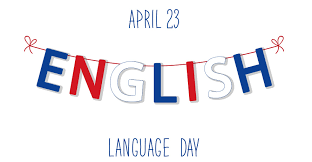
Over time, English has become one of the most widely used languages for reading, writing, science, and travel. Shakespeare’s creativity with language meant he contributed hundreds of new words and phrases: ‘gossip’; ‘fashionable’ and ‘lonely’ were all first used by Shakespeare. He also invented phrases like ‘break the ice’, ‘faint-hearted’ and ‘love is blind’.”
Have you ever really given much thought to the English language? It is one of the hardest languages to learn. There are 26 symbols (letters) that make 47 different sounds. To make it even more difficult, English has borrowed words from different languages, resulting in multiple pronunciations for the same spelling.
In addition, the same pronunciation can have different meanings depending on how the word is being used. If you can read and understand what you read, give yourself a pat on the back!
Fun Facts:
- About 380 million people speak English as their native language. About 1.3 billion speak Chinese and 486 million speak Spanish!
- E is the most common letter.
- Nothing rhymes with orange, silver, or month.
- The word “set” has over 400 different definitions, depending on how it’s used!
- The word “alphabet” comes from Greek, from the first two Greek letters: alpha and beta.
- Every book ever written is composed of the same 26 letters, just in a different order!
KIDS IN THE KITCHEN
Pretzel Sticks

Ingredients
- 1 package (1/4 ounce) active dry yeast
- 1-1/2 cups warm water (110° to 115°)
- 2 tablespoons sugar
- 2 tablespoons butter, melted
- 1-1/2 teaspoons salt
- 4 to 4-1/2 cups all-purpose flour
- 8 cups water
- 1/3 cup baking soda
- 1 large egg yolk
- 1 tablespoon cold water
- Optional: Coarse salt and warm cheese sauce
Directions
- In a large bowl, dissolve yeast in warm water. Add the sugar, butter, salt and 2 cups flour. Beat until smooth. Stir in enough remaining flour to form a soft dough (dough will be sticky).
- Turn dough onto a floured surface; knead until smooth and elastic, 6-8 minutes. Place in a greased bowl, turning once to grease top. Cover and let rise in a warm place until doubled, about 1 hour.
- In a large saucepan, bring 8 cups water and the baking soda to a boil. Punch dough down; divide into 32 portions. Roll each into a 5-in. log. Add to boiling water, a few at a time; cook 30 seconds. Remove with a slotted spoon; drain on paper towels.
- Place on greased baking sheets. Lightly beat egg yolk and cold water; brush over pretzels. If desired, sprinkle with coarse salt. Bake at 425° until golden brown, 9-11 minutes. Remove from pans to wire racks. Serve warm with cheese sauce if desired.
Literature Corner
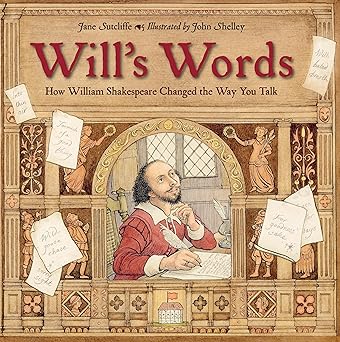
Will’s Words
By Jane Sutcliff
Jane Sutcliff set out to write a book about William Shakespeare in her own words, but ran into a problem. Shakespeare’s words keep showing up all over the place. She discovers that he is responsible for phrases such as “what’s done is done” and “too much of a good thing.” Jane embraces her dilemma with excitement and uses Shakespeare’s words to write about the greatest writer in the English language. For ages 7-10, 40 pages.
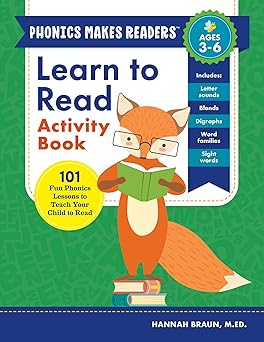
Learn to Read Activity Book: 101 Fun Phonics Lessons to Teach Your Child to Read
(Phonics Makes Readers)
By Hannah Braun M. Ed.
Phonics is the foundation needed to learn to read the English language. This award-winning workbook gives you 101 proven phonics lessons that guide your child from letters to full sentences. Author Hannah Braun, M.Ed., uses the “I do, we do, you do” method―an evidence-based approach that lets you model skills, practice together, then watch your child succeed independently. Lessons cover letter recognition, phonics, word families, blends, and sight words, all grounded in the science of reading. For ages 3-5, 222 pages.
Lardie’s Laughs
Q. What’s the best way to make Easter easier?
A. Put an “i” where the “t” is. (Easier)
Q. Why did the Easter egg hide?
A. Because he was a little chicken.
Gab in Gaelic
Happy Easter = Beannachtai na Casca ort! (bannockt/tee nah coss-kah urt)