




One Recommendation, Two Extraordinary Places
Shannon Relates: Dubh Linn Garden
I have romanticized gardens for as long as I can remember. It probably began with Frances Hodgson Burnett’s The Secret Garden.I remember the copy I purchased from the Scholastic Book Fair had a lock and key, which immediately intrigued me. The concept of a younger girl discovering and restoring a secret place was inspiring.
As I grew older, I came to know gardens as places where lovers united or departed or where daughters were kept hidden away by their crazy scientist fathers. Even at age 46, the enchantment of a garden is not lost on me.
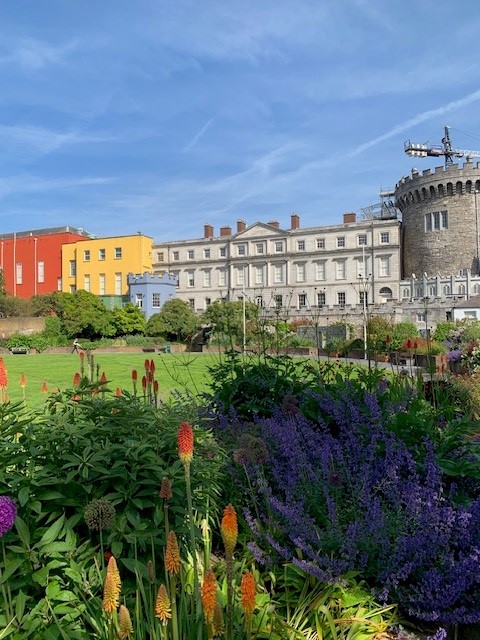
The thing about gardens is that often they are nestled away. You can happen upon them like I did with the Dubh Linn Garden outside The Dublin Castle after visiting the Chester Beatty.
When walking outside, my eye was immediately drawn into the circle pattern of green in the center of the garden. This surely is not a unique observation but one most likely shared by many people who encounter the garden.
Fortunate to have visited this outdoor space in May, the sun was shining, allowing the greens of the grass to cast a vibrancy against the many shades of thriving flowers and plants. It is hard to appreciate the full circle shape of the garden when you are immersed in it versus seeing an aerial shot of it, but you can feel how special this place is once you set foot inside. You are completely surrounded by buildings and yet nature feels like the main character here.
Touring the garden, you will see wooden benches provide little spots of rest and reflection. They are dotted along the circular path but manage to allow spaces where one might seek to steal a moment alone. The English poet John Clare said, “The garden is the poorest place when winter comes, but the richest when the heart is quiet enough to see.” After walking around Dubh Linn, this makes complete sense.
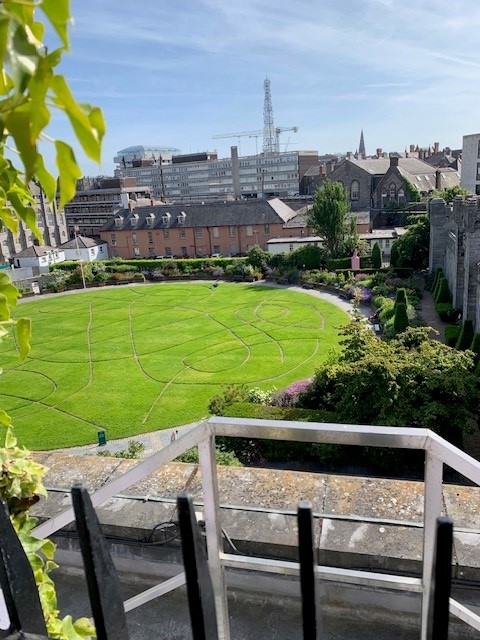
There is striking history concerning the garden as well. Carved into the circular grass are what many interpret as sea serpents. This Celtic knotwork is really part of a broader interlaced design tradition symbolizing continuity and eternity.
The garden is also the site of the Dubh Linn, the dark pool where Viking ships once anchored. The pool is the origin of Dublin’s name.
What I think ultimately adds to the charm of the Dubh Linn Garden is that it is not heavily promoted. While it is not quite a secret, it isn’t exactly a destination either. There is something to be said about some places that feel less like attractions and more like discoveries.
Karen’s Take: Chester Beatty

Dublin’s history extends far beyond the Guinness Storehouse and its local pubs. It was once a city shaped by writers and poets, a place where ideas were exchanged as often as stories. So, it came as no surprise to discover a library and museum devoted to some of the earliest recorded writings in a place as layered and meaningful as Dublin.
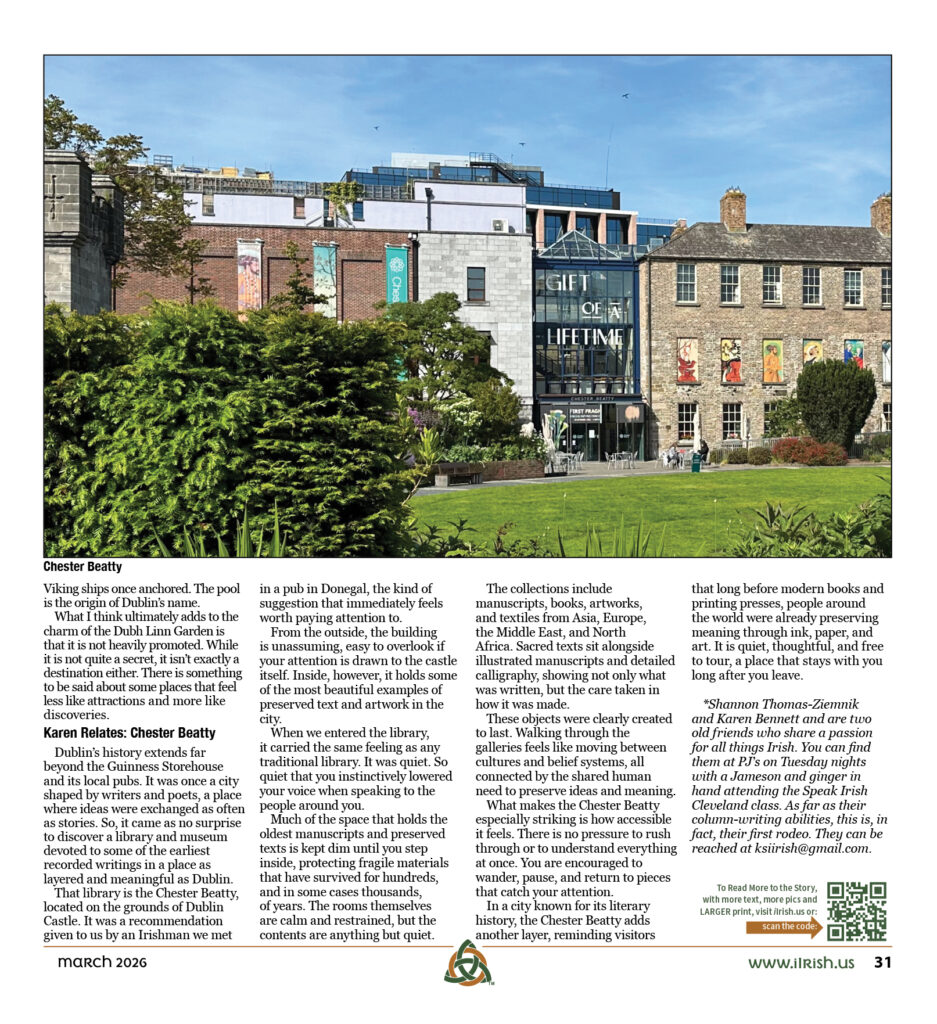
That library is the Chester Beatty, located on the grounds of Dublin Castle. It was a recommendation given to us by an Irishman we met in a pub in Donegal, the kind of suggestion that immediately feels worth paying attention to.
From the outside, the building is unassuming, easy to overlook if your attention is drawn to the castle itself. Inside, however, it holds some of the most beautiful examples of preserved text and artwork in the city.
When we entered the library, it carried the same feeling as any traditional library. It was quiet. So quiet that you instinctively lowered your voice when speaking to the people around you.
Much of the space that holds the oldest manuscripts and preserved texts is kept dim until you step inside, protecting fragile materials that have survived for hundreds, and in some cases thousands, of years. The rooms themselves are calm and restrained, but the contents are anything but quiet.
The collections include manuscripts, books, artworks, and textiles from Asia, Europe, the Middle East, and North Africa. Sacred texts sit alongside illustrated manuscripts and detailed calligraphy, showing not only what was written, but the care taken in how it was made.
These objects were clearly created to last. Walking through the galleries feels like moving between cultures and belief systems, all connected by the shared human need to preserve ideas and meaning.
What makes the Chester Beatty especially striking is how accessible it feels. There is no pressure to rush through or to understand everything at once. You are encouraged to wander, pause, and return to pieces that catch your attention.
In a city known for its literary history, the Chester Beatty adds another layer, reminding visitors that long before modern books and printing presses, people around the world were already preserving meaning through ink, paper, and art. It is quiet, thoughtful, and free to tour, a place that stays with you long after you leave.