




Telling Silences in Colm Tóibín’s Fiction
For all of its extraordinary international reputation as one of the richest traditions of literature, Irish literature retains a persistent regional strain. We might as well admit that when we think of Irish literature we expect a cottage, a cow, and cursed priest.
In drama, Synge delivers and Martin McDonagh makes sardonic hay of the peasant life in his black Connemara comedies. In fiction there’s John Keane, of course, and Patrick Kavanaugh. The pull of the provincial life, the old rural home, features in contemporary writing, too, such as Anne Enright’s The Green Road and Claire Keegan’s Foster. Niall Williams’ Faha village in Clare, is the “forgotten elsewhere” in This is Happiness that envisions a rich emotional landscape equal to the physical one.
Provincialism, rural beauty, the revolutionary past, the clutch of family, the church, stasis, and escape. These seven attributes don’t fully cover twentieth and twenty-first Irish literary themes, but they make a good start. Oh, and secrets. Where would Sebastian Barry be without them?
Now to a great contemporary writer: Colm Tóibín. He was born in County Wexford in 1955, a graduate of UCD, author of eleven novels, winner of many awards, including Booker listings, and a member of Aosdana. He is a frequent contributor to the London Review of Books and the New York Review of Books. He has written critical studies of other writers, including Lady Gregory, and his New Ways to Kill Your Mother: Writers and Their Families discuss James Baldwin, W.B. Yeats and J.M. Synge.
He curates exhibits, judges many prizes, and his partner is the editor of the prestigious Semiotext(e ), Hedi El Khoti. Tóibín’s sonorous voice, erudition, and great wit garner many speaking engagements. I have read almost everything he has written, heard him speak at Kenyon College, and listen to any podcast on which he is a guest. Indeed, Tóibín is my favorite travelling companion on Spotify on my frequent drives home to Pittsburgh.
I would like everyone interested in Irish literature to read The Heather Blazing. I don’t think that is too much to ask. I achieved part of this personal mission by teaching the novel frequently at John Carroll University, and I believe it is the best entry into an understanding not only of all of the seven characteristics noted above but, more importantly, of the slow emergence of a first modern and ultimately global Irish culture from the grip of revolutionary (but ultimately conservative) nationalism and a Catholic constitution.
The Guardian has done us the favor of ranking of Tóibín’s best ten novels, and while I agree with their top two picks (The Master and The Magician), they place The Heather Blazing in eighth place and rank the Brooklyn novels (Brooklyn and Long Island) above it. This cannot stand. They have their valid reasons, which I could elucidate here, but still, they are wrong. (https://www.theguardian.com/books/2025/jul/14/brooklyn-and-beyond-colm-toibins-best-books-ranked

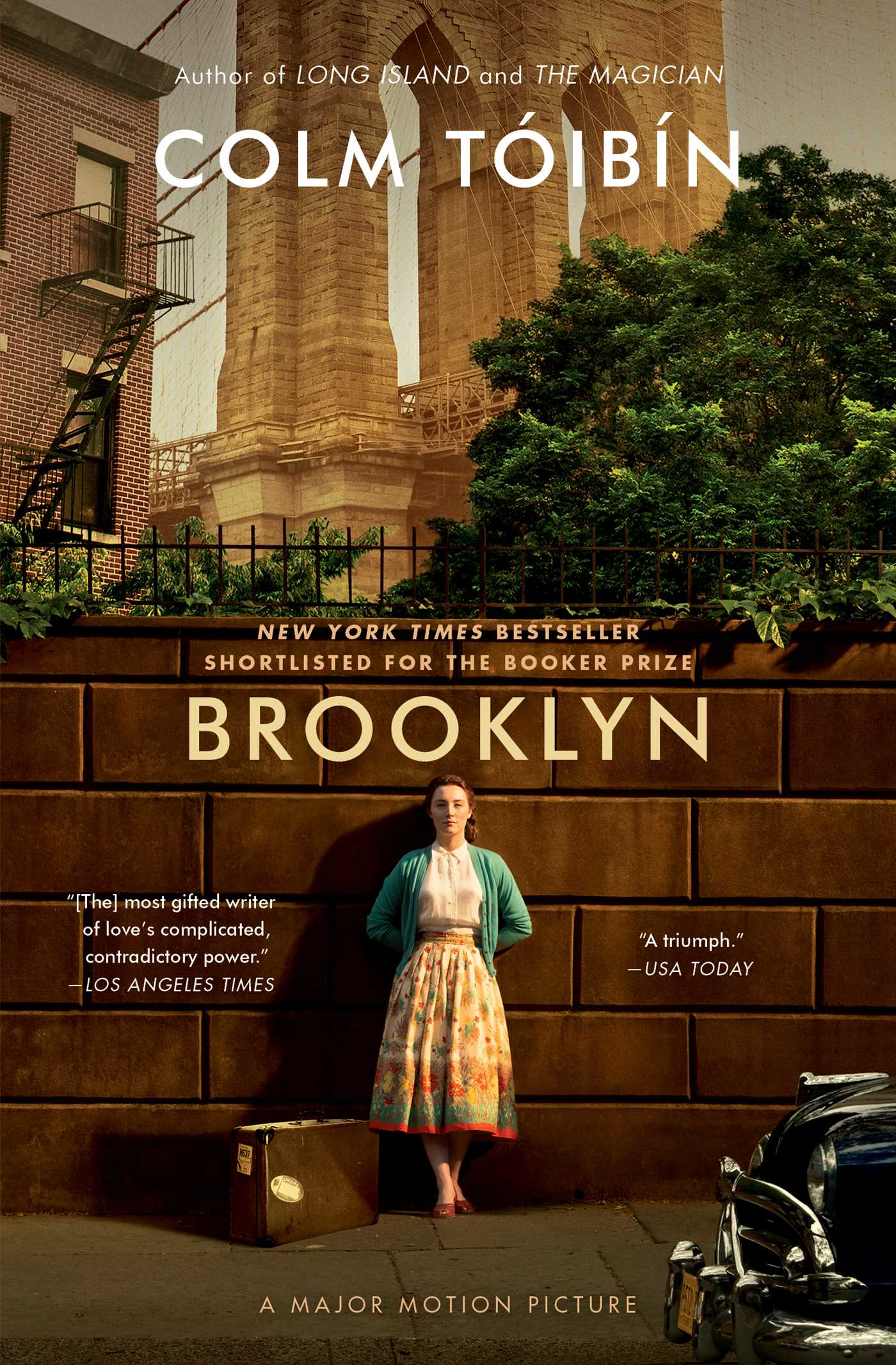
Wexford’s beautiful seaside is the backdrop for five of Colm Tóibín’s novels, set in Enniscorthy, his birthplace, and featuring some of the same characters across the stories. Brooklyn (2009) is his biggest commercial success, adapted for an Oscar nominated film in 2015 and followed up with the 2024 sequel Long Island. Amazon even adds “an Eilis Lacey Series” after the title as if the protagonist which appears in these two books (hardly a series) were the equivalent of Hercule Poirot.
Tóibín’s novel Nora Webster is also set in Wexford. The novels with Eilis Lacey depict the harrowing experience of migration, the great loneliness and long leave-taking, and the challenges of assimilation and economic insecurity. Since some 10% of Americans claim at least a drop of Irish blood, migration and settlement novels, like those of the gifted Alice McDermot, are popular.
At every gathering at the West Side Irish or East Side Irish clubs, some lilting voice can tell a similar tale. These stories are now largely nostalgic since the Irish are established and safe this century later, but the experiences are still within the grasp of living memory.
Tóibín’s Brooklyn may well be the best of these stores, much better than Angela Ashes, and much dryer. I remember telling my dad about Frank McCourt’s book and he shrugged his shoulders. His parents had braved their own (unexpected) Atlantic crossing to live on a steep hill near the University of Pittsburgh alongside their numerous sisters and brothers.
Everyone who worshipped alongside them at Saint Paul’s Cathedral was named Joyce, Browne, Lynch, Murphy, O’Toole, D’Arcy or any of the fourteen tribes of Galway. My dad would think that Eilis really didn’t have it badly.
Eilis’ job in the department store was better than my grandmother’s as a maid. She (Nellie) lost her engagement ring down the drain of the mansion she cleaned and then lost her job for crying about it.
My grandfather was a night security guard, shaking the doorknobs of the fancy homes in Squirrel Hill. He (James) installed a fake telephone near the car’s console so it would look like he was well-connected to the police and fire services.
My father delivered papers in his three-wheeled wagon. Some of these Colleran/O’Toole relatives, unlike Eilis, took their hard-earned savings and went back to Ireland permanently. And now I wouldn’t mind the reverse: a nice snug house in the Claddagh. Colm Tóibín’s novel has an accessible plot, but it is also emotive and evocative, rendering the deepest kind of loss and yearning, largely borne in silence.
The Heather Blazing
Silence is the great theme of The Heather Blazing (1992): both the silence within families, and the silence in the public sphere. The latter has replaced colonialism, with the restrictive laws and forbidding social judgements suppressing freedom and growth, and this suppression is fully and only in the hands of the Irish themselves to change.
The emblem of this intransigence is Eamon Redmond, a superior court judge. Set in the 1980s, Redmond writes deeply consequential opinions, models of clarity and constitutional directness, but heartless, outdated, impersonal, and dry. To his family, Eamon seems to embody these very traits. His memories reach back to the politics of his grandfather and father, and Eamon’s ultimately reactionary legal positions trace the Fianna Fail politics from Eamon De Valera to Charles Haughey.
One of the cases on which he must render an opinion concerns a Catholic school’s expulsion of a pregnant girl. Redmond’s own daughter is an unwed mother, but still he finds in favor of the school, reasoning that the Constitution’s restricted sense of family rested on traditional bonds of matrimony (and implicitly of sexuality). At a deep level, Redmond knows he lacks courage to attend to his deeper, more compassionate instincts. He is a hollow man, silenced by a politics that began as liberatory but congealed into a new type of control, more dogmatic and binding.
Tóibín’s most critically acclaimed books are not about anything Irish. The Magician imagines the life of the great German writer Thomas Mann, an equally remote father and a one-time conservative who with the rise of Nazism became increasingly progressive.
The Master, a portrait of several pivotal years of Henry James’ life, is a consummate novel of silence. The prolific American novelist writes volumes but remains obscure to himself, blocking the emotional discomfort and intellectual consequences of facing pain.
Tóibín’s fictive through line from the character of Eamon Redmond to that of Henry James suggests the causes and consequences of isolation, shame, and cowardice manifest not only in personal sorrow but in a wounding social ethos. The Heather Blazing helps to explain the long stagnation of the 1950s and after, and Ireland’s very agonized reckoning with new social values, and the fear and silence that caused an unnecessary sorrow to last too long.