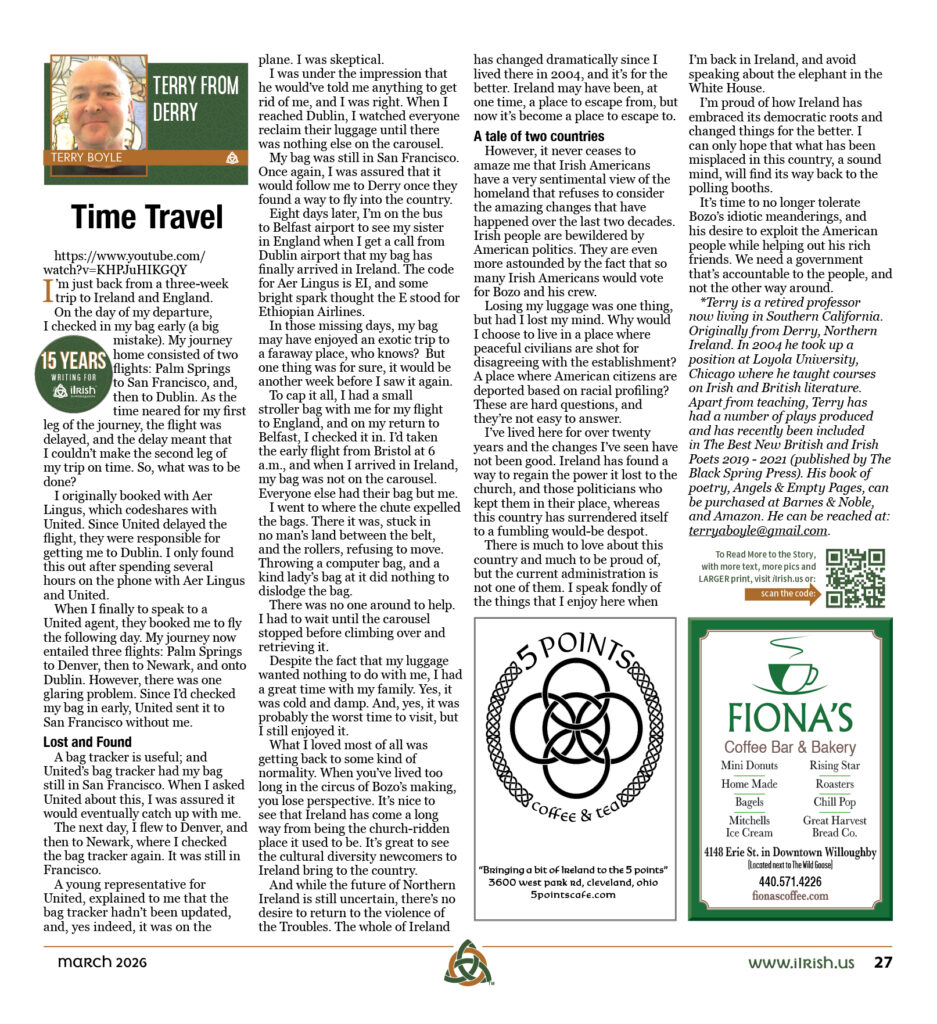
I’m just back from a three-week trip to Ireland and England.
On the day of my departure, I checked in my bag early (a big mistake). My journey home consisted of two flights: Palm Springs to San Francisco, and, then to Dublin. As the time neared for my first leg of the journey, the flight was delayed, and the delay meant that I couldn’t make the second leg of my trip on time. So, what was to be done?
I originally booked with Aer Lingus, which codeshares with United. Since United delayed the flight, they were responsible for getting me to Dublin. I only found this out after spending several hours on the phone with Aer Lingus and United.
When I finally got to speak to a United agent, they booked me to fly the following day. My journey now entailed three flights: Palm Springs to Denver, then to Newark, and onto Dublin. However, there was one glaring problem. Since I’d checked my bag in early, United sent it to San Francisco without me.
Lost and Found
A bag tracker is useful; and United’s bag tracker had my bag still in San Francisco. When I asked United about this, I was assured it would eventually catch up with me.
The next day, I flew to Denver, and then to Newark, where I checked the bag tracker again. It was still in Francisco.
A young representative for United, explained to me that the bag tracker hadn’t been updated, and, yes indeed, it was on the plane. I was skeptical.
I was under the impression that he would’ve told me anything to get rid of me, and I was right. When I reached Dublin, I watched everyone reclaim their luggage until there was nothing else on the carousel.
My bag was still in San Francisco. Once again, I was assured that it would follow me to Derry once they found a way to fly into the country.
Eight days later, I’m on the bus to Belfast airport to see my sister in England when I get a call from Dublin airport that my bag has finally arrived in Ireland. The code for Aer Lingus is EI, and some bright spark thought the E stood for Ethiopian Airlines.
In those missing days, my bag may have enjoyed an exotic trip to a faraway place, who knows? But one thing was for sure, it would be another week before I saw it again.
To cap it all, I had a small stroller bag with me for my flight to England, and on my return to Belfast, I checked it in. I’d taken the early flight from Bristol at 6 a.m., and when I arrived in Ireland, my bag was not on the carousel. Everyone else had their bag but me.
I went to where the chute expelled the bags. There it was, stuck in no man’s land between the belt, and the rollers, refusing to move. Throwing a computer bag, and a kind lady’s bag at it did nothing to dislodge the bag.
There was no one around to help. I had to wait until the carousel stopped before climbing over and retrieving it.
Despite the fact that my luggage wanted nothing to do with me, I had a great time with my family. Yes, it was cold and damp. And, yes, it was probably the worst time to visit, but I still enjoyed it.
What I loved most of all was getting back to some kind of normality. When you’ve lived too long in the circus of Bozo’s making, you lose perspective. It’s nice to see that Ireland has come a long way from being the church-ridden place it used to be. It’s great to see the cultural diversity newcomers to Ireland bring to the country.
And while the future of Northern Ireland is still uncertain, there’s no desire to return to the violence of the Troubles. The whole of Ireland has changed dramatically since I lived there in 2004, and it’s for the better. Ireland may have been, at one time, a place to escape from, but now it’s become a place to escape to.
A Tale of Two Countries
However, it never ceases to amaze me that Irish Americans have a very sentimental view of the homeland that refuses to consider the amazing changes that have happened over the last two decades. Irish people are bewildered by American politics. They are even more astounded by the fact that so many Irish Americans would vote for Bozo and his crew.
Losing my luggage was one thing, but had I lost my mind. Why would I choose to live in a place where peaceful civilians are shot for disagreeing with the establishment? A place where American citizens are deported based on racial profiling? These are hard questions, and they’re not easy to answer.
I’ve lived here for over twenty years and the changes I’ve seen have not been good. Ireland has found a way to regain the power it lost to the church, and those politicians who kept them in their place, whereas this country has surrendered itself to a fumbling would-be despot.
There is much to love about this country and much to be proud of, but the current administration is not one of them. I speak fondly of the things that I enjoy here when I’m back in Ireland, and avoid speaking about the elephant in the White House.
I’m proud of how Ireland has embraced its democratic roots and changed things for the better. I can only hope that what has been misplaced in this country, a sound mind, will find its way back to the polling booths.
It’s time to no longer tolerate Bozo’s idiotic meanderings, and his desire to exploit the American people while helping out his rich friends. We need a government that’s accountable to the people, and not the other way around.
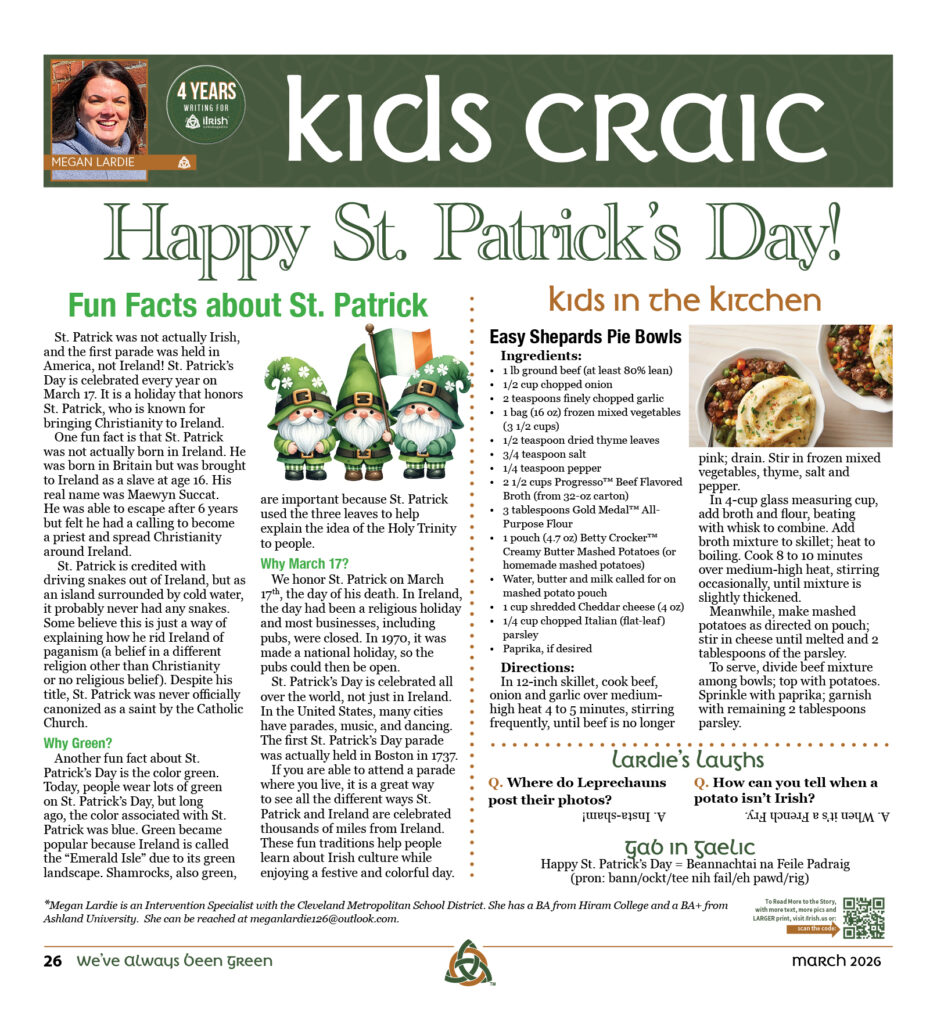
St. Patrick was not actually Irish, and the first parade was held in America, not Ireland! St. Patrick’s Day is celebrated every year on March 17. It is a holiday that honors St. Patrick, who is known for bringing Christianity to Ireland.
One fun fact is that St. Patrick was not actually born in Ireland. He was born in Britain but was brought to Ireland as a slave at age 16. His real name was Maewyn Succat. He was able to escape after 6 years but felt he had a calling to become a priest and spread Christianity around Ireland.
St. Patrick is credited with driving snakes out of Ireland, but as an island surrounded by cold water, it probably never had any snakes. Some believe this is just a way of explaining how he rid Ireland of paganism (a belief in a different religion other than Christianity or no religious belief). Despite his title, St. Patrick was never officially canonized as a saint by the Catholic Church.
Why Green?
Another fun fact about St. Patrick’s Day is the color green. Today, people wear lots of green on St. Patrick’s Day, but long ago, the color associated with St. Patrick was blue. Green became popular because Ireland is called the “Emerald Isle” due to its green landscape. Shamrocks, also green, are important because St. Patrick used the three leaves to help explain the idea of the Holy Trinity to people.
Why March 17?
We honor St. Patrick on March 17th, the day of his death. In Ireland, the day had been a religious holiday and most businesses, including pubs, were closed. In 1970, it was made a national holiday, so the pubs could then be open.
St. Patrick’s Day is celebrated all over the world, not just in Ireland. In the United States, many cities have parades, music, and dancing. The first St. Patrick’s Day parade was actually held in Boston in 1737.
If you are able to attend a parade where you live, it is a great way to see all the different ways St. Patrick and Ireland are celebrated thousands of miles from Ireland. These fun traditions help people learn about Irish culture while enjoying a festive and colorful day.
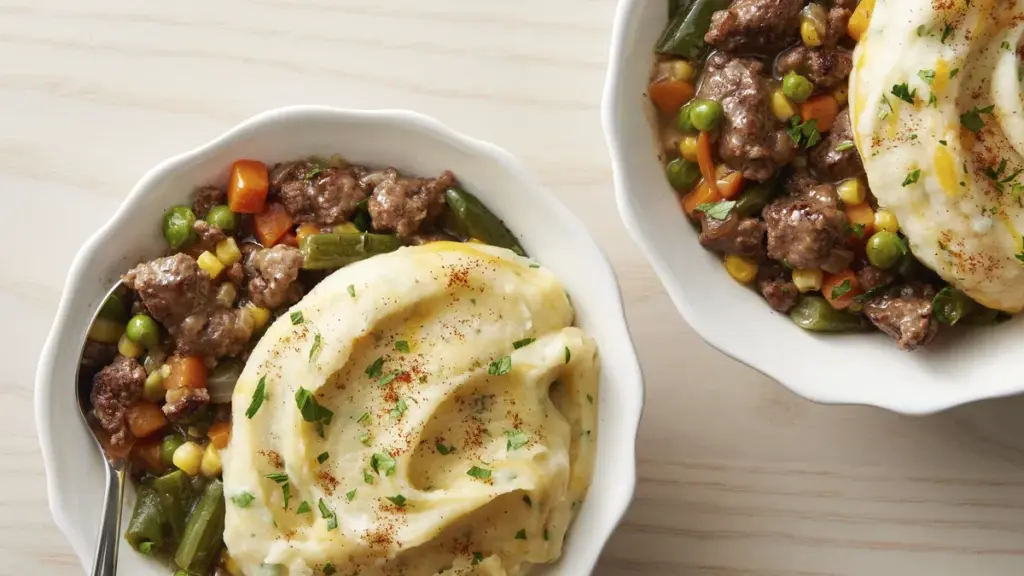
KIDS IN THE KITCHEN
Easy Shepards Pie Bowls
Ingredients
1 lb ground beef (at least 80% lean)
1/2 cup chopped onion
2 teaspoons finely chopped garlic
1 bag (16 oz) frozen mixed vegetables (3 1/2 cups)
Water, butter and milk called for on mashed potato pouch
1 cup shredded Cheddar cheese (4 oz)
1/4 cup chopped Italian (flat-leaf) parsley
Paprika, if desired
Directions
In 12-inch skillet, cook beef, onion and garlic over medium-high heat 4 to 5 minutes, stirring frequently, until beef is no longer pink; drain. Stir in frozen mixed vegetables, thyme, salt and pepper.
In 4-cup glass measuring cup, add broth and flour, beating with whisk to combine. Add broth mixture to skillet; heat to boiling. Cook 8 to 10 minutes over medium-high heat, stirring occasionally, until mixture is slightly thickened.
Meanwhile, make mashed potatoes as directed on pouch; stir in cheese until melted and 2 tablespoons of the parsley.
To serve, divide beef mixture among bowls; top with potatoes. Sprinkle with paprika; garnish with remaining 2 tablespoons parsley.
Literature Corner
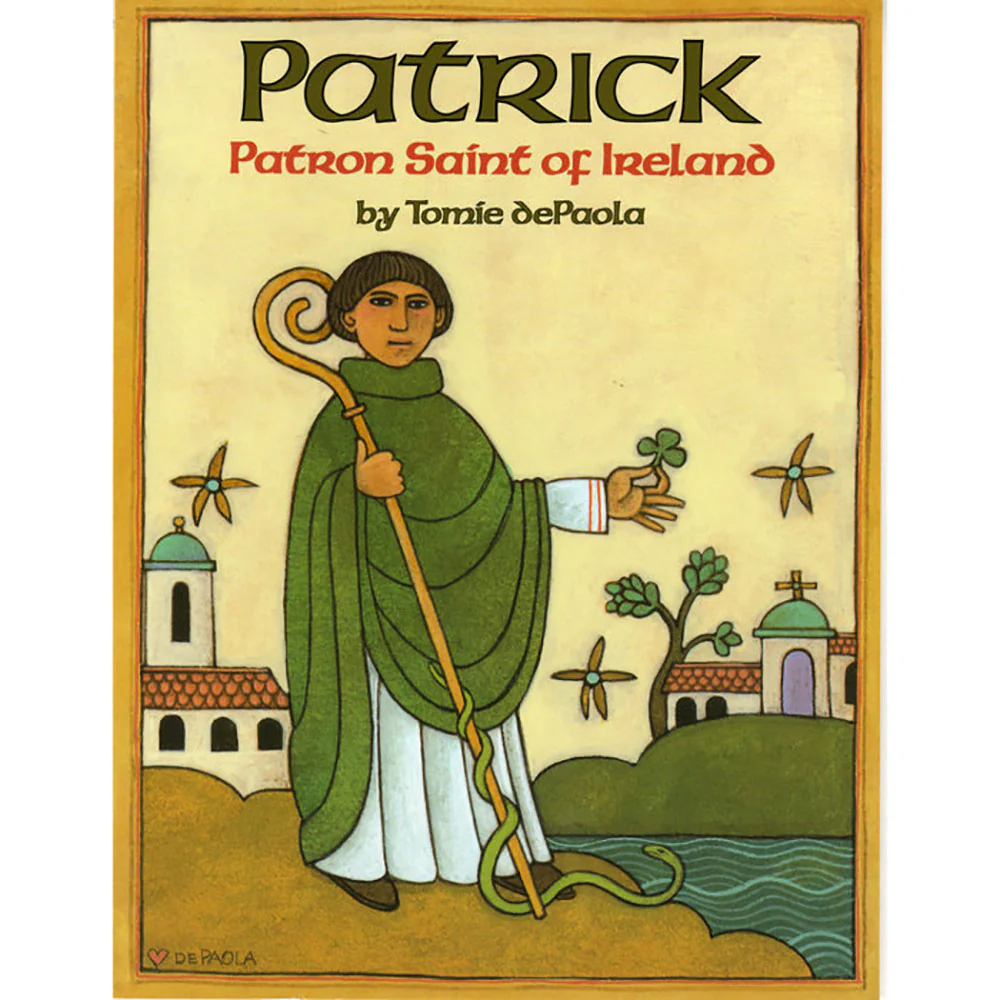
Patrick, Patron Saint of Ireland By Tomie dePaola
Tomie dePaola recounts the life of Saint Patrick-from his noble birth in Britain, to his captivity in Ireland, to the visions which led him to return and found the first Christian church in Ireland. This book recounts a number of legends about Saint Patrick, including the story of how he drove the snakes from Ireland, and his association with the shamrock. For ages 3-8, 32 pages.
The Lost Girl King By Catherine Doyle
Amy and Liam Bell have been packed off to stay at Gran’s house in the wilds of Connemara for the summer. Out for a walk on the first morning of their holiday, they trace the flight of a hawk to a nearby waterfall – only to watch the bird disappear through it. Intrigued, the children follow and soon realize they’ve discovered the entrance to Tír na nÓg, the legendary land of eternal youth. But they’ve been tricked. Find out what happens next! For ages 9-11, 311 pages.
Lardie’s Laughs
Q. Where do leprechauns post their photos?
A. Insta-sham!
Q. How can you tell if a potato isn’t Irish?
A. When it’s a French fry.
Gab in Gaelic
Happy St. Patrick’s Day = Beannachtai na Feile Padraig (pron: bann/ockt/tee nih fail/eh pawd/rig)
Next week, a court case will begin in London. It is a crowd-funded civil case, seeking limited compensation, being brought by several victims of the IRA against Gerry Adams. Previously, victims of the British state had brought such cases and won, which led the last British Government to ban victims from bringing civil actions.
No doubt a line of spooks, spies, and so-called “intelligence experts” will be called in to give evidence against Gerry Adams. The same agencies that failed in every attempt to use similar evidence to secure a criminal conviction.
The conflict in Ireland was brutal and bloody. We all must acknowledge and learn from the past in the name of reconciliation. It is central that victims are acknowledged and have the right to access justice and truth.
In 2014, Sinn Féin, then led by Gerry Adams, along with other parties and the Irish and British governments, signed the Stormont House Agreement. This agreement provided victims with the option to seek criminal convictions through the justice system or pursue a pathway to information recovery that could not be used in future criminal cases.
Decades on after the conflict, the likelihood of convictions is low, and many of those involved are dead. The vast majority of victims welcomed the agreement to learn more about what had happened to their loved ones.
Twelve years later, the British Government has still not implemented its own agreement. Despite the court cases and exposures, the British Government refuses to acknowledge its role as a protagonist in the conflict.
They prefer to maintain the obvious lie that they were referees in a centuries-long sectarian conflict rather than the truth that they were defending British interests by any means necessary.
For the British, Bloody Sunday was soldiers confused in the “fog of war,” collusion in the killing of citizens was down to a few bad apples, evidence was destroyed in mysterious fires or was destroyed by mistake, and killings done by their agents were the actions of rogue elements.
These actions are not isolated or ad hoc; they are part of a well-rehearsed and public strategy. Actions that were refined in other British colonial conflicts. That included using counter gangs, assassinations, and subverting the rule of law as an arm of repression. Throughout the course of the conflict, tens of thousands of Irish republicans went to jail, arrested under special powers, in many cases tortured and convicted in non-jury courts.
Others, like Gerry Adams, were interned without trial for years. The British had not even abided by their own rules when interning Gerry Adams, rendering his detention illegal; they recently changed the law to ensure that he could not seek redress. Over the same period, only a handful of British soldiers or their police were investigated or convicted of any offence.
These issues are not in the past. The cover-up continues, with legislation to hold back on vital information and at every point, cases from victims of state violence are stalled by endless appeals and delays.
The concept of British justice in Ireland was at the service of British interests, and with a few notable exceptions, it still is.
How can Britain talk about reconciliation when they refuse to acknowledge their role as a protagonist?
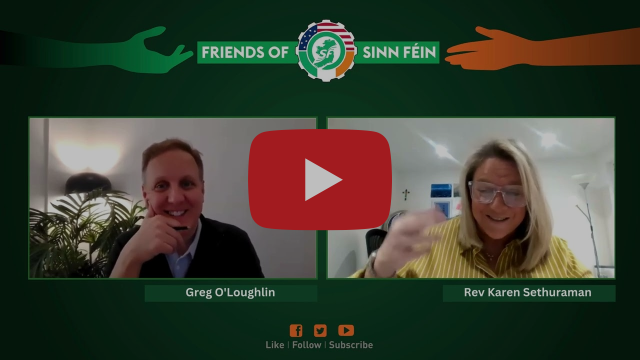
I had the opportunity to sit in on this month’s Irish Unity Webinar, a monthly video interview on the Irish Peace Process, Unity efforts and people involved in that process, hosted by Greg O’Loughlin, Executive Director, Friends of Sinn Féin.
I make the effort to block out that time each month, it is important to me. Why? Because I learn so much by listening in, get opinion and perspective of/from different leaders in the ongoing and substantial effort for Irish Unity.
Usually the following week, the recording of the webinar is made available to everyone. You can watch any of them on our iirish.us website. As I mentioned, the webinars are very good in being clear, answering sometimes forgotten issues and perspectives, and issues that must be overcome for Irish unity to happen. They generate ideas, and share what others are doing too.
I am no expert, I continue to strive, to learn and to invest each day in learning more, refining and expanding both my brain and iIrish’s perspective to our readers here in America, putting that knowledge to good use in my own search for truth and justice and hopes for One Ireland, for all involved.
Truth matters most, no matter how often some parties refuse to tell it, stark and as obvious to the average person with even a cursory view of Ireland’s past and prison, as it may be. I will not state those party’s position as far as left, right or center, without their authoritative response of what that is.
I have reached out to the largest parties (my opinion only: there are roughly 18 political parties in Ireland). Seven of them hold significant numbers to be considered those with real power or sway, though it may rise or fall, depending on cross party partnerships (Coalition governments) and the issue being addressed.
A Bit of Background on Irish Government &Largest Irish Political Parties
Dáil Éireann (Assembly of Ireland – “Dahl Air in“) – the Irish government has a lower house, called the Oireachtas (“Ore rock tus“), manned by 174 elected members, each called a Teachta Dála (“Tea ahtah Dahlah“), referred to as a “TD”. Each TD is elected, and represents a constituency between 20,000 and 30,000 people.
Each area has three to five TDs. No government can be elected for more than five years, but a call for dissolution of the government, and therefore a new election, can happen simply by the call for dissolution, which then has to be approved by the president of Ireland.
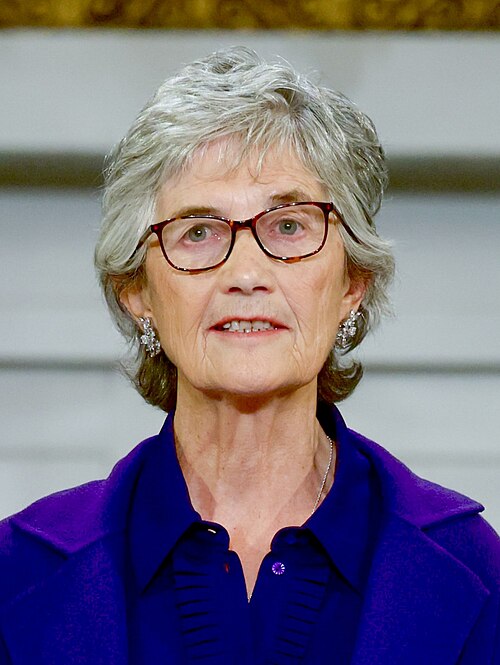
[Each Oireachtas includes the president of Ireland. Catherine Connolly is the President, elected to a seven year term in October of 2025, and an upper house or senate, called Seanad Éireann (“Shawn ahd Air in”). Each Senator is appointed, not elected].
My opinion is that these are the seven parties with the most impact today:
Sinn Féin – (Shinn Fayne) Leader: Mary Lou McDonald, Sinn Féin President, referred to as The Leader of the Opposition.
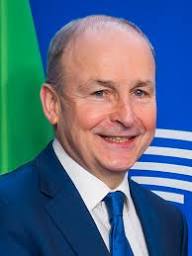
Fiánna Fail – (Fee uh nuh Foyle) Leader: Micheál Martin, called anTaoiseach (Tea- shuck”). This is the Irish head of government, similar to Prime Minister, since January 2025, and from 2020 to 2022 as well. Any party can be elected Taoiseach; if not enough members of that party are elected, the parties work the system maneuvering to try to arrange coalitions that will give them the majority in voting for or to block legislation.
Leo Varadker (Fine Gael ) was the previous Taoiseach. He and Martin were elected to swapped positions as two-year terms expired.
Fine Gael – (Fee uh nuh Gayl) Leader: Simon Harris, Tánaiste (“Taw nish tah”), similar to Deputy Prime Minister.
Green Party – Leader: Roderic O’Gorman
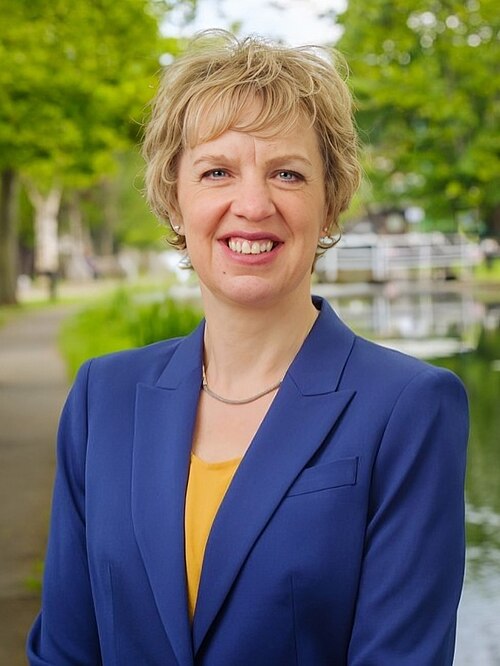
Labour Party – Leader: Ivana Bacik. Other names you will recognize from the Labour Party include Michael D. Higgins, and Mary Robinson, Ireland’s first female president, before resigning and becoming an Independent.
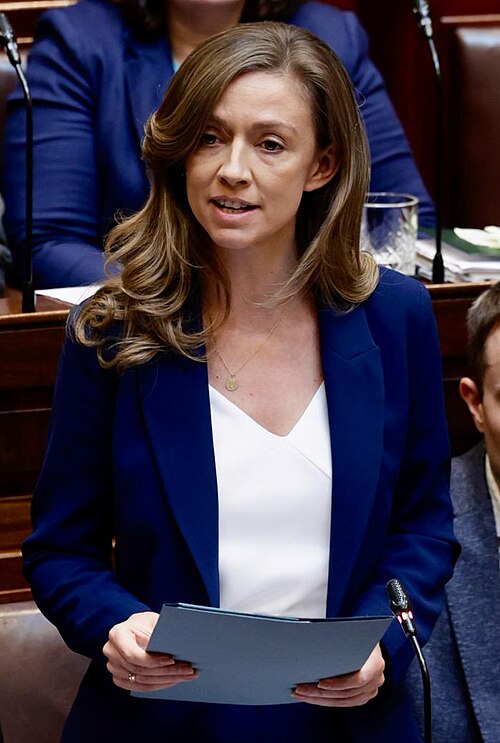
Social Democrats – Leader: Holly Cairns
Independents – such as the President of Ireland, Catherine Connolly
Currently, no single party has a majority to control the government, so they form coalitions with other parties with the goal of getting enough votes to pass what they are advocating for.
What each believes in or propagates can be debated, so I will not tackle that here, as the internet is not big enough to hold it all.
iIrish strives to present a representative view of the Irish leadership perspective, from the parties themselves when possible. It is harder to present different perspectives if the parties won’t talk to you, and never have. The only party that has responded to my requests, at all – let alone in a consistent, periodic basis, is Sinn Féin.
These requests have been made by me specifically, not farmed out to anyone, to allow the Irish political parties to reach the American public, which as you know, has a pretty large Irish population. The requests to be added to any distribution lists, for interviews, for any response at all … has been made several times a year, year after year, all of our 19 years in print, without ever receiving any response whatsoever, from any Irish party. They owe us nothing, but surely they are wiser then that?
We have also asked for ANY update from a legitimate/respected party, authority, or elected or appointed representative, from all of the parties, not just the seven mentioned above – weekly, monthly, quarterly – for party perspective on Irish issues. We can’t get ONE, let alone weekly, as Sinn Féin does.
So who represents the people? Those who talk to and with the people, or those whose received emails go to … the never to be recycled can? Sharing the knowledge wealth is part of my job responsibilities. I strive to keep an open mind, despite the results from requests and the walls.
Onward … Check out this month’s Irish Unity Education Webinar with Greg O’Loughlin and Rev. Karen Sethuraman.
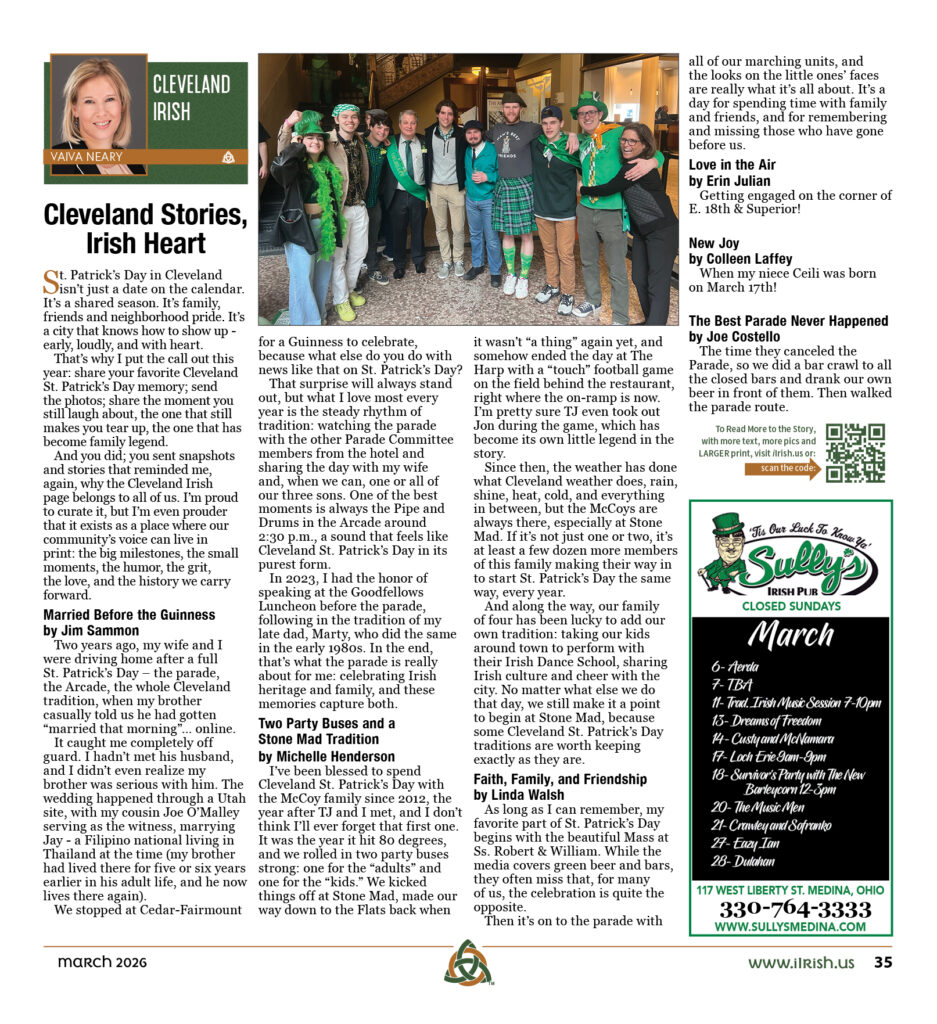
St. Patrick’s Day in Cleveland isn’t just a date on the calendar. It’s a shared season. It’s family, friends and neighborhood pride. It’s a city that knows how to show up – early, loudly, and with heart.
That’s why I put the call out this year: share your favorite Cleveland St. Patrick’s Day memory; send the photos; share the moment you still laugh about, the one that still makes you tear up, the one that has become family legend.
And you did; you sent snapshots and stories that reminded me, again, why the Cleveland Irish page belongs to all of us. I’m proud to curate it, but I’m even prouder that it exists as a place where our community’s voice can live in print: the big milestones, the small moments, the humor, the grit, the love, and the history we carry forward.
Married Before the Guinness, by Jim Sammon
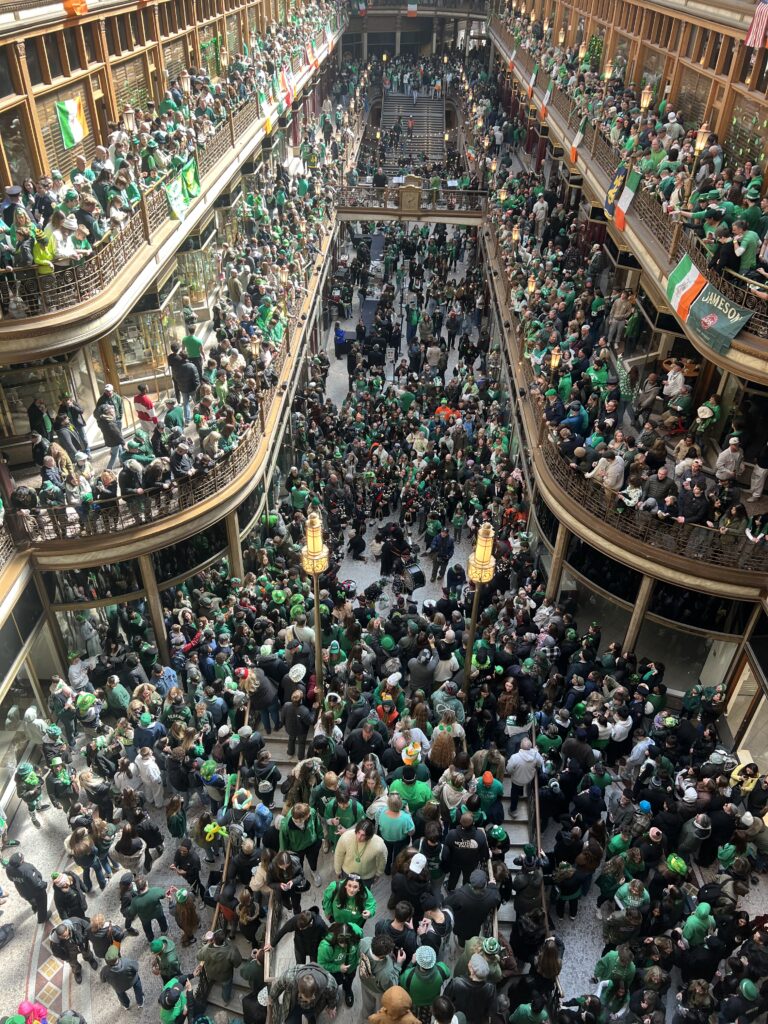
Two years ago, my wife and I were driving home after a full St. Patrick’s Day – the parade, the Arcade, the whole Cleveland tradition, when my brother casually told us he had gotten “married that morning”… online.
It caught me completely off guard. I hadn’t met his husband, and I didn’t even realize my brother was serious with him. The wedding happened through a Utah site, with my cousin Joe O’Malley serving as the witness, marrying Jay – a Filipino national living in Thailand at the time (my brother had lived there for five or six years earlier in his adult life, and he now lives there again).
We stopped at Cedar-Fairmount for a Guinness to celebrate, because what else do you do with news like that on St. Patrick’s Day? That surprise will always stand out, but what I love most every year is the steady rhythm of tradition: watching the parade with the other Parade Committee members from the hotel and sharing the day with my wife and, when we can, one or all of our three sons. One of the best moments is always the Pipe and Drums in the Arcade around 2:30 p.m., a sound that feels like Cleveland St. Patrick’s Day in its purest form.
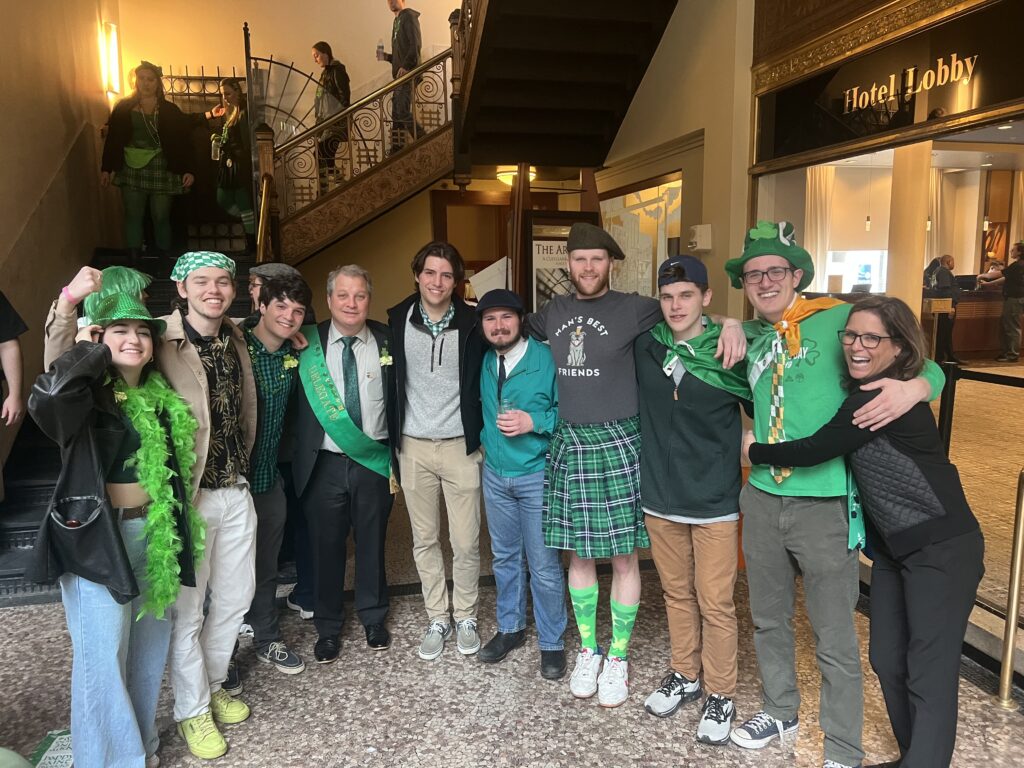
The Arcade by Jim SammonThe Gang
In 2023, I had the honor of speaking at the Goodfellows Luncheon before the parade, following in the tradition of my late dad, Marty, who did the same in the early 1980s. In the end, that’s what the parade is really about for me: celebrating Irish heritage and family, and these memories capture both.
Two Party Buses and a Stone Mad Tradition, by Michelle Henderson
I’ve been blessed to spend Cleveland St. Patrick’s Day with the McCoy family since 2012, the year after TJ and I met, and I don’t think I’ll ever forget that first one. It was the year it hit 80 degrees, and we rolled in two party buses strong: one for the “adults” and one for the “kids.” We kicked things off at Stone Mad, made our way down to the Flats back when it wasn’t “a thing” again yet, and somehow ended the day at The Harp with a “touch” football game on the field behind the restaurant, right where the on-ramp is now. I’m pretty sure TJ even took out Jon during the game, which has become its own little legend in the story.
Since then, the weather has done what Cleveland weather does, rain, shine, heat, cold, and everything in between, but the McCoys are always there, especially at Stone Mad. If it’s not just one or two, it’s at least a few dozen more members of this family making their way in to start St. Patrick’s Day the same way, every year.
And along the way, our family of four has been lucky to add our own tradition: taking our kids around town to perform with their Irish Dance School, sharing Irish culture and cheer with the city. No matter what else we do that day, we still make it a point to begin at Stone Mad, because some Cleveland St. Patrick’s Day traditions are worth keeping exactly as they are.
Faith, Family, and Friendship, by Linda Walsh
As long as I can remember, my favorite part of St. Patrick’s Day begins with the beautiful Mass at Ss. Robert & William. While the media covers green beer and bars, they often miss that, for many of us, the celebration is quite the opposite.
Then it’s on to the parade with all of our marching units, and the looks on the little ones’ faces are really what it’s all about. It’s a day for spending time with family and friends, and for remembering and missing those who have gone before us.
Love in the Air, by Erin Julian
Getting engaged on the corner of E. 18th & Superior!
New Joy, by Colleen Laffey
When my niece Ceili was born on March 17th!
The Best Parade Never Happened, by Joe Costello
The time they canceled the Parade, so we did a bar crawl to all the closed bars and drank our own beer in front of them. Then walked the parade route.
It’s that time of year again, St. Patrick’s Day celebrations are scheduled at every Irish and non-Irish pub around Cleveland. We are fortunate to have so many choices to turn to enjoy the day. We all have our favorites, that place “where everyone knows your name” or perhaps a spot just discovered.
Although I don’t recommend trying out this months vocabulary on St. Patrick’s Day, in what is sure to be a packed and busy environment, save it for a quieter time or perhaps on your next visit to the West of Ireland.
Vocabulary
Feoil (feeole)
meat Turcaí (turkey) turkey
Uaineoil (oon-ole) lamb
Liamhás (lee-voss) ham
Mairteoil (mort-ole) beef
Lacha (lock-ah) duck
Muiceoil (mwi-ke ole) pork
Stéig (stay-g) steak
Torthaí (tor-hee) fruit
Úlla (ool-a) apples
Peitseoga (pet-soga) peaches
Neachtairíní (nek-tah ree-nee) necterines
Liomóidí (limb-o-dee) lemons
Bananaí (banan-ee) bananas
Oráistí (or-osh-tee) oranges
Mealbhacáin uisce (malv-a-con ish ka) watermelon Glasraí (gloss-ree) vegetables
Tráitaí (traw-tee) tomatoes
Leitís (let-eesh) lettuce
Tornapaí (turn-a pea) turnips
Cabáiste (ca-bosh-ta) cabbage
Cairéid (car-aid) carrots
Prátaí (praw-tee) potatoes
Oinniúin (un-yoon) onion
Deochanna (jowk-ahnna) drinks
Caife dubh (kah-fay duv) black coffee
Tae láidir (tay lah-jer) strong tea
Tae lag (tay-lag) weak tea
Ar mhaith leat deoch?(ar vah laht jowhk) Would you like a drink?
An mbeidh deoch agat? (an mayd jowh ah-gut) Will you have a drink?
An bhfuil ocras ort? (an will oh kruss ort) Are you hungry?
An bhfuil tart ort? (an will tart ort) Are you thirsty?
Tá tart orm. (taw tart ort) I’m thirsty.
Tá ocras orm. (taw oh-kruss ort) I’m hungry.
An bhfuil tú réidh le hordú? (an will too ray le hor-doo) Are you ready to order? An bhfuil sibh réidh le hordu? (an will shiv ray le hor-doo) Are you ready to order?
Plural
Leat (laht) for you/ with you
Ba (buh) it would be Ar – (ur) would it be
Liom (lum) for me / with me
Mise, an ea? (meesha ahn ah) Me, is it? Who me?
Ba mhaith leat (ba vah laht) You would like
Ba mhaith leat rud éigin a ithe. (ba vah laht rud a-gin a ih-ha) You would like something to eat.
Ar mhaith leat? (ar vah laht) Would you like?
Ar mhaith leat rud éigin a ithe? (ar vah laht rud a-gin a ih-ha) Would you like something to eat?
Ba mhaith. (ba vah) Yes. (it would be well)
Nior mhaith (neer vah) No (it would not be well)
Ba mhaith liom.(ba vah lum) I would like (it would be well with me)
Ba mhaith, ba mhaith liom rud éigin a ithe. (ba vah lum rud a-ginn a ih-ha) Yes, I would like something to eat.
Ba mhaith liom rud éigin a ól. (ba vah lum rud a-ginn a ol) I would like something to drink.
Sú oráiste (soo oh-rash-ta) orange juice
Ubh / an ubh (oov/ahn oov) egg / the egg
Putóg / an phutóg (puh-toeg/ahn fuh-toeg) pudding / the pudding
Ispín / an t-ispín / ispíní (ish-peen/an tish-peen/ish-peen-ee) sausage / the sausage / sausages
Bagún / an bagún (bah-goon/an bah-goon) bacon / the bacon
Arán bán / an t-arán bán (ah-rawn bahn/ an ta-rawn bahn) white bread / the white bread
Arán donn / an t-arán donn(ah-rawn dun/ahm ta-rawn dun) brown bread / the brown bread
Tósta / an tósta (tost-ah/ahn tost-ah) toast / the toast
Im / an t-im (im/ahn tim) butter / the butter
Cupán tae / an cupán tae (cup-ahn tay/ahn cup-ahn tay) tea / the tea
Caife / an caife (ka-fay/ ahn ka-fay) coffee / the coffee
Siúcra / an siúcra (shoo-kra/ahn shoo-kra) sugar / the sugar
Gloine bainne (glon-yah bahn-yah) glass of milk
Spúnóg amháin (spoo-nog ah-wahn) one spoon
Dhá spúnóg (gah spoo-nog) two spoons
Trí spúnóg (tree spoo-nog) three spoons
Anraith / an t-anraith (ahn-rah/ahn tahn-rah) soup / the soup
Milseog / an mhilseog (mill-shog/ahn vill-shog) dessert / the dessert
Briosca / an briosca / brioscaí (brish-ka/ahn brish-ka/brish-kee) biscuit / the biscuit / biscuits
Sailéad torthaí (sahl-ayd tor-hee) fruit salad
Feoil / an fheoil (fee-ole/ ahn ee-ole) meat / the meat
Sicín rósta/ an sicín rósta (shih-keen rost-ah) roast chicken / the roast chicken
Bia mara / an bia mara (bee-uh mar-ah) seafood / the seafood
Iasc / an t-iasc (ishk/ ahn tishk) fish / the fish
Uisce (ish-ka) water uisce beatha (ish-ka bah-hah) whiskey (water of life)
Beoir /an bheior (byore/ahn vyore) beer / the beer
Pionta beorach (pyonta byore-ach) pint of beer
Gloine beorach (glon-yah byore-ach) glass of beer
Fíon / an fíon (fee-un/ ahn fee-un) wine / the wine
Buidéal fíona (bu-dahl fee-uh-na) bottle of wine
Gloine fíona (glon-yah fee-uh-na) glass of wine
Freastalaí (frahs-ta lee) waiter an freastalaí (ahn frahs-ta-lee) the waiter
freastalaithe (frahs-ta-lee-ha) waiters
Biachlár / an biachlár (bee-uh-clar/ahn bee-uh-clar) menu / the menu
Remenber there are two types of vowel groupings, broad and slender a,o,and u are broad and e and i are slender. A broad vowel would cause the lenited bh combination to be pronounced as a w, a slender vowel would make it be pronounced as a v.
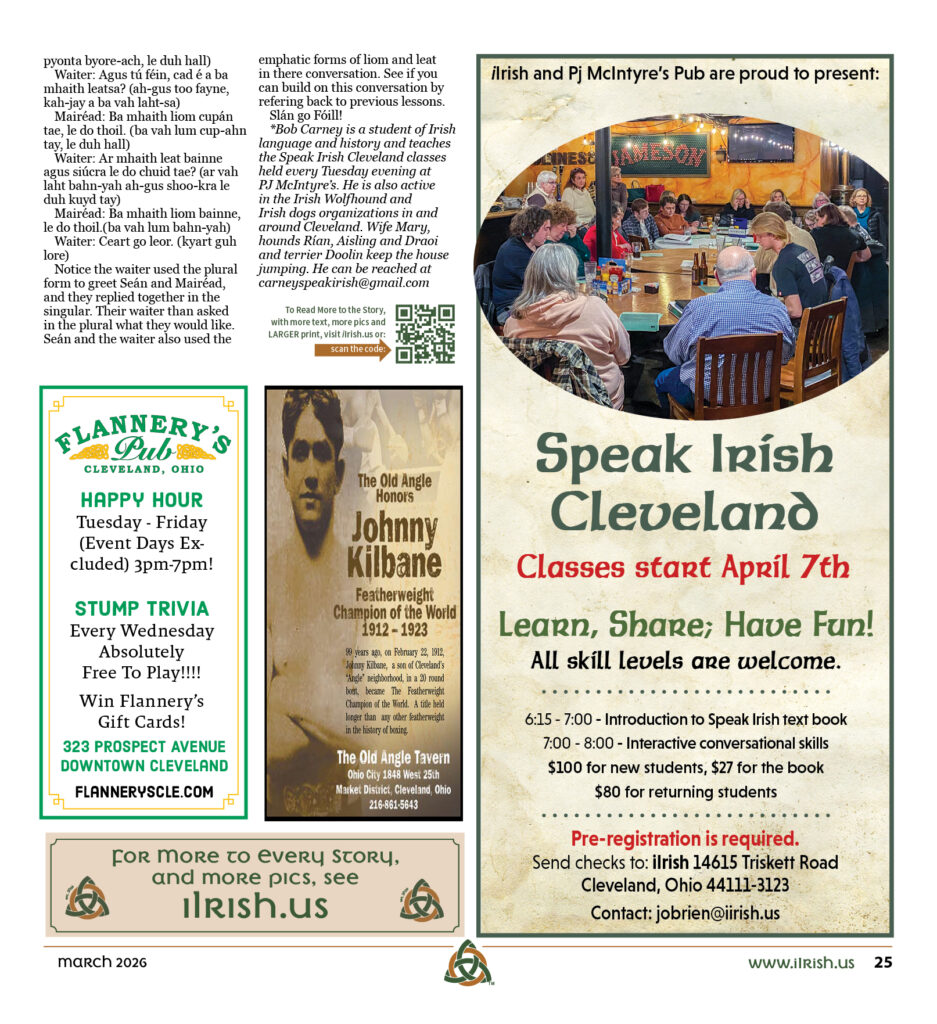
Sample Conversation
Waiter: Dia daoibh. (dee-uh yeev)
Seán agus Mairéad: Dia’s Muire duit. (dee-us morra gwit)
Waiter: Anois, Cad é a ba mhaith libh? (ah-nesh, kah-jay a ba vah liv)
Seán: Ba mhaith liomsa pionta beorach, le do thoil. (ba vah lum-sa pyonta byore-ach, le duh hall)
Waiter: Agus tú féin, cad é a ba mhaith leatsa? (ah-gus too fayne, kah-jay a ba vah laht-sa)
Mairéad: Ba mhaith liom cupán tae, le do thoil. (ba vah lum cup-ahn tay, le duh hall)
Waiter: Ar mhaith leat bainne agus siúcra le do chuid tae? (ar vah laht bahn-yah ah-gus shoo-kra le duh kuyd tay)
Mairéad: Ba mhaith liom bainne, le do thoil.(ba vah lum bahn-yah)
Waiter: Ceart go leor. (kyart guh lore) Notice the waiter used the plural form to greet Seán and Mairéad, and they replied together in the singular. Their waiter than asked in the plural what they would like. Seán and the waiter also used the emphatic forms of liom and leat in there conversation. See if you can build on this conversation by refering back to previo
USA, USA is a patriotic chant we often hear, such as at the recent Milan Olympics. Of course, it was an Irishman, born on Blarney Street in Cork who is credited with first using the beautiful name: “United States of America.”
Stephen Moylan was born in Cork and educated in France, due to the British Penal laws forbidding the education of Catholics. Moylan the Immigrant ended up making his way to Philadelphia in 1768, a Quaker founded city where religious tolerance was one of its hallmarks.
He was economically successful and volunteered his services to Gen. George Washington at the start of British aggression against the American Colonies in 1775. He served in various roles, including being appointed Quartermaster by the Continental Congress.
Moylan also served as an Aide de Camp to Gen. Washington and was a Colonel of the Dragoons (cavalry) fighting in most of the major revolutionary battles, up to and including the Brit surrender at Yorktown. Moylan’s three brothers, all born in County Cork, served in the American Revolution as well.
Prior to the Revolution, Moylan was one of the Founders of the oldest Irish Organization in America, The Friendly Sons of St. Patrick. Moylan was its first President. The Friendly Sons stated purpose was to aid immigrants, especially those from The Emerald Isle. The Friendly Sons also raised significant funds to help fund the fledgling Bank of North America, which was created to help finance the American Revolution.
In the 1990s, New York Times Columnist, William Safire, wrote that his research indicated that Stephen Moylan was the first to use the Term “The United States of America” in official correspondence penned by Moylan on January 2, 1776, a full six months before the Declaration of Independence was promulgated on July 4th, 1776.
Congress promoted Moylan to the rank of Brigadier General. Moylan died in 1811 and is buried in St. Mary’s Catholic Cemetery in Philly. Last month, Irish Taoiseach Micheal Martin, a Cork man himself, presided over the unveiling of a plaque erected in honor of Moylan’s contributions to The American Revolution and celebrating the powerful and durable ties that bind Ireland and The United States of America.
Keir Starmer
Eighteen Months is a short time for Brit Prime Minister Keir Starmer to already be on thin ice. Even with a huge electoral mandate, P.M. Starmer is being shook by the Epstein disgrace. While Starmer had no interaction with Epstein, his appointed ambassador to the U.S.A., Peter Mandelson, one of the many elites with ties to Epstein, is touching off outrage from the UK citizenry.
The recalled Ambassadorial appointment is rocking the Brit political establishment, coupled with continuing revelations of the grotesque relationship of Randy Andy Mountbatten-Windsor, the former Prince Andrew, with Epstein’s twisted, X-rated version of Pinocchio’s Pleasure Island that it could bring Westminster tumbling down. Could The UK be looking at its seventh Prime Minister in eight years?
“The Files” have even damaged the Royal Family in Norway. The Germanic Brit Royals are so terrified of the storming of the gate that they are throwing Royal Randy Andy to the wolves.
Meanwhile, here in the Colonies, the American Ruling class and Politicos have skated without consequence; for instance, Epstein’s besty, the architect of the Marie Antoinette Ball Room, Pres. dTrump seemingly skips merrily along. Dozing Donnie has the power to unilaterally release every and all files, why does he not act, what is he hiding? The current ham-fisted governmental cover-up makes Watergate look quaint by comparison.
A meek GOP leadership shrugs its collective shoulders, and silence is the response from our enabler brother and sisters in the Evangelical Community. The rape of children and the commoditization of women have become a cornerstone of “making America great again”, count me out. Ironically, the only person in jail from these years of criminal activity is a woman (Brit Gislane).
As to Ireland, this Epstein stain has seemingly put UK PM Starmer’s campaign promise to revoke the Legacy Act, the British Political and Military establishments efforts to sweep the human and civil rights crimes carried out in the Six Counties, done in the name of Randy Andy’s family, under the rug and into the dust bin of calculated lost history. We are eighteen months into this Starmer government, and no mention of a promised vote to reverse this shameful act.
Quote of the Month
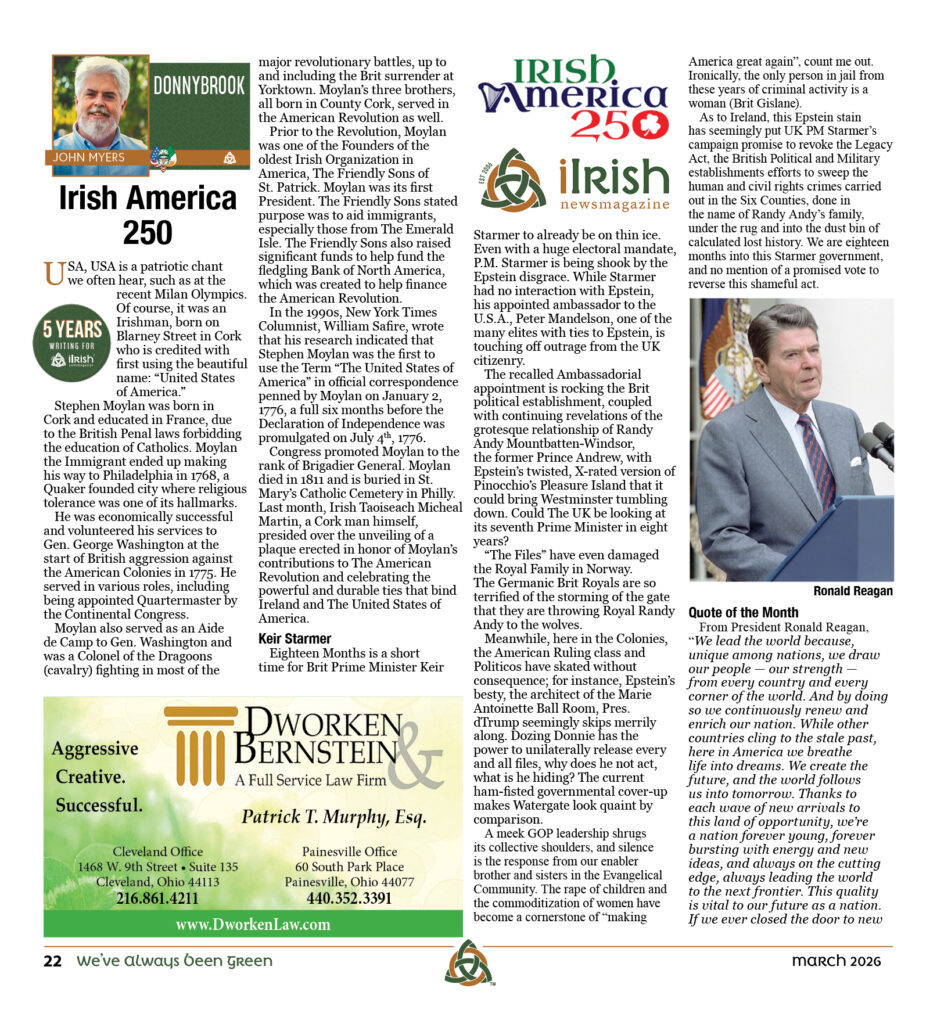
From President Ronald Reagan, “We lead the world because, unique among nations, we draw our people — our strength — from every country and every corner of the world. And by doing so we continuously renew and enrich our nation. While other countries cling to the stale past, here in America we breathe life into dreams. We create the future, and the world follows us into tomorrow. Thanks to each wave of new arrivals to this land of opportunity, we’re a nation forever young, forever bursting with energy and new ideas, and always on the cutting edge, always leading the world to the next frontier. This quality is vital to our future as a nation. If we ever closed the door to new Americans, our leadership in the world would soon be lost.” In this Congressional election year, push your candidates to drop the posturing and pass a fair, just and comprehensive Immigration law.
UNITED STATES – SEPTEMBER 01: Ronald Reagan, with the Statue of Liberty behind him, speaks at Liberty State Park, Jersey City. (Photo by James Hughes/NY Daily News Archive via Getty Images)
Irish Poets
From Brendan Behan: It’s not that the Irish are cynical. It’s rather that they have a wonderful lack of respect for everything and everybody
Melt Ice
In addition to arresting little 5 year old Liam in Minnesota, murdering two U.S. Citizens, The Irish Mirror reports that Seamus Culleton, a native of County Kilkenny was pulled over by ICE agents and arrested outside Boston. Culleton has been held in an immigrant detention “camp” for the last six months, despite carrying a valid work permit, a current Massachusetts drivers license, operating his own plastering company, living in the USA for over twenty years, married to an American citizen AND no criminal record, not even a parking ticket. He had one more interview as part of his Green Card processing. If this is Pressy dTrump’s idea of “The worst of the worst,” dTrump should be sent back to his parent’s European homeland, The Don does have a criminal history after all, Seamus does not.
Culleton shared with RTE Radio that “It’s absolute torture, psychological torture, physical torture” in the detention holding pens. The Mirror reported that Culleton shared: “Everybody’s sick. There’s Covid in every pod. There’s influenza in every pod. It’s just a horrible, horrible, horrible place. It’s very hard to stay positive in a situation like this. We’re often without hygiene products. We’re often without shampoo and soap. The showers are filthy; the toilets are filthy. Infection, disease and sickness is right here. I just want to get back to my wife. We were so desperate to start a family.” Why is he being held in prison, six months without due process of law. These dTrump policies are not making America Great, America is being remade into Potterville (It’s a Wonderful Life) before our very eyes, RESIST!
For all of its extraordinary international reputation as one of the richest traditions of literature, Irish literature retains a persistent regional strain. We might as well admit that when we think of Irish literature we expect a cottage, a cow, and cursed priest.
In drama, Synge delivers and Martin McDonagh makes sardonic hay of the peasant life in his black Connemara comedies. In fiction there’s John Keane, of course, and Patrick Kavanaugh. The pull of the provincial life, the old rural home, features in contemporary writing, too, such as Anne Enright’s The Green Road and Claire Keegan’s Foster. Niall Williams’ Faha village in Clare, is the “forgotten elsewhere” in This is Happiness that envisions a rich emotional landscape equal to the physical one.
Provincialism, rural beauty, the revolutionary past, the clutch of family, the church, stasis, and escape. These seven attributes don’t fully cover twentieth and twenty-first Irish literary themes, but they make a good start. Oh, and secrets. Where would Sebastian Barry be without them?
Now to a great contemporary writer: Colm Tóibín. He was born in County Wexford in 1955, a graduate of UCD, author of eleven novels, winner of many awards, including Booker listings, and a member of Aosdana. He is a frequent contributor to the London Review of Books and the New York Review of Books. He has written critical studies of other writers, including Lady Gregory, and his New Ways to Kill Your Mother: Writers and Their Families discuss James Baldwin, W.B. Yeats and J.M. Synge.
He curates exhibits, judges many prizes, and his partner is the editor of the prestigious Semiotext(e ), Hedi El Khoti. Tóibín’s sonorous voice, erudition, and great wit garner many speaking engagements. I have read almost everything he has written, heard him speak at Kenyon College, and listen to any podcast on which he is a guest. Indeed, Tóibín is my favorite travelling companion on Spotify on my frequent drives home to Pittsburgh.
I would like everyone interested in Irish literature to read The Heather Blazing. I don’t think that is too much to ask. I achieved part of this personal mission by teaching the novel frequently at John Carroll University, and I believe it is the best entry into an understanding not only of all of the seven characteristics noted above but, more importantly, of the slow emergence of a first modern and ultimately global Irish culture from the grip of revolutionary (but ultimately conservative) nationalism and a Catholic constitution.
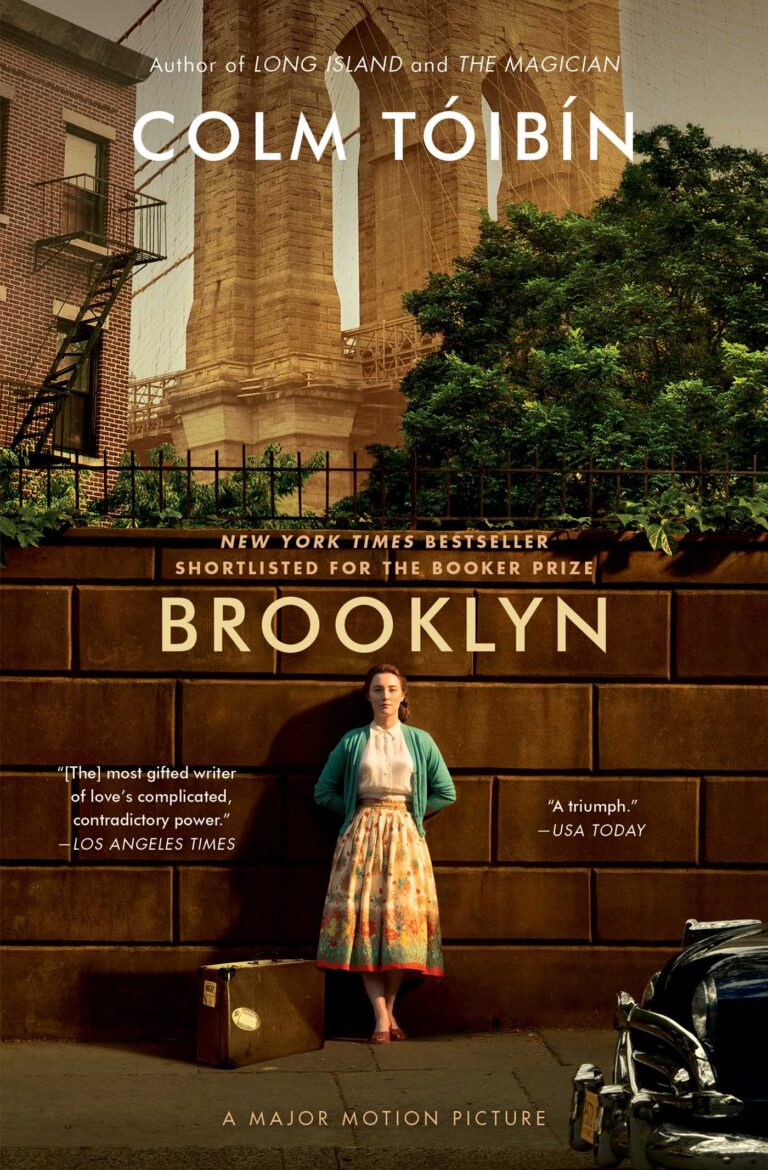
The Guardian has done us the favor of ranking of Tóibín’s best ten novels, and while I agree with their top two picks (The Master and The Magician), they place The Heather Blazing in eighth place and rank the Brooklyn novels (Brooklyn and Long Island) above it. This cannot stand. They have their valid reasons, which I could elucidate here, but still, they are wrong. (https://www.theguardian.com/books/2025/jul/14/brooklyn-and-beyond-colm-toibins-best-books-ranked
Wexford’s beautiful seaside is the backdrop for five of Colm Tóibín’s novels, set in Enniscorthy, his birthplace, and featuring some of the same characters across the stories. Brooklyn (2009) is his biggest commercial success, adapted for an Oscar nominated film in 2015 and followed up with the 2024 sequel Long Island. Amazon even adds “an Eilis Lacey Series” after the title as if the protagonist which appears in these two books (hardly a series) were the equivalent of Hercule Poirot.
Tóibín’s novel Nora Webster is also set in Wexford. The novels with Eilis Lacey depict the harrowing experience of migration, the great loneliness and long leave-taking, and the challenges of assimilation and economic insecurity. Since some 10% of Americans claim at least a drop of Irish blood, migration and settlement novels, like those of the gifted Alice McDermot, are popular.
At every gathering at the West Side Irish or East Side Irish clubs, some lilting voice can tell a similar tale. These stories are now largely nostalgic since the Irish are established and safe this century later, but the experiences are still within the grasp of living memory.
Tóibín’s Brooklyn may well be the best of these stores, much better than Angela Ashes, and much dryer. I remember telling my dad about Frank McCourt’s book and he shrugged his shoulders. His parents had braved their own (unexpected) Atlantic crossing to live on a steep hill near the University of Pittsburgh alongside their numerous sisters and brothers.
Everyone who worshipped alongside them at Saint Paul’s Cathedral was named Joyce, Browne, Lynch, Murphy, O’Toole, D’Arcy or any of the fourteen tribes of Galway. My dad would think that Eilis really didn’t have it badly.
Eilis’ job in the department store was better than my grandmother’s as a maid. She (Nellie) lost her engagement ring down the drain of the mansion she cleaned and then lost her job for crying about it.
My grandfather was a night security guard, shaking the doorknobs of the fancy homes in Squirrel Hill. He (James) installed a fake telephone near the car’s console so it would look like he was well-connected to the police and fire services.
My father delivered papers in his three-wheeled wagon. Some of these Colleran/O’Toole relatives, unlike Eilis, took their hard-earned savings and went back to Ireland permanently. And now I wouldn’t mind the reverse: a nice snug house in the Claddagh. Colm Tóibín’s novel has an accessible plot, but it is also emotive and evocative, rendering the deepest kind of loss and yearning, largely borne in silence.
The Heather Blazing Silence is the great theme of The Heather Blazing (1992): both the silence within families, and the silence in the public sphere. The latter has replaced colonialism, with the restrictive laws and forbidding social judgements suppressing freedom and growth, and this suppression is fully and only in the hands of the Irish themselves to change.
The emblem of this intransigence is Eamon Redmond, a superior court judge. Set in the 1980s, Redmond writes deeply consequential opinions, models of clarity and constitutional directness, but heartless, outdated, impersonal, and dry. To his family, Eamon seems to embody these very traits. His memories reach back to the politics of his grandfather and father, and Eamon’s ultimately reactionary legal positions trace the Fianna Fail politics from Eamon De Valera to Charles Haughey.
One of the cases on which he must render an opinion concerns a Catholic school’s expulsion of a pregnant girl. Redmond’s own daughter is an unwed mother, but still he finds in favor of the school, reasoning that the Constitution’s restricted sense of family rested on traditional bonds of matrimony (and implicitly of sexuality). At a deep level, Redmond knows he lacks courage to attend to his deeper, more compassionate instincts. He is a hollow man, silenced by a politics that began as liberatory but congealed into a new type of control, more dogmatic and binding.
Tóibín’s most critically acclaimed books are not about anything Irish. The Magician imagines the life of the great German writer Thomas Mann, an equally remote father and a one-time conservative who with the rise of Nazism became increasingly progressive.
The Master, a portrait of several pivotal years of Henry James’ life, is a consummate novel of silence. The prolific American novelist writes volumes but remains obscure to himself, blocking the emotional discomfort and intellectual consequences of facing pain.
Tóibín’s fictive through line from the character of Eamon Redmond to that of Henry James suggests the causes and consequences of isolation, shame, and cowardice manifest not only in personal sorrow but in a wounding social ethos. The Heather Blazing helps to explain the long stagnation of the 1950s and after, and Ireland’s very agonized reckoning with new social values, and the fear and silence that caused an unnecessary sorrow to last too long.
As we celebrate the feast day of Saint Patrick this month, the patron Saint of Ireland, we also celebrate our Irish heritage. Part of that heritage encompasses our ancient Irish legal system established by the Brehon (BREE-hǝn) Laws. These laws spanned a millennium and embodied a sophisticated set of legal governance that is considered progressive for its time. The people who dispensed justice under this system of laws were known as the Brehons.
Who Were the Brehons?
The title “Brehon” derives from the Irish “breitheamh” (breɪ’haɪm), which means judge. Becoming a Brehon was not easy. A person would dedicate themselves to twenty years of study in the law before they were considered proficient enough to become a Brehon.
Much of their studies included the oral traditions of the law, which was the initial method of passing down and dispensing the law through the generations. It was not until the seventh century that the Brehon laws would be recorded in written form.
Rigorous study was not the only requirement to become a Brehon. Family descent was a key factor. A Brehon would have entered his role as a matter of heredity.
As such, a career as a Brehon would pass down to future generations in a family. This led to an established class of professional judges who dedicated themselves to carrying out the lifetime duties of a Brehon. Certain families became known for the exceptional Brehons who descended from their families.
Brehons were also well compensated. Their high compensation was paid to eliminate the potential for bribes being paid or unjust results being handed down.
The establishment of the Brehon law has been dated to approximately one thousand B.C., as evidenced by the oral accounts that were subsequently transcribed. The Brehon laws are truly of Celtic Irish traditions and origin.
The influence of foreign legal systems, such as the English common law, would not occur on the Island of Ireland until the seventeenth century. By that time, the Brehon law was viewed as inapplicable and outdated.
The Brehon Law Was Unique
Our modern legal framework comprises separate criminal and civil justice systems. If a person commits a criminal act, murder, assault, theft, and the like, they are likely to go to jail.
If a person commits a breach of contract, injures someone, or fails to pay their bills, they will likely be required to pay or compensate the other party for their monetary loss. Under the Brehon law, this dual system, a criminal and civil justice system, did not exist.
While the Brehon law appeared structured in a fashion similar to our civil justice system today, it was not the same. The overriding emphasis in the Brehon system was compensation to the aggrieved party for the harm done to them. It focused on the contracts existing between parties, the determination of property disputes, including livestock and goods, and other similar types of disputes.
Punishment of individuals or punitive actions, such as jail, were not considered. This is reflective of the attitude of the early Irish to seek equity and compensation to resolve “harms” to the aggrieved party rather than imposing punishment.
A notable example of equitable compensation, rather than punitive measures, in Brehon law is the payment known as “éric” (AIR-eek). Consider, for example, a murder case. Under Brehon law, the murder of an individual was not punished by jailing or executing the perpetrator. Rather, a Brehon would assess the perpetrator éric, a fine, for commission of the murder, to be paid to the victim’s family.
The éric was assessed based on the severity of the act and the victim’s status in the community. If the perpetrator failed to pay the éric to the victim’s family, other avenues under the law could be imposed to obtain it from the perpetrator.
The Brehon Laws of Ancient Ireland
The Brehon laws encompassed a wide range of areas that the early Irish would have incurred daily. These areas included music, art, poetry, property, land, relationships, health, and the care for the hungry and poor.
In music, harpists were the only musicians who were allowed to hold noble standing. Flute players, trumpeters, jugglers, magicians, and other related professions, held no societal status other than the status of the chieftain they were affiliated with.
In land transactions, if a person wished to acquire good land from an owner, a buyer would pay 24 cows. If the land being acquired was rough and dry, the buyer would pay the owner 12 cows.
In relationships between a woman and a man, if a man takes a woman away on horseback into the woods or seagoing vessel, and members of the woman’s clann are present when they ride off, the clann must object withing twenty-four hours of her being taken or they may not demand payment of a fine. Before a marriage could take place, the groom was required to pay a bride price of land, cattle, horses, and gold or silver to the bride’s father. The married couple would retain rights to individual land, flocks, and household wares they each bring to the marriage.
Married women had equitable relief under the Brehon laws too. If a husband was listless and did not pay romantic attention to his wife, he was required to pay a fine for his inattentiveness. If a marriage relationship was waning, the couple were entitled to declare on February first that a mutual decision was made to separate and leave the marriage.
Care for the elderly was also accounted for under Brehon law. For instance, when a clann member became elderly, the clann must provide the elder with one oatcake a day and a container of sour milk as food. The clann was required to bathe the elder every twentieth night and wash their head every Saturday. The elder was also to be given an allotment of seventeen sticks of firewood to keep them warm.
The Brehon law also required care for the hungry and poor. If someone came to a door asking for food and care, the person or clann residing in the “teach” (chalk), the home, must provide food and care to them unconditionally.
As for the spiritual care of the clergy, a layman was allowed to consume up to six pints of ale with dinner, while monks were restricted to only three pints of ale with their dinner. This was to prevent the monk from becoming intoxicated before prayer time.
The Brehon law of ancient Ireland constituted a distinctive legal system that upheld principles of equity and justice on the island for one thousand years. The arbiters of that system were the judges, the Brehons. Judges, like the Brehons before them, remain committed to providing fair and unbiased justice.
I am proud to call myself a Brehon. As we celebrate our grand heritage this month remember our Brehons. Lá Fhéile Pádraig sona duit!
2026 Parade Theme: Celebrating 250 years of Irish American Contributions
2026 Hibernian of the Year Maire O’Leary Manning
Maire is the first born of nine children of Mary Celine McNamara O’Leary and Alphonsus O’Leary. Both Al and Mary Celine have been dedicated Hibernians for over 70 years and instilled a love of faith, Ireland, and America in their children.
Maire’s mother served as President of Division 2 but Maire became a Hibernian through her cousin Marilyn Madigan. She was installed in 1987 and served in many Division and County offices, sometimes simultaneously, including Division President. Maire headed many committees and events including the Easter Egg Hunt for over 25 years. It continues to be one of the Divisions favorite events. She and several members and friends worked at Browns Stadium for six years to raise money for Hibernian charities.
Maire has served in most offices on the Ohio State Board, including 2015-2017 Ohio LAOH State President and comprised a data base as Ohio State Treasurer when electronic records were required.
She served as the Degree Team Committee Chair at the 2008 National Convention in New Orleans with Maire Leffel. They became Co-Directors when Sheila Murphy Crawford and Joan Cavanaugh were unable to continue. Maire was a member for 10 years before serving as Co-Director for more than 15 years. She remains a dedicated team member but has stepped aside as an officer.
Maire has been teaching Irish dance most of her life but became certified in 1987. She was blessed to have many wonderful teachers. She taught dancers through the Cleveland Gaelic Society and the O’Leary-Manning School who competed in competitions in the US and Ireland. She teaches ceili dance at the West Side Irish American Club and assists with the ceilis held. She was a past officer at IDTAMA. Maire served as an officer of the Cleveland Associated Irish Clubs, the Gaelic Society and was honored as Queen Deirdre in 1975. She is a representative for the UIS and was named Co-Chair in 2015.
Maire was a founding member and officer of the Cleveland Emerald Camogie Club and served as officer on the Midwest Camogie Board. She served as the first National Secretary of the North American Camogie Board and was later named an Honorary President. She is a member of the Comhaltas, IACES, and a lifelong member of the WSIA. She has marched in the WSIA Drill Team for over 35 years.
An avid gardener, Maire has her own garden and is on the maintenance committee of the Irish Cultural Gardens on MLK Boulevard. She also volunteers at the WSIAC gardens and Sugar Mill Botanical Gardens. She is a dedicated volunteer at the Cleveland Metroparks Zoo.
Maire attended SVDP grade school and St. Joseph Academy. Maire has been a member of St. Clements parish for over 40 years. She previously worked for the City of Cleveland Public Utilities Commission. Maire was married to Richard Manning (deceased) and has a daughter Maureen. Maureen is a member of the LAOH and has completed in Irish Dance and marched in the WSIA majorettes, pompoms and WSIA Ladies Drill Team.
Maires dedication to our Order and Community is instilled in her and is shared by her. She is an inspiration to our motto. Cairdas, Aontcht agus Criostin Charthanacht Friendship, Unity and Christian Charity.
2026 Grand Marshal Thomas J. Mackin
Thomas J. Mackin is the son of Thomas of Clonbur, Galway and Mary Coletta Dever Mackin, whose family comes from Achill, Mayo. Tom along with his siblings Mary Schriner and the late James participated with the West Side Irish Club’s Marching Units.
Tom is married to Bridget McNamara Mackin. They are the proud parents of seven; Thomas, Daniel, Caitlin, Bridget, Colleen, Patrick and Erin. They have three Grandchildren: Thomas, Daniel and Maeve with a fourth due in February.
Tom attended St. Edward High School, Lakeland Community College and Baldwin Wallace. He had a wonderful career as a Paramedic working in Cleveland EMS, Lakewood Fire as a Paramedic Supervisor. Although retired as a Paramedic, he is busy as a realtor and a driver with American Limousine.
Tom is a member of the Ancient Order of Hibernians and the West Side Irish American Club. He was a member of the Colonial Boys a Marching Unit of the West Side Irish American Club in honor of the 200th Anniversary of the United States. He served as a Delegate, Deputy Director of the United Irish Societies prior to serving as Executive Director from 1992-95. In 2025, he was honored to receive the Raymond “Rip” and Mary Reilly Memorial Directors Emeritus Award for his service to the St. Patrick’s Day Parade.
The Mackins are parishioners of St. Christopher in Rocky River. Tom serves as an Usher and Eucharistic Minister.
Tom is an example to his children of someone who loves and is proud of his Irish Heritage.
His sons played Gaelic Football and his daughters Irish Danced. All the Mackin Children have followed Tom’s footsteps, marching with the West Side Irish American Club’s Units; Junior Fife and Drum, Majorettes, Pom-Poms, Senior Fife and Drum and the Ladies Drill Team.
2026 Irish Mother of the Year Midge Gannon
Mary Catherine Ginley was born to John and Margaret Ginley. She has one brother Pat, who gave her the nickname Midge. Midge grew up in St. Colman’s parish and then moved to St Patrick W.P. She graduated from Magnificat High School.
Midge has been married to husband Brendan for 58 years. They have three children who all attended catholic schools, St. Patrick W.P, St. Ignatius and Magnificat. All went on to college where they earned a total of five degrees. She has five grandchildren Maeve, Fiona, Conall Gannon, Colin and Gavin Wright.
Midge began Irish dance at age of 6 with teachers Tom Scott and Kevin Shanahan. At the age of 12 she took her first trip to Ireland with other dancers to learn new dance steps to take back to their dance school. Kevin’s sister Murial graciously kept them at her home.
Her introduction to the WSIA was when she would have dance practice there. She danced at the “Burning of the Mortgage” on Madison Avenue. Bobby Masterson took over the class, and she helped him as a teacher for many years.
Daughter Marian and granddaughter Fiona have kept Midge involved in the world of Irish Dance. Brendan and their sons have also played Gaelic Football with Midge as their cheerleader.
Midge began her working career at East Ohio Gas Co. Later she worked as a Librarian at St. Patrick’s W.P. elementary school for 30 years. She is happily retired although she does work occasionally at Casey’s Irish Imports.
Midge is a member of the West Side Irish American Club and a Delegate of the United Irish Societies of Cleveland. In 2014, she was honored as the West Side Irish American Club Woman of the Year. Midge has been a member of the Pioneer Total Abstinence Society for over 50 years. Her and her husband Brendan were recognized as Couple of the Year.
When Lonnie McCauley started to organize al library for the WSIA, Midge volunteered to assist her. She has been Chairwoman of the committee since it opened. The committee brings in speakers on a variety of Irish topics.
The Gannons are parishioners of St. Patrick West Park. She was an active member and an officer for the Altar and Rosary Society and selected as “Special Lady” in 1998.
2026 Parade Co Chair Bob Crawford
Bob Crawford was born in Cleveland and raised in Lyndhurst. He attended Brush High School, Kent State University and Cleveland State University. He received a Master’s Degree in Technology in Education and History.
Bob is married to Sheila Murphy Crawford. The Crawfords are parishioners of St. Dominic and reside in Mayfield Heights. He recently retired as Chair of the Social Studies Department at Beaumont High School.
Bob is a member of the Cleveland Feis Society, Irish American Club East Side, Murphy Irish Arts and the West Side Irish American Club. He has been a dedicated volunteer with the Cleveland Feis serving as Vice President for 12 years and coordinating the Feis Schedule of dancers, judges, stage building and volunteer’s duties.
Murphy Irish Arts has been honored to have Bob work for them in many capacities for the past 47 years. Since the founding of Irish Dance school, he has been involved in dancing, choreography, set design, music, costumes as well as float design and other construction projects. Bob is responsible for the administrative duties of the center.
Bob is a musician and has played for many of the Irish organizations and One World Day at the Cultural Gardens. He is dedicated volunteer at the Irish Cultural Garden for over 45 years. His commitment to the Irish Community is remarkable and truly deserving of being recognized by the United Irish Societies 2026 Co-Chair.
2026 Parade Co Chair Donna Leary
Donna M. Leary was born on April 30, 1946, to Margaret and Palmer Smith in Cleveland, Ohio. She is the oldest of four siblings—three brothers and a sister. She attended St. Colman Grade School and went on to St. Stephen’s High School, graduating in 1964.
In 1970, Donna married the love of her life, Alex, and together they raised two children, Patrick and Michele, in Olmsted Township. Donna is the proud grandmother of two beautiful granddaughters, Morgan and Annabel.
Donna began her career in the fast-paced hospitality industry. In the mid-1970s, she worked as secretary to the general manager of the Sheraton Airport Hotel, providing first-class service to guests and VIPs alike.
She later joined the American Red Cross, where she was responsible for tracking employee schedules and timesheets for blood-drive staff throughout Northeast Ohio. She retired in 2016.
Donna’s involvement in the Cleveland Irish community steadily increased after Alex’s passing in 1990. She joined the West Side IA, where she has been an active member for decades.
Her first volunteer role was assisting with the IA’s commemorative opening-day book. Since then, she has joined the drill team, catered at the IA, and continues to support many club activities.
Donna joined the Ladies Ancient Order of Hibernians in 1995 and has held many roles within the organization. She was a member of the Ohio Degree Team and served four years as President of the Our Lady of the Rosary Division. She has been active on her division’s nominating committee and has attended countless state and national conventions.
In 2020, Donna was honored with the Mary of the Gael Award for her outstanding dedication and service. Over the past five years, Donna has served on the Cleveland Feis Committee, assisting with event planning and volunteer coordination.
She is honored to represent the Brady-Campbell School of Irish Dance as their Parade Delegate. In addition, she is an active member of the Irish American Club East Side and the Mayo Society.
Donna’s commitment to preserving and promoting Irish heritage remains strong. On Mondays, you will find Donna at the “House of Champions” after-school program on Cleveland’s Near West Side, providing a safe environment for doing homework and learning valuable life skills.
West Side Irish American Club Honorees Man of the Year Jack Forrey
Jack Forrey is the son of Hugh and Anne (Gallagher) of Curran Co. Mayo, Ireland. He is the fifth of eight children. Jack attended St. Colmen’s grade school. He served as a radio operator in the United States Army for two years.
Jack married Kay (Leonard), and together they raised three children—Mary Catherine Platten, John, and Kevin. He is a proud grandfather to seven grandchildren. After Kay’s passing, Jack later married Kathy Higman.
Jack spent many years working for Local 181 Glazer Union, where his glazing career took him across the United States, contributing to numerous high-rise building projects.
A lifelong member of the Westside Irish-American Club, Jack cherishes memories of marching from the old WSIA Club on Madison Avenue to St. Colmen’s Church each St. Patrick’s Day. During construction of the new IA, he assisted wherever needed, whether it was painting, building, or mowing the lawn. Jack served as a WSIA trustee for many years, and until recently, he drove honorees in the St. Patrick’s Day parade. Jack is especially proud of two events he helped launch—the Super Bowl party and supporting his first wife Kay with the Women’s Reverse Raffle—both of which continue to sell out every year.
2026 W.S.I.A Woman of the Year Norine Hastings
Norine’s Irish roots go back to her parents, Nora (Conway) Hastings from Tourmakeady, County Mayo, and Thomas Hastings from Westport, County Mayo. Norine was born, the youngest of four, and raised in East Cleveland with her sister, Mary and brothers, Tom and Frank.
She attended St. Philomena Grade School, Ursuline Academy of the Sacred Heart and Saint John College in Cleveland. Norine then went on to a career in teaching. After retiring from East Tech, she taught computer part time in two grade schools.
After a brief respite, Norine took up a new career. You can find her now, a few days a week, behind the counter at Casey’s Irish Imports in Rocky River.
Norine is an avid reader who enjoys walking and playing golf. She especially enjoys the time she can spend with her eight nieces and nephews and their families. When possible, she attends their games, extra-curricular activities, and important life events. She is a resident of North Ridgeville and a member of St. Clarence parish in North Olmsted where she serves as lector and Eucharistic Minister.
Her introduction to the West Side Irish American Club began at a very young age. In fact, you can probably say she was born into it. Her father was involved with the club from its inception and was co-founder of the WSIA Fife and Drum and Pipe Band. As a child, Norine learned many Irish dances from her mother but also took step dancing from Tom Scott and later, Kevin Shanahan, at the WSIA.
With her 3 siblings, she continued to dance with the Cleveland Gaelic Society. While her love of dancing plays a major part in her life, she is also interested in other Irish activities. For over twenty years, Norine performed with Kevin McGinty and the Cleveland Irish Players.
Through the years, she has been active with both the Irish American Club – East Side and the West Side Irish American Club. She is familiar with the kitchen on both sides of town. Her passport is still valid, and she continues to support all things Irish on both sides of the Cuyahoga.
In 1961, Norine joined her sister and her cousins in the Ladies Drill Team at the West Side Irish American Club with Carole McGinty. The following year, her sister, Mary McCluskey (1975 WSIA Woman of the Year), took over the leadership of the drill team.
Except for a few years, Norine continued to march with that unit until 1987.
At that time, she became the first leader of the Ladies Drill Team at the Irish American Club – East Side. Even then, Norine was still involved with the West Side Drill Team and would help with Sunday practice and often fill in a spot for the drill team exhibition dance. After 20 years leading the East Side Drill Team, she retired from that unit but continued marching with the WSIA Drill Team through 2018.
Norine has continued her love and interest in Irish dancing and continues to promote set dancing with weekly classes at St. Clarence. Today at the club, you can find her checking you in at the monthly meeting, playing the card game 25, but more often than not, on the dance floor.
2026 W.S.I.A Queen Fiona Clare Mangan
Fiona Clare Mangan, a resident of North Ridgeville, OH, was born and raised in Westpark, Cleveland. She is a valued employee as a customer relations specialist for Enbridge Gas.
As a member of the large Mangan family, and the youngest daughter of Eileen Mangan-Stull, Fiona grew up attending céilís, feiseanna, festivals, parades, hooleys, and wakes almost every weekend of her life.
Fiona is the youngest sister to Liam Stull and Catherine (Stull) Duplisea, and proud aunt to Cora, Ronan, and Isla Duplisea, who she continues to encourage and share her love of Irish culture. Fiona’s family roots stem from Achill, Co. Mayo, Ireland on her mother’s side and Co. Cork on her father’s.
Fiona is a familiar and friendly face to many in the Irish community around northeast Ohio. Her kind, loving, and caring nature paired with her classic Irish beauty makes her the perfect WSIA 2026 Queen.
Fiona’s involvement at the Irish American Club began as a toddler running around the club during marching practices as her mom, Eileen, supervised. She started majorettes as soon as she was allowed, progressed to flag unit, and then PomPoms. She was privileged to lead the PomPom unit her junior and senior year of high school, making priceless memories with girls she would have lasting friendships with.
Fiona grew up Irish dancing at the Burke School of Irish Dance under the instruction of the legendary Tessie Burke. Fiona retired as a championship dancer and competed on the World stage in 2012. She is the second generation in her family to dance for Tessie, and her adored nieces and nephew continue on as the third generation.
2026 W.S.I.A Volunteers of the Year Michael McHugh & Terianne Hannibal
Michael McHugh was born in Castlebar, Co. Mayo to Patrick and Bridget (Barrett) McHugh. Shortly afterward, the family moved back to Cleveland. His parents met at a West Side Irish American Club social dance in 1950. They had six children and were long time WSIA volunteers. Patrick McHugh was named the Club’s 1994 Man of the Year.
Michael attended St. Patrick’s West Park grade school and St. Edward High School. As a young man he headed out west to Phoenix. He has three children and four grandchildren. He moved back to Cleveland in 1999.
He retired five years ago after 40 years in the HVAC industry, 16 years of which were spent at University Hospitals in Cleveland. He enjoys working with the Tuesday Volunteer Maintenance Crew team and likes to look for things to fix. He assists with HVAC, plumbing, electrical, lawn maintenance, grounds, snow removal, mailings and event set ups. He also helps in the kitchen and for special events.
Michael’s been back to the Auld Sod multiple times and has enjoyed visiting the village of Keel where his mother grew up. He’s also climbed both Slievemore on Achill Island and Croagh Patrick near Westport.
His hobbies include projects around the house and his summertime tomato garden. He enjoys being a flag bearer in the St. Patrick’s Day Parades, as did his father.
Terianne Hannibal is the daughter of Dr. John Hannibal Jr., a dermatologist, and Patricia (Doyle) Hannibal. Her grandfather was Dr. John Hannibal, a surgeon who worked for 35 years at the old St. John’s Hospital on Cleveland’s west side.
Terianne grew up in Fairview Park in the St. Angela Merici Parish and attended Fairview High. She graduated from Syracuse University with a Bachelor of Science in Broadcast Journalism. She has an identical twin sister, Gerianne.
During Covid, Terianne spent hours researching family history. She enjoyed tracing both her Doyle & Hannibal roots and learned her great-great-great grandfather Patrick Doyle and his wife Catherine were farmers in Kiltimagh, Co. Mayo.
During the Great Famine, Patrick and his family left Ireland on the ship Nestorian and settled in 1850 in the coal mining town of Trevorton, Pennsylvania. Several years ago, Terianne visited Trevorton to see Patrick’s grave at St. Patrick Cemetery. He died at age 42 in 1857. Terianne’s grandparents, Ralph & Dorothy Doyle, lived in Decatur, IL where Ralph spent forty years in law enforcement.
Terianne’s work life included radio broadcasting, telecommunications sales and 13 years as a law firm receptionist. She moved back to Cleveland in late 2001 and met Michael several years later and has been together ever since.
Terianne is retired and enjoys volunteering for the WSIA and Fairview Hospital. She is part of the WSIA’s Tuesday cleaning crew and usually has a mop or bucket in hand.
Duties include cleaning, vacuuming, outdoor weeding and watering. She has also helped with special events and mailings. She loves keeping busy and staying active. She also enjoys attending the WSIA monthly meetings.
Irish American Club East Side 2026 Members of the Year David and Donna Baioni
David and Donna exemplify a lifetime of dedication to family, service, and community. For more than five decades, they have built a life rooted in love, commitment, and an unwavering belief in giving back.
David Baioni was born in the spring of 1949 on Cleveland’s near west side to Helen and Guerino Baioni. He attended St. Rocco’s Elementary School and West Tech High School before proudly serving in the United States Army.
After his military service, David began a long career in the Cleveland steel mills, where his strong work ethic carried him through decades of demanding labor until his well-earned retirement.
Donna Baioni was born in March of 1950 at Euclid General Hospital to Marion (Pat) and Benjamin Wilbraham. She grew up on Westport Avenue and attended Euclid City Schools. In 1973, she married David, beginning their partnership of over 53 years.
David and Donna have three children David (Kim), Phillip (Lynn) and Katie (Dave). As parents they were deeply involved in family life. David was a constant presence, participating in YMCA Indian Guides and Indian Princesses and supporting his children’s many activities. Donna became known as the person who never said “no” when help was needed. She devoted countless hours to Euclid schools as PTA president, classroom supporter, and long-time book fair volunteer. Her service expanded into a professional role supporting elementary school technology programs, while her creativity shone through years of costume design for Euclid’s “Big Show” and show choir programs—earning her the lasting nickname “Momma B.”
In retirement, David and Donna remain devoted servants of the Euclid community through their long-standing involvement with the Euclid Historical Society. As board members and volunteers, they work to preserve the city’s history, stories, and heritage for future generations. Donna’s lifelong compassion and leadership were recently recognized with the Euclid Schools Alumni Association Joseph P. Mayer Community Engagement Award.
Their commitment to faith and service was equally strong at St. Felicitas Church. David and Donna supported numerous parish ministries, most notably the bocce league, which they led for many years and consistently stepped in wherever help was needed. Through church, the Baionis formed lasting friendships that led them to the Irish American Club East Side, where their love of community continues to flourish.
At our General Membership Meetings David and Donna are most likely the first people you see when you walk in the door. They will be selling the 50/50 raffle tickets each month as they have done for years with a friendly smile.
Dave co-chaired the pinochle league with his friend Bud Epic for many years and then took on chairing the league when Bud passed. Donna is a member of the award-winning float committee where she continues to share her talents in decorating the float and making costumes to be worn by participants on the float. Donna also works on the bereavement committee and has helped decorate the club for many events/ seasons.
Above all else, David and Donna are guided by one clear priority: their five grandchildren. Victoria, Anthony, Nick, Grace and Stella. Everything they do is grounded in love for family and a desire to build a meaningful legacy for the next.
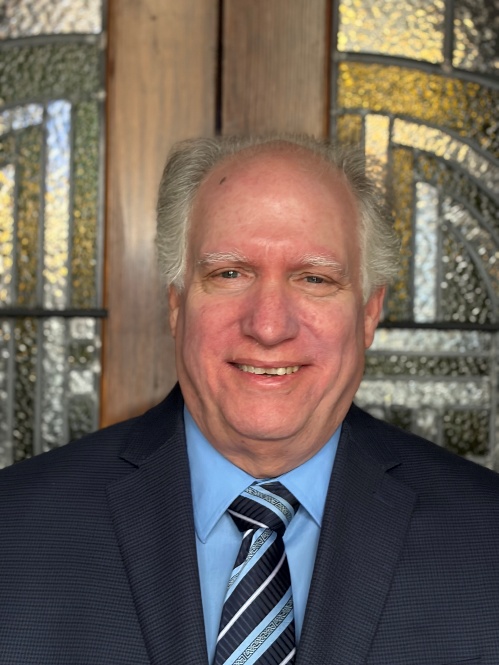
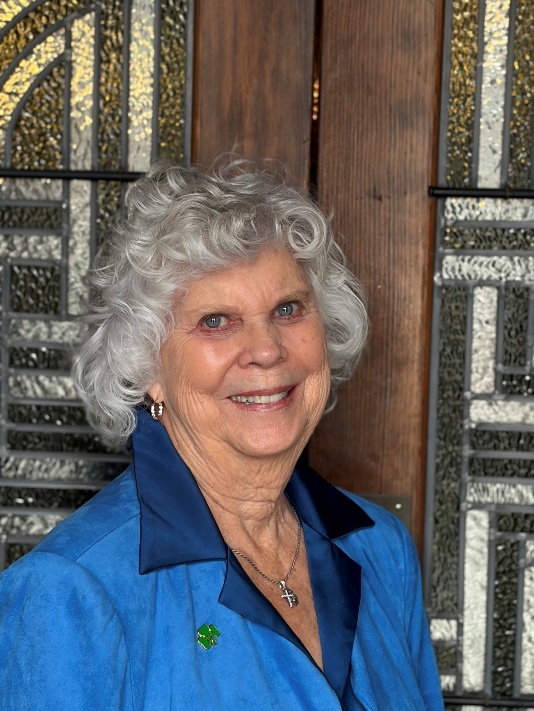
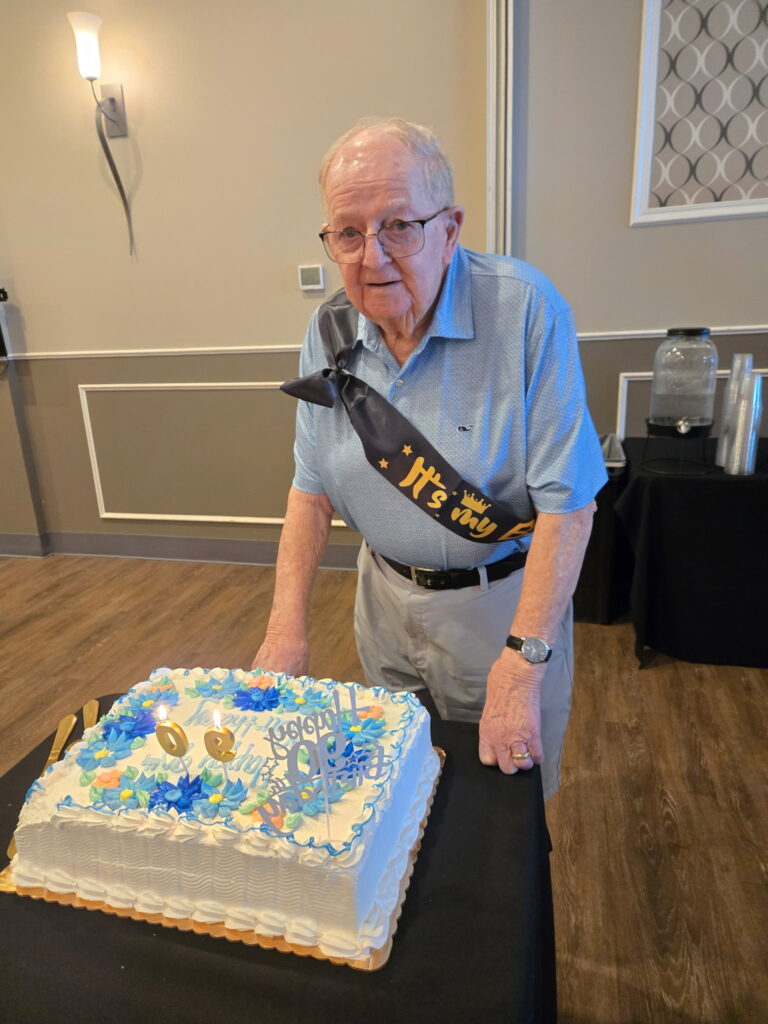
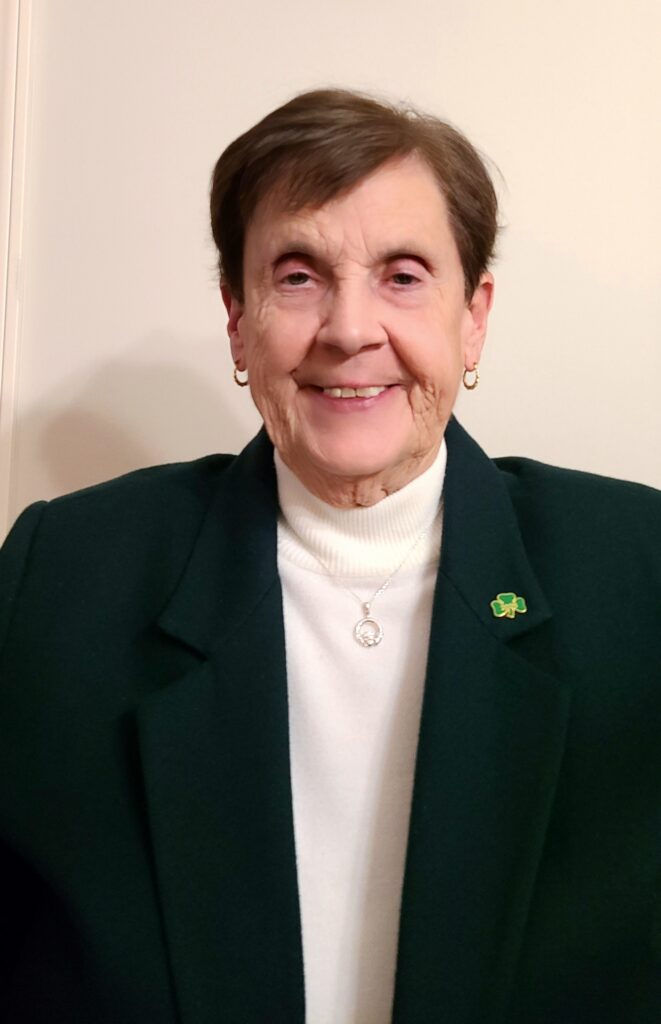
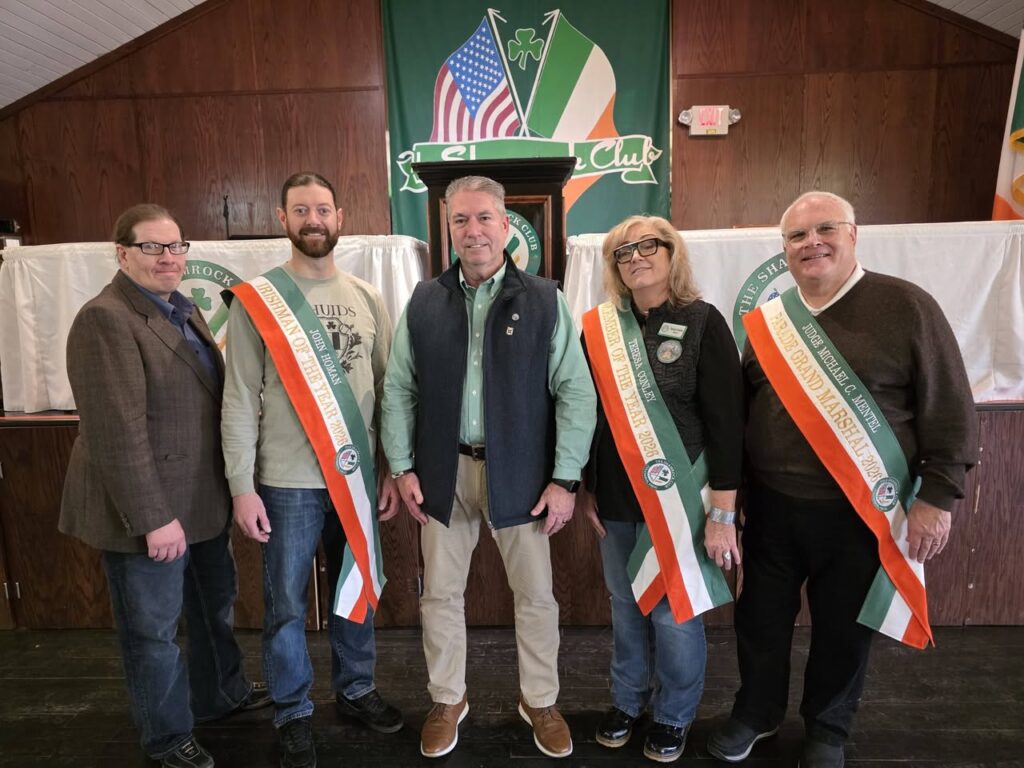
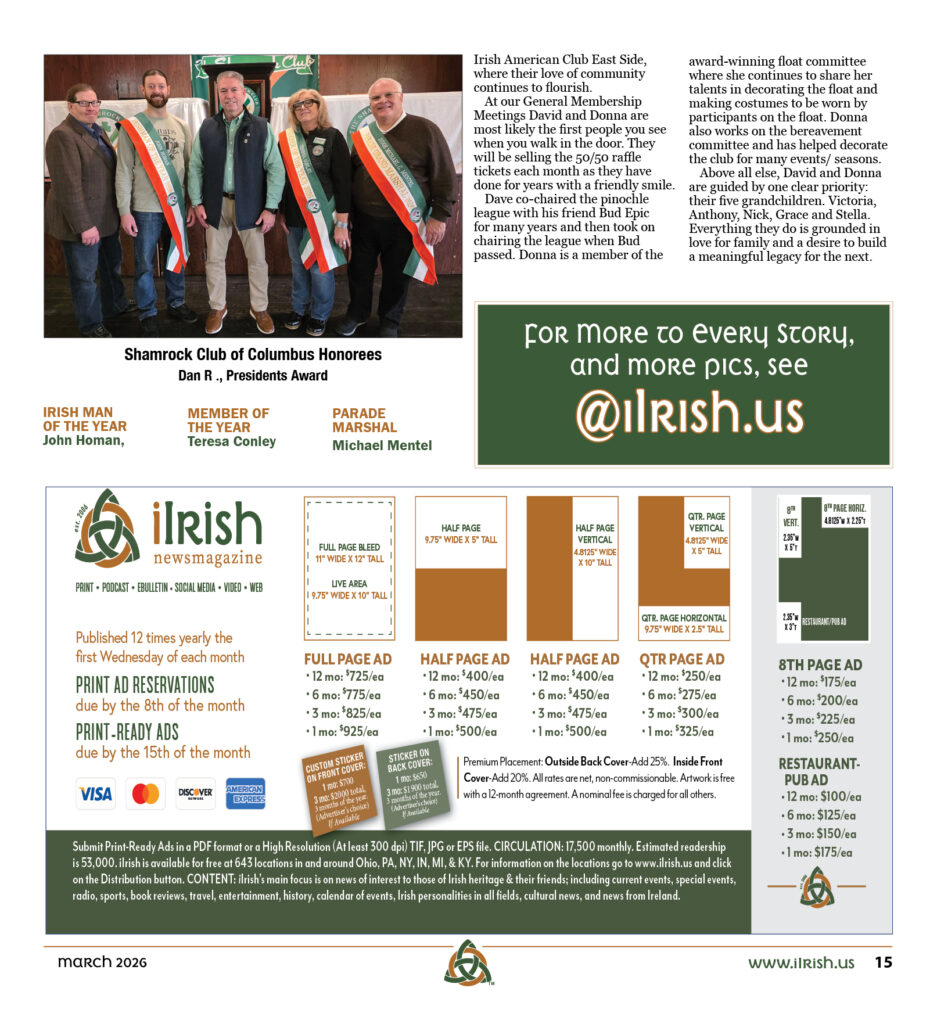
Shamrock Club of Columbus Honorees Dan R ., Presidents Award: John Homan, Irish Man of the Year; Teresa Conley, Member of the Year; and Michael Mentel, Parade Marshal;
Irish America 250: Honoring 250 Years ofIrish Contributions to the United States
A new initiative, Irish America 250 (irishamerica250.org), is being launched to celebrate the upcoming 250th anniversary of the United States and the vital role the Irish have played throughout American history.
Stephen Moylan of Cork, one of Washington’s trusted aides, is credited by historians as the first person to use the phrase “The United States of America. From the nation’s very founding, Irish influence was present. Eight Irish Americans signed the Declaration of Independence, and General George Washington counted many Irish-born generals among his closest allies. Commodore John Barry of Waterford, often called the Father of the U.S. Navy, helped shape America’s earliest naval forces.
Irish America 250 is designed as an inclusive, bipartisan initiative that will highlight these historic contributions while also celebrating the impact of Irish Americans over the past two and a half centuries. The effort is being organized in partnership with the Irish Embassy and the Northern Ireland Bureau, ensuring broad collaboration and recognition on both sides of the Atlantic.
Those interested in getting involved or learning more are encouraged to reach out to Executive Director Kevin Sullivan at skjsully33@gmail.com.