



Growing Up Irish
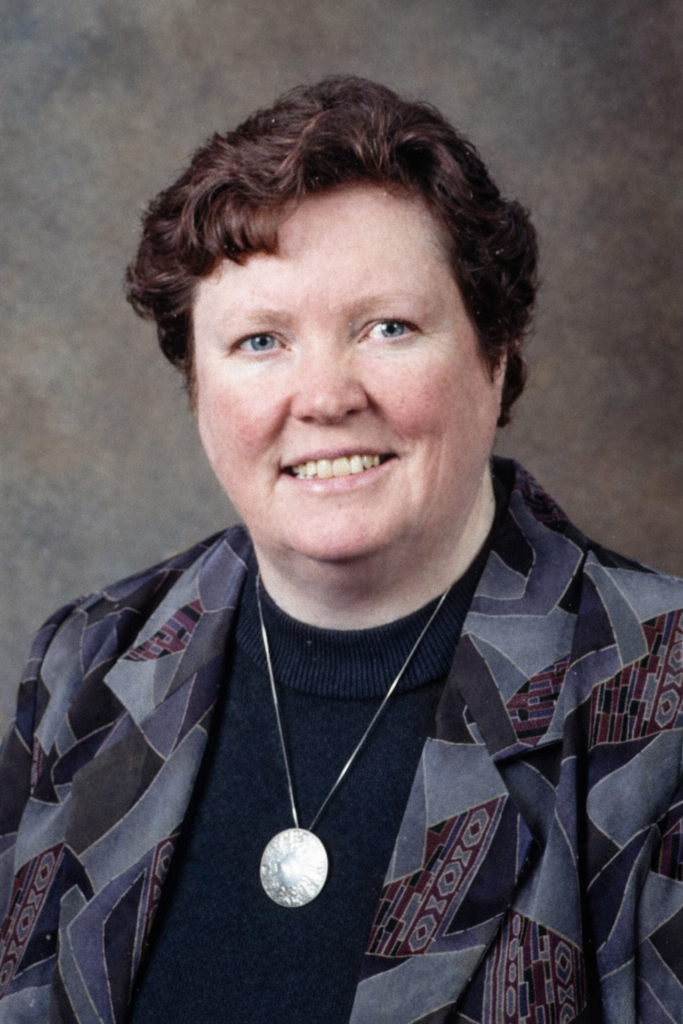
Sr. Maureen Burke’s voice, soft with warmth and a touch of quiet humor, folds you in like a cup of tea at an Irish kitchen table. That table, in fact, is a central image in how she sees the world: “You walk into an Irish house, the kettle goes on immediately.
“It’s not just about giving someone something to drink -— it’s about the time. Time to share what’s going on in your life. The table is where it all happens.”
Born into a large Irish family of six boys and two girls, Sister Maureen’s upbringing was steeped in the traditions of the immigrant experience. Her parents emigrated from Ireland with three children in tow and eventually raised their growing family in East Cleveland.
“Everybody we knew was Irish,” she laughed. “If they weren’t cousins, they were like cousins. We didn’t even realize our parents had accents, because everyone around us spoke the same.”
The family’s home life was rich with cousins, card games, dance music, and a sense of deep communal care. Family vacations meant heading to Fairport Harbor with relatives or spending the night at cousins’ homes. Friday nights were for the game Pinochle, Saturdays for 25, the traditional Irish card game. And always, there was music and dancing, even in the dining room.
“My dad couldn’t sing, but he’d always find someone who could. By the end of the night, someone was singing or dancing right there between the table and the chairs.”
Faith
Sr. Maureen’s recollections are vivid and textured, filled with neighbors who became family. “We had Protestant neighbors, and my mom didn’t think twice about going to their son’s wedding, even when Catholics weren’t supposed to attend services in other churches. She just said, ‘That’s ridiculous,’ and went anyway.”
Later, the family became close with the African American neighbors who moved in. “They’d bring ribs over the fence during our parties, and we’d do the same. When my dad died, one of those neighbors sat for an hour at the funeral home before anyone arrived. He told the funeral director, ‘I just wanted to sit with my friend.’”
She pauses, letting the tenderness hang in the air. “That’s what it meant; That was community.”
That kind of loyalty, to people, to community, to shared humanity, forms the core of Sister Maureen’s understanding of both faith and Irish identity. “Faith is about community,” she explained.
“Catholics believe in a Triune God – Father, Son, and Holy Spirit. That means relationship. That means belonging.”
Faith, too, was not a separate piece of life, it was the very air they breathed. “In Ireland, being Irish Catholic was like being Jewish in Israel, completely entwined.”
That spiritual grounding shaped her worldview. “Who wants to celebrate by themselves? And when you need to cry, you also need people you can lean on. I learned that from the Irish community.”
Irish Emphasis on Education
Sr. Maureen’s family, like many Irish families of that era, placed tremendous value on education, even if few had advanced degrees themselves. “None of my aunts and uncles had more than a grade school education,” she shared, “but they wanted high school and college for all of us. They believed that was important.”
That belief became a mission for Sister Maureen. After entering religious life, she devoted herself to Catholic education, eventually becoming principal of Regina High School in South Euclid. She led with integrity and vision until the school’s closing in 2010. In recent years, she has served as president of St. John School in Ashtabula, where she continues to guide Catholic education with clarity and compassion.
Her own stories are part of a broader tapestry. She fondly remembered her father playing hurling, the family attending matches, and the bonds of kinship and community stretching from Cleveland to Chicago to New Haven. “They never said the words, ‘American Dream,’ but that’s what they wanted for us,” she said. “To work hard, to have more than they had, to build something.”
In Sister Maureen’s eyes, that sense of togetherness is the bedrock of both the Irish Cleveland she grew up in and the one she works to preserve today. Whether raising funds for someone in need, organizing card nights at the Irish Clubs, or simply gathering to “sit and chat” instead of “kneel and pray,” she sees community as an action. “There were GoFundMes before the internet,” she said. “We always showed up, with soda bread, with trifle, with a folding chair if you needed it.”
Her connection to Cleveland’s Irish cultural institutions runs deep. She’s worked to preserve the legacy of lesser known but foundational groups, like the Gaelic League, the Cleveland Irish Players, and the Pioneers Total Abstinence Association. Sister Maureen herself was honored in 2019 with the prestigious, “Walks of Life” award, recognizing her lifelong contributions to Cleveland’s Irish and Catholic communities.
Romanticizing Ireland
Sr. Maureen’s memories aren’t romanticized. She recognizes that change has come, some good, some bittersweet.
“You go back to Ireland now, and it’s different. My cousins there kind of laugh at us, we probably have an idealized version of what Ireland is. And they want to be modern. But I think we want to hold onto those deep roots in family, in gathering around the table, in being part of something bigger than yourself.”
One of her favorite recent finds is a gravestone in Ireland that reads, simply, Sit and chat. “Isn’t that beautiful?” she said. “You used to see ‘kneel and pray,’ but now—sit and chat. I love that idea.”
That chatting is different than just talking. “It’s gathering around the table. It’s tea and presence. It’s taking time to share what’s going on in people’s lives.”
At 70, Sister Maureen still prefers a Friday night of stories and cards over any television drama. “Somebody asked me what I’d most like to do, and I said, to play 25 with all these Irish friends who are now in their 60s, 70s, 80s, 90s. I just love their stories and perspective on life. To me, that’s a perfect Friday night.”
The teapot, the card table, the Irish soda bread, the open door, all these elements come together to form her spiritual and cultural legacy. “I think that’s one of the big lessons we can pass on, that sometimes we get so stuck in our own minds that all we see is what’s right in front of us. But the world is a lot bigger than our backyards.”