








A Touch of Green
I thought that I was not ready to leave winter behind. There was such beauty to the frozen earth this winter. Polar sunlight cast afternoon shadows of bare maple branches onto the snow-covered ground.
At night, crystal frost shimmered upon the cold, drifted snow. Mystical glitter shining beneath the full Snow Moon.
Each day swirled into the next: white upon white, grey upon grey. Powder blue days disguising Arctic cold. Still, I was not ready to give up the peace of winter. Imbolc had only just passed, and I was not yet ready for the call of spring.
Winter is a time for hibernation and retreat. It is a time to nourish our bodies and minds. A time for rest in preparation for the hope of spring, but also the work that ensues as the ground defrosts and life begins again.
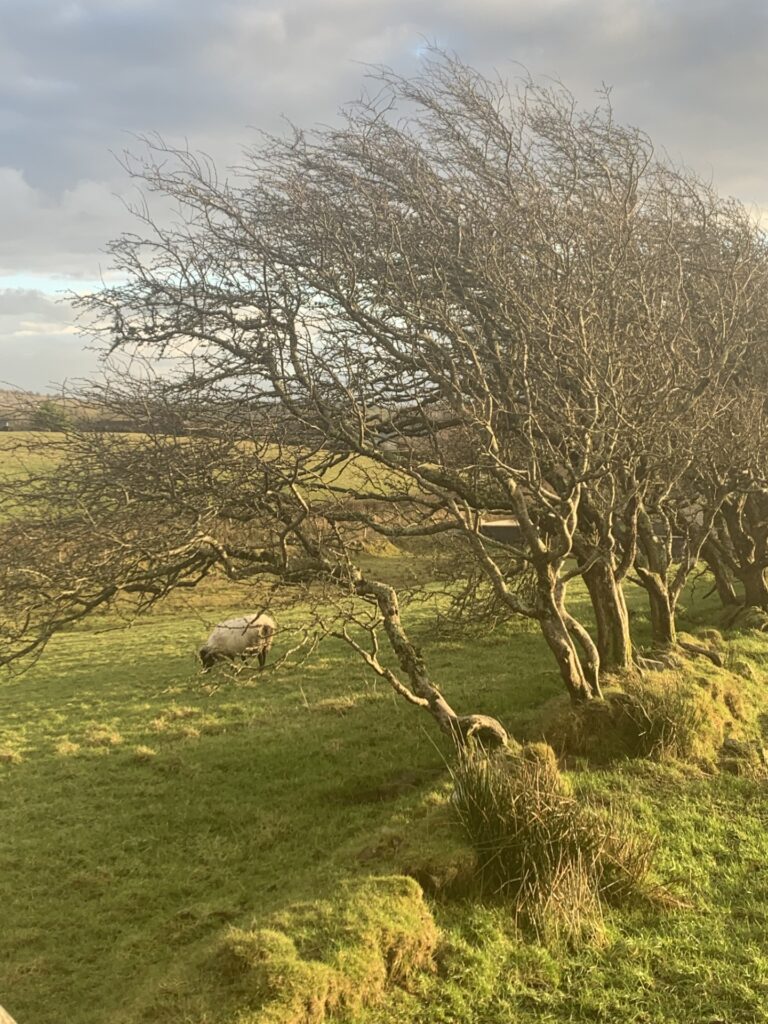
In ancient Ireland, Imbolc was celebrated as the beginning of spring, the halfway point between the winter solstice and the spring equinox, the return to light. Curiously, Imbolc translates as “in the belly,” alluding to the baby lambs that grow inside their mothers.
Spring not only brings light, but also new birth. Beneath the heavy wool of the ewe, lies the promise of the lamb. Beneath the cover of snow and frozen earth lie swollen bulbs, ready to burst into green leaves, literal and symbolic signs of new life.
When the earth warms in March, green stems of crocus and daffodils will burst forth from the soil to yield white, lilac, and golden blooms. As I sit and reflect on this metamorphosis that we so often take for granted, the earth is still snow covered. I am content with this transition between cold and warmth, winter and spring, the purifying pause before new breath.
The proverb, “March comes in like a lion and goes out like a lamb,” or “in like a lamb and out like a lion,” speaks to this curious transition between darkness and light, death and rebirth. By March we are longing for a world washed with green.
Looking out of my frost covered window, I notice gentle flakes of down falling from the sky. The snowflakes appear magnified and stand in contrast to the verdant green of the towering pine that borders our garden. The juxtaposition of ivory and green recalls the heavy woolen cables of an Aran sweater amid the verdant sea of St. Patrick’s Day.
Aran Sweater
My first and favorite Aran knit belonged to my childhood best friend, Michelle. Her parents hailed from County Kerry and County Waterford.
Her mother brought us to our first St. Patrick’s Day parade. The Chicago River was dyed green and glittery green chaos surrounded the bustling streets.
I remember feeling so cold that my toes stung despite my heavy socks, and my fingers tingled beneath my woolen gloves.
Michelle had given me an Irish sweater that her grandmother had gifted her. I was grateful for the thickness of the coarse wool that kept me warm and dry as the snow fell from frozen skies.
My friend told me to keep the sweater. She grew tall and her thin ivory wrists peeked out from the sleeves. Small and sturdy, the sweater fit me just fine and does to this day.
The tradition of the Aran sweater is a staple during the St. Patrick’s Day season. Some years, it is too warm to wear the heavy knits to the parade, but people do. Just as I am not quite ready for the cold to end, St. Patrick’s Day revelers refuse to give up their favorite knits even during an unpredictable blast of warm air on March 17.
These garments are more than clothing, they are cherished heirlooms that speak of the sea and family, hard work and little comfort. The cables represent woven baskets and family lineage, sea moss and bladderwrack, sorrow and blessings. Some legends recall that fishermen who have drowned were identified by the pattern of cables unique to their families.
In our family, the children and their adored cousins always wore Irish sweaters on St. Patrick’s Day. We have photos of the young crew all lined up at the windows of the hotel where they could watch the parade in warmth and safety, until they were old enough to march down the avenue with the West-Side Irish American Club.
Until the frost begins to melt, our sweaters will keep us warm, while our shared love of honored traditions and faith will continue to strengthen our already sturdy roots.
Spring will arrive and with it the sway of daffodils and the bloom of violet crocus.
Perhaps I am finally ready to trade the fragrance of woodsmoke for the mineral scent of soil after steady rain, the sway of daffodils for the shiver of pine needles. Perhaps it is time for winter to take a well-deserved rest.