

Grá Mór
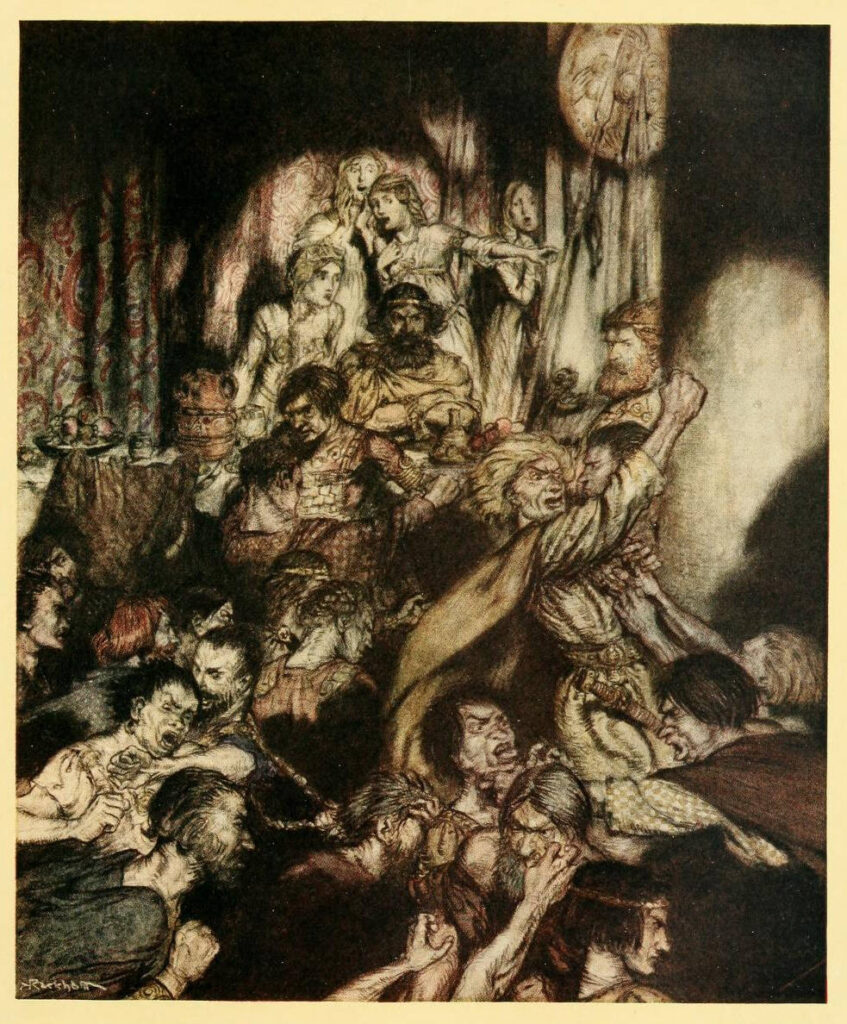
Tragic love stories are plentiful in Irish folklore and mythology. The story of Deirdre of the Sorrows is one of the most well known. Whenever I’m out walking through the woods and come across a pair of interwoven trees or fit fuaite, I’m reminded of the fate of Deirdre and Naoise.
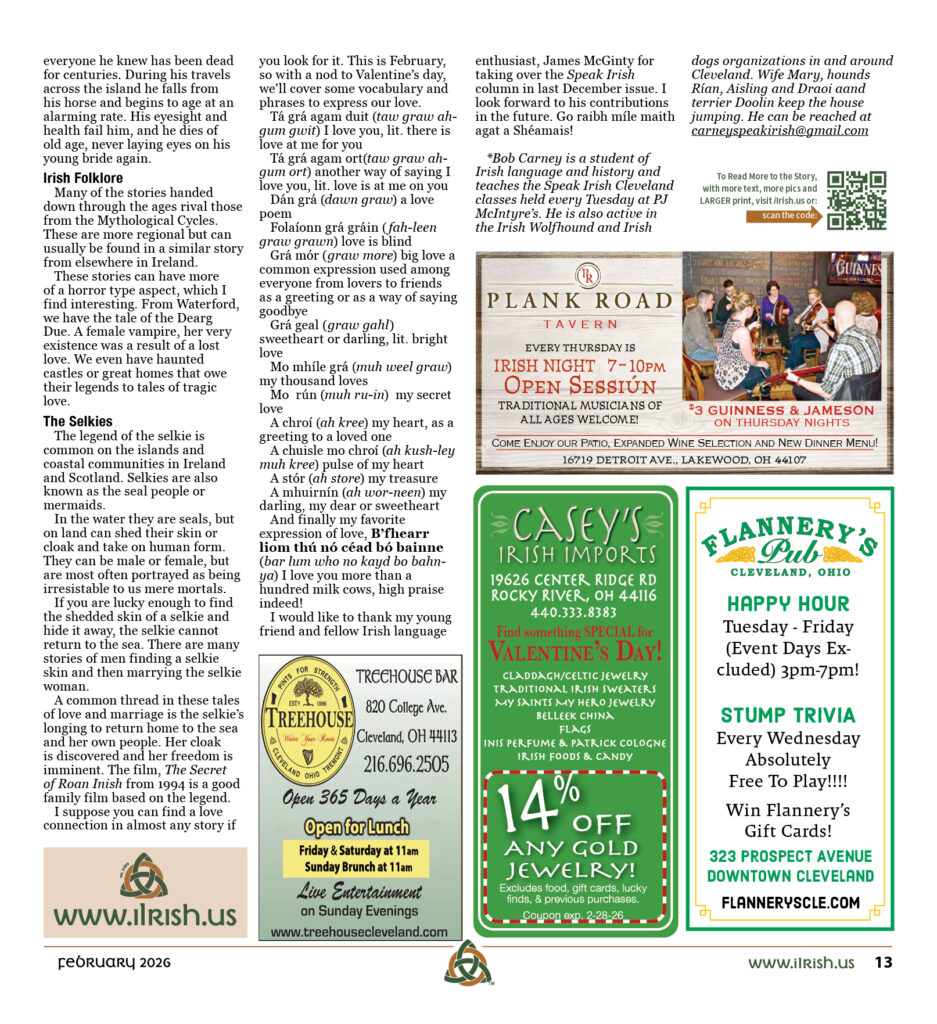
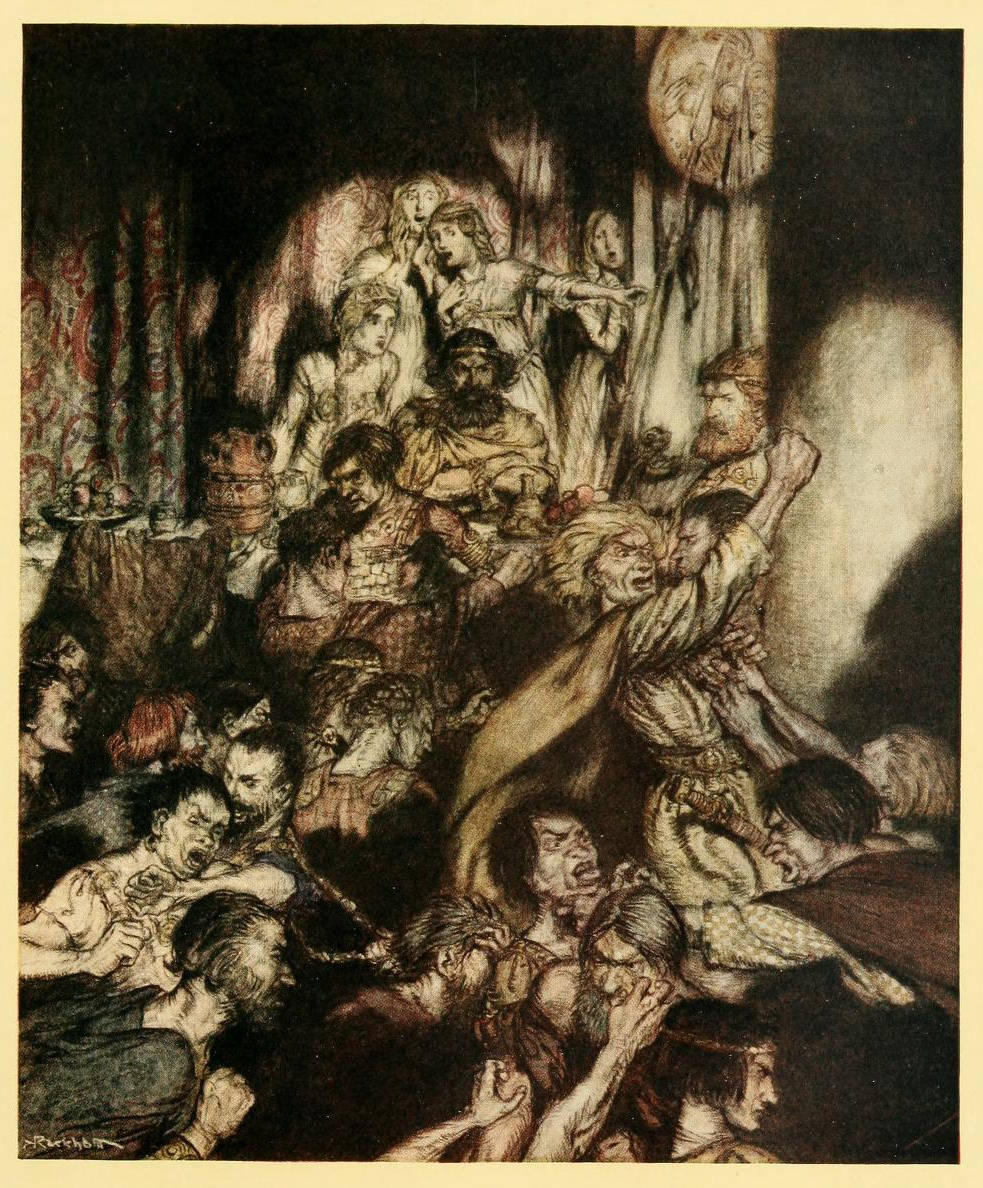
The Fenian Cycle
From the Fenian Cycle of Irish mythology we have the story of the legendary warrior Fionn mac Cumhaill, who while out hunting with his hounds picks up the tracks of a deer. When the hounds came upon it, they stopped and protected it from Fionn’s arrow.
The hounds Brán and Sceólang had been born with a human understanding and recognized a spirit within the deer. Fionn too, saw there was something special about the deer and took it to his home un-harmed.
Overnight the deer was transformed back into a beautiful woman. Her name was Sadhbh (sive with a long i sound), she had refused the advances of Fear Doiriche, a malevolent creature from the otherworld. In anger he had cursed her, changing her into a deer.
Fionn fell in love with the beautiful Sadhbh and the two were married. They were very happy together, but Sadhbh could never leave the protection of Fionn’s fort and his warriors, for fear of retaliation from Fear Doiriche. She and Fionn were together for a year when she became pregnant.
About the same time, Fionn was called away to defend Ireland from invasion, taking many of his warriors with him. Using his draíocht (dree-ocht) magic, Fear Doiriche lured Sadhbh away from the Fianna guarding her, and out of Fionn’s home. He turned her back into a deer and drove her deep into the forest.
Fionn was devastated when he returned home and spent year after year searching for his lost love. His two faithful wolfhounds were always at his side. Seven years later, the hounds came across a little boy alone in the woods. Brán and Sceólang ran to the boy’s side and protected him in much the same way they had with Sadhbh, so many years before.
Fionn looked into the boy’s eyes and quickly concluded the boy must be his son. As the boy learned to speak, he described the gentle deer that had raised him and protected him.
Fionn named the boy Oisín, which means little fawn. Fionn, Oisín and the hounds never gave up their search for Sadhbh, but to no avail.
Oisín and Niamh
Fionn’s son eventually became a great warrior and hero. Niamh was a princess in Tír na nÓg, or the Land of the Young. The two became lovers and married, living in her homeland where they never aged. After a time Oisín longs to return home to visit his father.

Niamh warns her husband not to allow his feet to touch the ground in Ireland, for if he does he can never return to Tír na nÓg or to her. Three years in the land of the Young is the equivalent of three hundred years in Ireland.

When he arrives home, he finds that his father, his warriors and everyone he knew has been dead for centuries. During his travels across the island he falls from his horse and begins to age at an alarming rate. His eyesight and health fail him, and he dies of old age, never laying eyes on his young bride again.
Irish Folklore
Many of the stories handed down through the ages rival those from the Mythological Cycles. These are more regional but can usually be found in a similar story from elsewhere in Ireland.
These stories can have more of a horror type aspect, which I find interesting. From Waterford, we have the tale of the Dearg Due. A female vampire, her very existence was a result of a lost love. We even have haunted castles or great homes that owe their legends to tales of tragic love.
The Selkies
The legend of the selkie is common on the islands and coastal communities in Ireland and Scotland. Selkies are also known as the seal people or mermaids.
In the water they are seals, but on land can shed their skin or cloak and take on human form. They can be male or female, but are most often portrayed as being irresistable to us mere mortals.
If you are lucky enough to find the shedded skin of a selkie and hide it away, the selkie cannot return to the sea. There are many stories of men finding a selkie skin and then marrying the selkie woman.
A common thread in these tales of love and marriage is the selkie’s longing to return home to the sea and her own people. Her cloak is discovered and her freedom is imminent. The film, The Secret of Roan Inish from 1994 is a good family film based on the legend.
I suppose you can find a love connection in almost any story if you look for it. This is February, so with a nod to Valentine’s day, we’ll cover some vocabulary and phrases to express our love.
Tá grá agam duit (taw graw ah-gum gwit) I love you, lit. there is love at me for you
Tá grá agam ort(taw graw ah-gum ort) another way of saying I love you, lit. love is at me on you
Dán grá (dawn graw) a love poem
Folaíonn grá gráin (fah-leen graw grawn) love is blind
Grá mór (graw more) big love a common expression used among everyone from lovers to friends as a greeting or as a way of saying goodbye
Grá geal (graw gahl) sweetheart or darling, lit. bright love
Mo mhíle grá (muh weel graw) my thousand loves
Mo rún (muh ru-in) my secret love
A chroí (ah kree) my heart, as a greeting to a loved one
A chuisle mo chroí (ah kush-ley muh kree) pulse of my heart
A stór (ah store) my treasure
A mhuirnín (ah wor-neen) my darling, my dear or sweetheart
And finally my favorite expression of love, B’fhearr liom thú nó céad bó bainne (bar lum who no kayd bo bahn-ya) I love you more than a hundred milk cows, high praise indeed!
I would like to thank my young friend and fellow Irish language enthusiast, James McGinty for taking over the Speak Irish column in last December issue. I look forward to his contributions in the future. Go raibh míle maith agat a Shéamais!