

By Shane Lehane
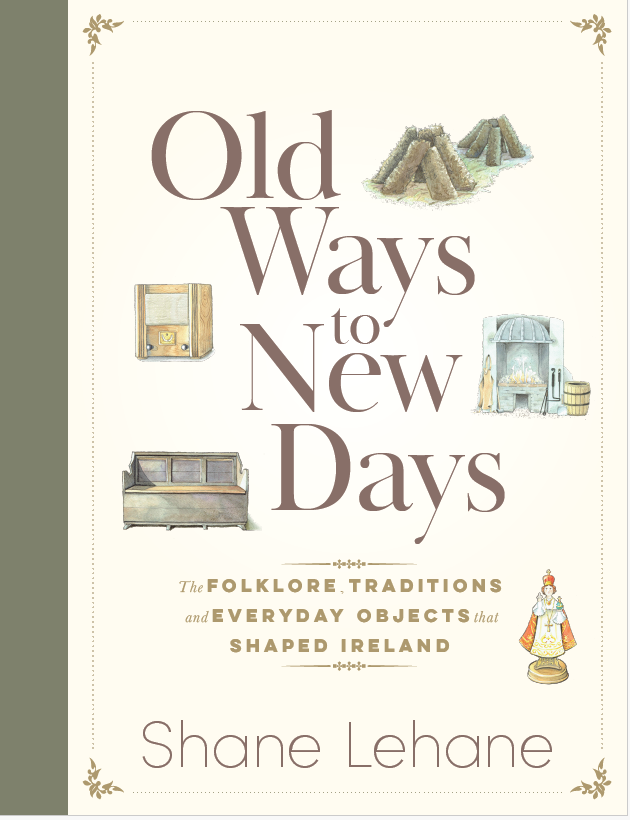
Hachette Books, Ireland. 336 Pages ISBN 978-1-399-73647-3
Folklorist Shane Lehane’s previews his new book Old Ways to New Days The Folklore, Traditions and Everyday Objects that Shaped Ireland. At once scholarly and deeply entertaining, it opens up an extraordinary vista of our wonderous everyday past:
For over twenty years my late father, Tadg, used to write a daily column for the Evening Echo that was called ‘Wise and Otherwise’. He focused on intriguing nuggets of cultural or social history that he illustrated with pen drawings and cartoons. He liked to lighten each article by adding in a joke, a snippet of Cork slang or an age-old forgotten maxim.
I must have inherited something of his mindset because however serious or academic the topic, I can never resist including the quirky anecdote or funny story that my discipline of folklore brings to mind. With some forty years of being fully immersed in Irish folklore, rather than confining the study to academic journals alone, this book, Old Ways to New Days, is consciously written for a wider audience. It maintains its solid scholarly backbone while at the same time interweaving numerous fascinating stories and powerful memories gleaned from the generations gone before.
The book opens with an exploration of some of the folk rituals, customs and beliefs that marked the various points on the journey from birth to death. In a domestic setting, in a time before modern medicine, the complications relating to procreation and birth fell within the realm of the local wise woman. She was the one who might advise how the magical piece of cloth, the Brat Bríde, ‘Brigid’s Cloak’, might be used to help at conception and moreover to ease the labour pains of the mother.
Such women were held in high regard for their common sense and expert knowledge of vernacular cures and remedies. They were perceived as having magical powers and their mere presence at specific points of transition in life was vital. Many were thought to be able to foretell the future, specifically in respect of someone’s love and marriage prospects.
Given the complications of land inheritance in the nineteenth and early twentieth centuries the open facility of marriage and the social status it imbued was not open to all. Rural Ireland had a disproportionate share of bachelors and spinsters, many of whom, if they did not emigrate or move to the city, were confined to something of a subservient existence. They lived out their lives in the house where they were born, working as farm labourers and domestic help under the eye of their now married eldest brother who had inherited the farm.
Marriage was the optimum state and when weddings did occur, they were riotous affairs full of drink, dancing and merriment. One old wedding tradition involved a manic horserace from the church to the house of the groom, where a bottle of whiskey, along with a kiss from the bride, was the prize for the victor.
The winner passed the bottle around and everyone drank from it and when empty it was thrown high into the air, and it would break into pieces. If it didn’t break this was taken as a bad portent for the marriage.
Weddings were one of the many occasions, along with Halloween, the Wren Boys and the Biddy Boys, when bands of uninvited guests disguised themselves by dressing in straw costume and the raucous strawboys, causing havoc, were a regular part of Irish wedding celebrations. The same mixture of fun and frolic, heavily fuelled by drink and mischief, was a characteristic feature of many wakes in Ireland in the nineteenth century. Here too, the old wise women took central stage, washing the corpse, keening their passing and operating as the prime officiator in the management of death.
In addition to such ancient folk reflexes, Old Ways to New Days moves to observations of things that might be considered quintessentially Irish. These are the casual but essential bits of our communal identity manifest as concerns deeply engrained in our national cultural psyche. Irish people have compulsive affinities with such things as pots of tea, the news, the homeliness of pubs and a constant preoccupation with the weather.
We recognise our familiarity with religious paraphernalia – the ‘chalky gods’, the sacred heart, rosary beads and scapulars that were the backdrop to so many peoples’ lives growing up. Such expositions of the extraordinary of the everyday are teased out throughout this book when looking, for example, at where and how we slept in the past. In the chapter on beds, it spans the time of plucking geese to fill the tick feather mattresses for the settle beds in the 19th century to the 1970s when toenails were snagged on the new-fangled, powder-blue, Bri-Nylon sheets.
The third and final section of Old Ways to New Days explores some of the seminal instruments of technological change that took Ireland from an almost medieval way of living to the cusp of the modern country it is today. The instructive scenario that most will appreciate are the occasions when, due to a storm or a fault, the electricity goes out, and people are plunged into darkness. One fumbles around in the drawer to find the stub of an old candle and striking a match to light the twisted black wick the dark is defeated.
Defeated by the simplest and oldest of technologies. It isn’t so long ago, perhaps only 200 years ago, when this, the candle, homemade from rushes and animal fat or fish oils was the only source of light in rural Irish houses over the dark winter months. Over time, commercially produced penny candles gave way to paraffin oil lamps and then the bright globe of the tilly lamps before the major revolution of electricity brought light with the flick of a switch.
Electrifying Ireland
Electricity was the ultimate gamechanger yet, in 1945, two out of every three homes in Ireland were still without the new technology. Over the 1950s and 1960s, it was systematically rolled out throughout rural Ireland.
Bright 100-watt lightbulbs hanging from the centre of the kitchen ceiling made the night day. Electrical water pumps miraculously supplied water into the house and revolutionised the efficiencies on the farm. In addition to the ubiquitous sacred heart lamp, the electricity socket powered the radio, no longer reliant on the old wet and dry batteries, and Ireland was further opened up to itself and the world. The weekly visit to the local cinema had already started this process while it was television from the mid-1960s, that would prove the greatest catalyst for change in Ireland.
Perhaps we all define ourselves by what went before us and what has come after. Each and every one of us has and will experience many watershed moments. I think about my grandfather’s maternal grandfather, Billy Duggan, from Kilnamartyra, who lived to the incredible age of 112. He was born in 1803 and died in 1915.
He was alive to experience the era of Napoleon, the monster meetings of O’Connell, he survived the Great Famine and was active in the Land Leagues. He was particularly delighted to get the old age pension in 1909, the test for which was his ability to recall the great hurricane, ‘The Night of the Big Wind’ that devastated Ireland on the 6 January 1839.
My mother’s grandfather, Patrick Ryan from Ballybeg, Co. Limerick, also lived to a great age of 103; born in 1835, he died in 1938. My mother, Eleanor, remembered sitting on his lap and he recounting in detail his first-hand memories of the Great Potato Famine.
The past is never dead, but it is enlivened and reimagined and its elements made relevant again at each retelling. Old Ways to New Days is a catalyst that seeks to re-invigorate old memories and prompt new conversations about our fascinating past.
Order your copy:
from Kenny Bookshop Galway – who regularly ship to the States, and offer a special rate for shipped books:
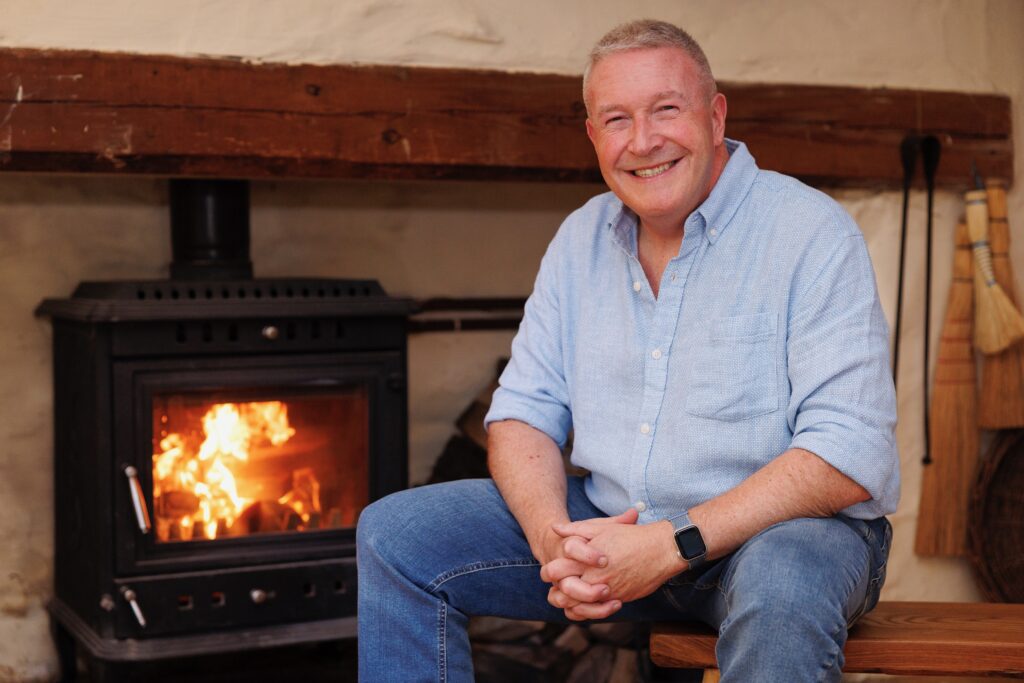
*Shane Lehane has been an influential educator and lecturer in Folklore, Archaeology, History and the Arts for over 35 years. He is Course Director of Cultural and Heritage Studies in Cork College of FET, Tramore Road Campus, whilst also teaching in the Department of Folklore & Ethnology, University College, Cork. In addition to working in archaeology, he taught for many years in the Department of Celtic Civilisation, UCC.
Learn more at: https://www.youtube.com/@shanelehane2777
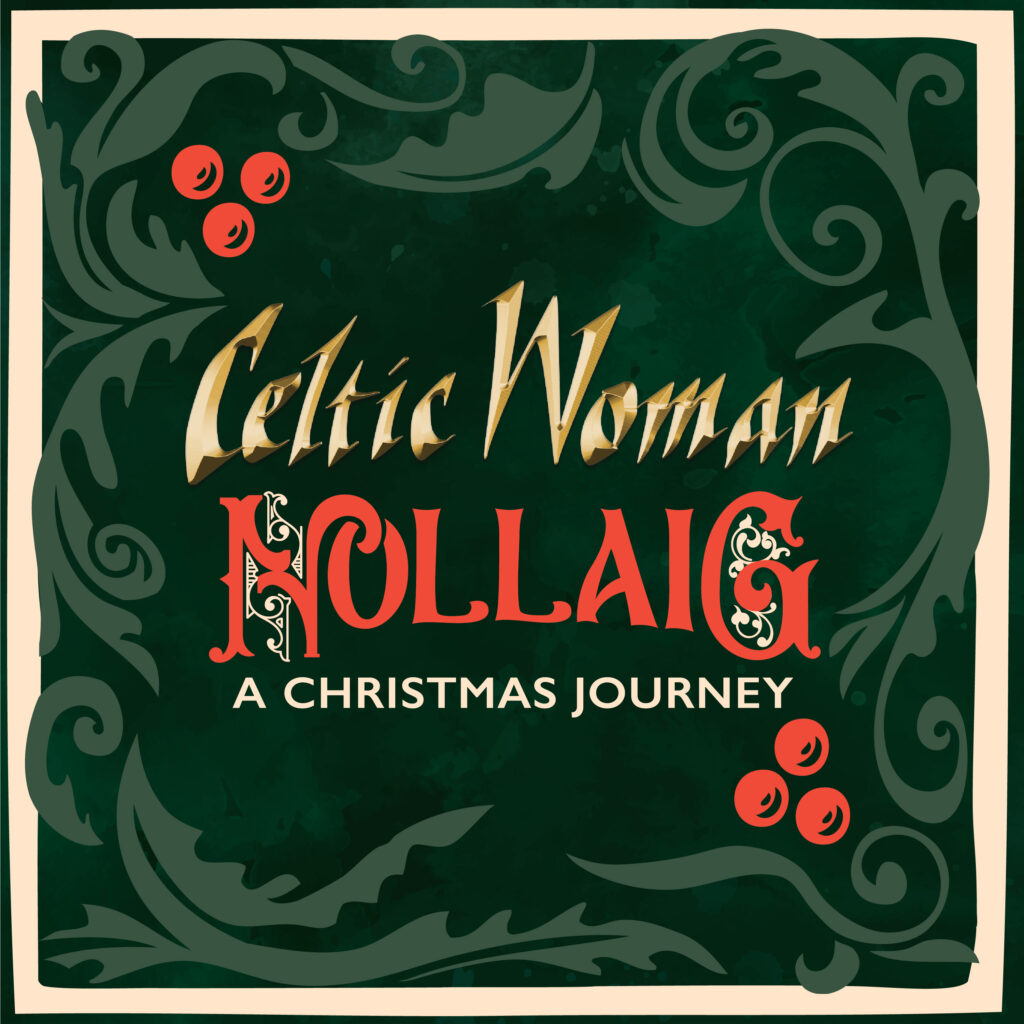
Celtic Woman Release New Christmas Album:
Nollaig – A Christmas Journey
In the stillness of winter, as the world quiets, familiar melodies drift like snowflakes; gentle, timeless, and full of wonder. Celtic Woman’s Nollaig- A Christmas Journey is a reflection of that magic.
Celtic Woman is the most successful all-female group in Irish history, with a legacy of 12 Billboard number ones, over 10 million album sales & 3 billion online streams to date. In 2024 Celtic Woman celebrated an incredible 20 years.
Celtic Woman’s brand-new album Nollaig – A Christmas Journey features some of your favourite classics:, including God Rest Ye Merry Gentlemen, Little Drummer Boy, Silver Bells, Have Yourself a Merry Little Christmas & more, along with brand-new composition, Nollaig na mBan, and a few songs & tunes with a Christmas twist.
The word Nollaig is the Irish word for ‘Christmas’. It is also the name for the month of December, and a given name for many people born within the month of December. For Celtic Woman, it epitomises the spirit of the entire Christmas season.

Newest members Sean-Nós singer Caitríona Sherlock and fiddle player Ciara Ní Mhurcú make their Celtic Woman debut joining sopranos Mairéad Carlin & Muirgen O’Mahony, along with fiddle player Tara McNeill, Sean-Nós singer Sibéal on three songs, plus award-winning multi-instrumentalist Tara Howley playing Uilleann Pipes & Whistles. This 13 track studio album is produced & arranged by Golden Globe-nominated composer Brian Byrne. Celebrate the holiday season with Grammy-nominated multi-platinum Irish singing sensation Celtic Woman.
1. God Rest Ye Merry Gentlemen (2:29)
2. Nollaig na mBan (4:45)
3. Have Yourself A Merry Little Christmas (3:00)
4. River (4:59)
5. Codail a Linbh (3:21)
6. Silent Night (4:16)
7. Wexford Carol (4:06)
8. Little Drummer Boy (3:05)
9. Don Oíche Úd i mBeithil (2:24)
10. Silver Bells (3:45)
11. In the Bleak Midwinter / Goin’ Home (4:34)
12. The Bells of Dublin / Christmas Eve / Navan in the Snow (3:38)
13. Auld Lang Syne (4:50)
See Celtic Woman’s December 2nd thru 22nd Symphony Christmas Tour Dates & more: www.celticwoman.com