



A Letter from Ireland
a Chara,
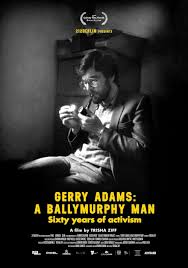
This week, while in Boston, I had the opportunity to attend a screening of the documentary, “Gerry Adams: Ballymurphy Man,” directed by Trisha Ziff. The event was hosted by former Congress member and current President of the University of Massachusetts, Marty Meehan.
When introducing the documentary, Mr. Meehan spoke of the role played by the US in securing the Good Friday Agreement and his friendship with Gerry Adams and Martin McGuinness.
He acknowledged Representative Richie Neal, Chair of the Friends of Ireland Caucus on Capitol Hill, for his service to the cause of peace, justice and unity in Ireland.
After the screening, Rep. Neal shared his experience of growing up as part of the Springfield Irish, the impact of the 1981 Hunger Strikes and his hopes for a united Ireland.
In his discussion with the director, Trisha Ziff outlined the documentary’s themes and took questions from the audience. It was at that point that Trisha was able to draw all of the strands of the documentary together. She described it as a portrait of Gerry Adams. A portrait crafted from his own words, historic footage, and images of him going about his daily life.
It was his story, told in his words. That is what separates this documentary from all others about Gerry. Free from the usual “gotcha” moments and political talking heads, it provides space for reflection and elucidation. The pacing of the documentary is purposefully slow and contemplative and stands in contrast to the urgency of the archive footage. Here is a leader living through tumultuous times but not bound by them and always looking to the future.
In one striking example, he was released from prison in 1972 at the age of 22 for peace talks with the British Government. He tells how he was flown to London by the RAF with other Irish Republican Leaders to demand a timetable for the British to withdraw from Ireland. In his self-critical assessment, the Republic leadership had a set of demands but not a political strategy to achieve them.
That would appear to be a defining point of his political development that would change the course of history. It is a lesson for others; it is not good enough to believe that you have the right or history on your side. There is more to do than protest and resistance. There is a need for strategy and tactics to win your demands.
This documentary does not glorify violence. It talks of loss and injury, of time served in jail and torture at the hands of the British. It is an impassioned call for dialogue to avoid and end conflict and to reach agreements based on equal rights, democracy and a commitment to peace.
When Gerry Adams first took to Twitter when it was a platform for information and discussion, he quickly gained the largest number of followers of any Irish politician. The reaction of political journalists was to decry this as a plot to humanise Gerry Adams. As the Sinn Féin Director of Publicity, I reminded the commentators that Gerry Adams was indeed human and it was years censorship and the media with some notable examples had sought to dehumanise him.
For the first time, I recognise on the screen the Gerry Adams that I have known and worked with for over 30 years. Well done to Trisha, Marty Glennon, Billy Tranghese and all the others who made this documentary and screening possible.
It deserves a wider audience, not only for those interested in Ireland, our history and politics but for those who struggle for peace, justice and equality.
Have a great weekend,